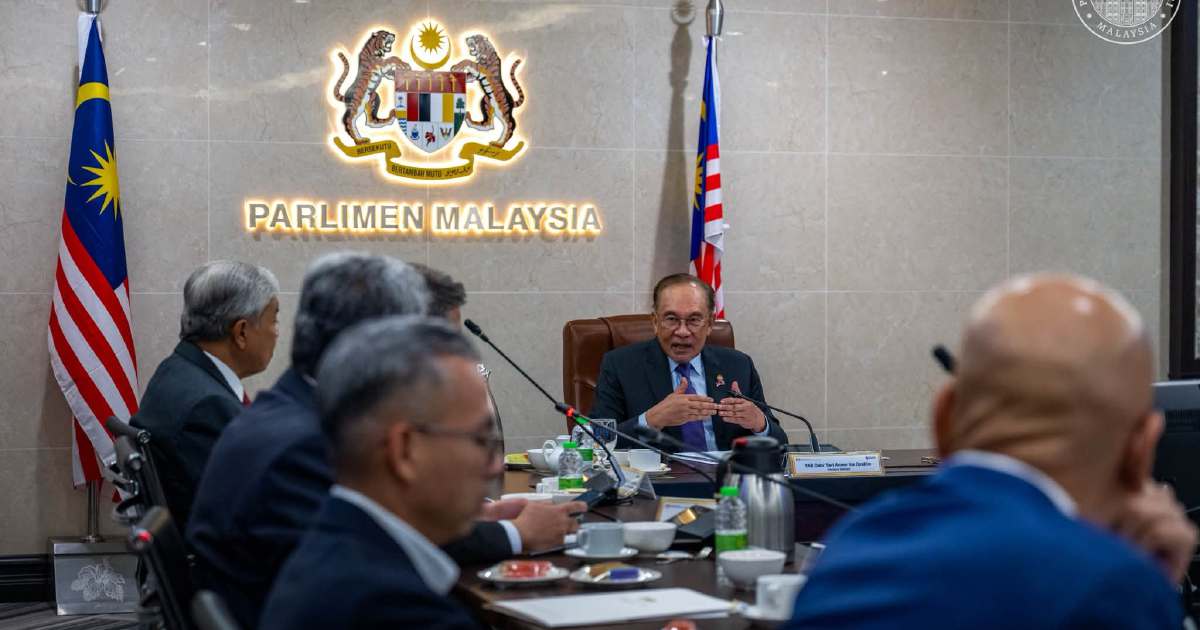
Prime Minister Datuk Seri Anwar Ibrahim has taken direct action to address the mounting financial strain on Malaysia's manufacturing sector, directing both the Investment, Trade and Industry Ministry (Miti) and the Economy Ministry to work closely with affected manufacturers and identify relief measures. The intervention signals the government's heightened concern about the ripple effects of persistent international supply disruptions on domestic industrial competitiveness and employment stability.
Global supply chain challenges continue to reshape production economics worldwide, with Malaysia's manufacturing base—a cornerstone of the national economy—facing particular vulnerability given its integration into regional and global value networks. Rising input costs, extended delivery times for critical components, and increased logistics expenses have compressed profit margins for manufacturers across sectors ranging from electronics and semiconductors to automotive and consumer goods production. These pressures intensify at a time when Malaysian firms are competing against peers in Vietnam, Thailand, and Indonesia for multinational investment and export contracts.
The government's directive reflects acknowledgment that while supply chain disruptions originated beyond Malaysia's borders, domestic policy intervention can meaningfully ameliorate their local impact. By instructing Miti and the Economy Ministry to establish formal engagement channels with manufacturers, Anwar has signalled that relief discussions will move beyond informal consultations to structured government-industry dialogue aimed at producing concrete policy responses. This engagement approach allows officials to understand sector-specific challenges—whether semiconductor manufacturers face semiconductor wafer shortages, food producers struggle with packaging material costs, or textile makers contend with raw material scarcity.
Miti's role in these discussions carries particular significance given the ministry's mandate to sustain Malaysia's industrial competitiveness and attract foreign direct investment. The ministry can explore trade facilitation measures, tariff adjustments on critical inputs, or expedited import procedures that reduce bureaucratic friction without compromising regulatory standards. Additionally, Miti can coordinate with customs and port authorities to streamline clearance processes for time-sensitive shipments, thereby reducing dwell times that compound costs for perishable or urgently needed materials.
The Economy Ministry's involvement adds another dimension, suggesting the government may consider financial relief mechanisms alongside trade and industry interventions. Options might include low-interest bridge financing for manufacturers facing working capital constraints due to extended supply cycles, tax deferrals for affected enterprises, or targeted subsidies for critical industrial inputs deemed essential to maintaining domestic production capacity. Financial measures require careful design to ensure they support genuine relief rather than create market distortions or unfairly advantage particular companies over competitors.
Manufacturers operating in Malaysia have signalled growing alarm about sustained cost pressures eroding their ability to maintain pricing competitiveness while preserving operational viability. Small and medium-sized manufacturers, lacking the scale and financial reserves of larger corporations, face particularly acute challenges in absorbing cost increases. Many regional competitors in lower-cost jurisdictions can undercut Malaysian producers when input expenses surge, threatening the export volumes that drive foreign exchange earnings and provide employment for hundreds of thousands of workers. This dynamic underscores why government-level coordination between industry and ministries carries strategic weight.
The timing of Anwar's directive arrives as manufacturers prepare for the final quarter of the calendar year, a critical period for global manufacturing as firms finalize orders for year-end consumer demand. Supply constraints during this window can cascade into missed deadlines, unfulfilled contracts, and reputational damage that extends beyond immediate financial losses. Providing support mechanisms now could prevent a deterioration of Malaysia's standing as a dependable manufacturing base for multinational corporations planning regional production networks.
Contextually, Malaysia's manufacturing sector has weathered multiple shocks in recent years—pandemic-related facility shutdowns, semiconductor shortages that disrupted automotive production globally, geopolitical tensions affecting trade flows, and labour market tightening that has raised wage costs. The sector's resilience depends partly on policy stability and government willingness to adapt regulations when external circumstances create legitimate hardship. By initiating this dialogue, Anwar demonstrates responsiveness to sector concerns while positioning the government as an active participant in industrial problem-solving.
The success of this initiative will depend on translating ministerial engagement into specific policy actions within realistic timeframes. Manufacturers will expect tangible relief—whether through reduced import duties on critical inputs, facilitated credit access, or regulatory changes that lower operational friction—rather than consultative exercises that produce recommendations without implementation. The Economy Ministry and Miti must coordinate closely to avoid overlapping initiatives or conflicting directives that confuse the business community.
Longer term, the current supply crisis underscores structural vulnerabilities in Malaysia's manufacturing supply base, particularly overdependence on just-in-time inventory systems vulnerable to disruption. Government support measures should be accompanied by strategic discussions about building supply chain resilience through diversified sourcing, strategic inventory buffers for critical inputs, and investments in domestic production capacity for items currently imported. This requires coordinated thinking between industrial policy, investment incentives, and workforce development.
The directive also carries implications for Malaysia's regional standing. As supply chains reorganise in response to geopolitical and pandemic-driven vulnerabilities, countries that demonstrate proactive governance and support for manufacturers may attract production relocation from higher-risk jurisdictions. By showing commitment to supporting the sector through challenges, Malaysia positions itself competitively against rivals also seeking to capture a share of reshuffled global manufacturing investment. The government's willingness to engage directly with manufacturers sends reassuring signals to multinational corporations considering Malaysia as a production hub.

