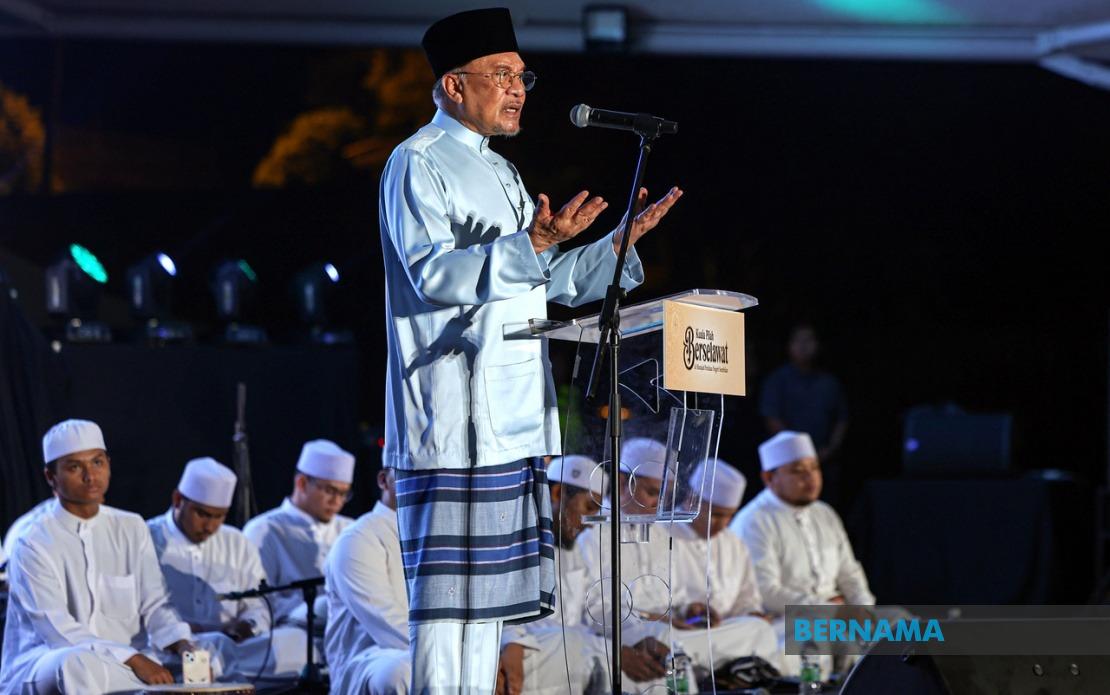
Prime Minister Datuk Seri Anwar Ibrahim has thrown his weight behind a comprehensive and transparent investigation into the findings of the Royal Commission of Inquiry into Lembaga Tabung Haji, signalling zero tolerance for misconduct within the pilgrimage fund. Speaking at the Kuala Pilah Berselawat and Negeri Sembilan Munajat Perdana programme at Dataran Melang, the Prime Minister underscored that those responsible for wrongdoing identified in the RCI report will face full scrutiny without preferential treatment or shielding from consequences.
The Royal Commission's inquiry into TH has unearthed significant governance and conduct issues within one of Malaysia's largest faith-based financial institutions. The pilgrimage fund, which manages the savings of millions of Malaysian Muslims preparing for hajj and umrah, holds immense public trust and financial responsibility. Anwar's call for transparent investigations reflects the gravity with which his administration views the matter, particularly given TH's critical role in managing hajj-related funds for ordinary Malaysian Muslims.
The Prime Minister's remarks carry particular weight given the historical pattern of administrative investigations in Malaysia that have sometimes been perceived as lacking rigour or closure. By explicitly calling for transparency and rejecting cover-ups, Anwar appears to be positioning the government's response as a departure from past practices. His statement that "we have waited long enough" suggests frustration with the pace at which institutional accountability has been pursued, indicating his administration intends to move swiftly on implementation.
The RCI's determination of fault provides the investigative roadmap for follow-up action. Rather than accepting the report as a mere documentary record, Anwar has instructed that it serve as the evidentiary foundation for formal investigations and potential action against identified individuals. This suggests the government will treat the RCI findings as actionable intelligence rather than a symbolic exercise in institutional review. The emphasis on using the report to identify and pursue those responsible signals that consequences will follow findings of misconduct.
The composition of attendees at the Kuala Pilah event underscores the administration's multi-agency coordination on the matter. Datuk Dr Zulkifli Hasan, the Minister in the Prime Minister's Department (Religious Affairs), and his deputy Marhamah Rosli attended alongside Education Minister Fadhlina Sidek and Selangor Menteri Besar Datuk Seri Amirudin Shari. This gathering of senior officials across religious affairs, education, and state government portfolios suggests that the TH investigation and follow-up is being treated as a whole-of-government priority rather than an isolated matter for any single ministry.
For Malaysian Muslims, particularly the millions of ordinary savers with TH accounts, the Prime Minister's commitment carries reassurance value. The hajj fund represents not merely financial savings but spiritual preparation and family investment in one of Islam's Five Pillars. Institutional mismanagement or misconduct within TH thus breaches public trust at both financial and spiritual levels. Anwar's unequivocal stance addresses these concerns directly, signalling that governance failures within Islamic institutions will not be overlooked or minimised for political convenience.
The reference to rejecting "cover-ups" carries broader implications for institutional governance in Malaysia. Transparency in investigations and accountability for wrongdoing have long been contentious issues across Malaysian public institutions. By explicitly rejecting the possibility of protecting wrongdoers from consequences, the Prime Minister is articulating a governance standard that, if consistently applied, could influence practices beyond the TH matter. However, the credibility of this commitment ultimately rests on the actual implementation of investigations and the visibility of outcomes.
The timing and context of Anwar's remarks also reflect the political importance attached to demonstrating competent governance. Public confidence in institutions, particularly those managing substantial financial assets or serving spiritual functions, depends heavily on perceived accountability. By visibly championing transparent investigation of the TH matter, the government signals administrative competence and ethical seriousness to both domestic constituencies and international observers monitoring Malaysian governance standards.
Moving forward, the substance of the investigation will determine whether the Prime Minister's commitments translate into meaningful accountability. The public will gauge success not merely by formal investigations being launched, but by the visibility of their progress, the clarity of findings, and the proportionality and implementation of any consequences. The promise of transparency requires not only that investigations proceed, but that their conduct and outcomes are communicated clearly to stakeholders and the broader public.

