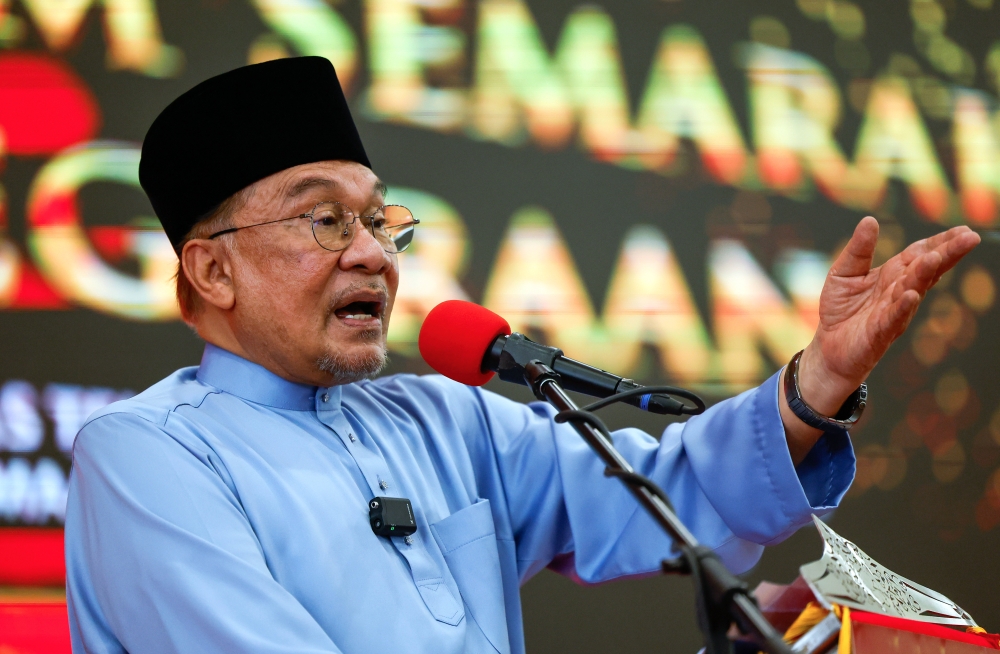
Prime Minister Datuk Seri Anwar Ibrahim confronted mounting accusations of misconduct during a campaign appearance in Port Dickson, drawing a distinction between legitimate political criticism and what he characterised as deliberate falsehoods designed to undermine his government. Speaking at the event, he emphasised that whilst he remains accountable for genuine policy decisions that have not succeeded as intended, he will not tolerate coordinated disinformation campaigns that distort his administration's actions or personal conduct.
The Prime Minister's remarks came amid intensifying political competition surrounding state-level contests, where opposition parties have escalated their messaging against the federal government. Anwar's intervention reflects mounting concern within his coalition that unsubstantiated claims risk poisoning public discourse and diverting attention from substantive policy debates. His statement effectively separates acknowledgement of administrative challenges from what he views as malicious fabrications, establishing a framework for distinguishing between fair political opposition and what constitutes slander.
Anwar's willingness to publicly concede that his government has encountered setbacks signals a shift in political positioning for the Prime Minister, who has historically faced intense scrutiny over his record. By preemptively acknowledging imperfect decision-making, he appears to be inoculating himself against broader accusations of arrogance or refusal to accept criticism. This approach also allows him to pivot discussions toward what he characterises as responsible versus reckless campaigning, potentially reshaping the terms of political engagement during the current election cycle.
The timing of these comments proves significant given Negeri Sembilan's status as a contested state where no single coalition has secured overwhelming dominance. The state has become a bellwether for broader national sentiment, with campaign dynamics there carrying implications for how voters across Malaysia perceive the federal government's performance. By deploying carefully calibrated messaging that balances accountability with pushback against alleged smear tactics, Anwar seeks to maintain momentum in territories where his coalition remains competitive.
Opposition movements have ramped up their criticism of the government on multiple fronts, ranging from economic management to allegations concerning governance standards. Rather than blanketly dismissing these critiques, Anwar's Port Dickson address carves out space for legitimate debate whilst drawing firm boundaries around what constitutes acceptable political conduct. This rhetorical manoeuvre attempts to reclaim moral authority on the issue of political integrity, potentially disadvantaging opponents who rely heavily on unverified claims.
The distinction between mistakes and slander carries particular resonance in Malaysian politics, where defamation and misinformation have historically played outsized roles in electoral campaigns. By elevating this distinction during a high-profile campaign event, Anwar signals that his administration intends to contest the narrative terrain more aggressively. This represents a tactical adjustment from earlier periods when government responses to opposition attacks appeared more reactive and fragmented.
Negeri Sembilan's political economy adds layers of complexity to campaign messaging there. The state's mix of urban and rural constituencies means that different voter segments respond to distinct messaging priorities. Whilst urban voters may prioritise governance standards and transparency concerns, rural communities often focus on bread-and-butter issues including agricultural support and rural development funding. Anwar's simultaneous acknowledgement of mistakes and rejection of false claims potentially speaks to both constituencies, suggesting a government willing to answer for specific shortcomings whilst maintaining commitment to core principles.
The Prime Minister's remarks also carry implications for coalition cohesion within Barisan Nasional and its allied parties. By establishing clear parameters around acceptable criticism, Anwar provides political cover to coalition members who wish to distinguish themselves from opposition messaging without appearing disloyal to the federal government. This framework allows local politicians to engage with voter concerns whilst maintaining alignment with Putrajaya's preferred narrative.
Looking forward, Anwar's Port Dickson intervention suggests the government will pursue a strategy combining defensive rebuttals of specific false claims with offensive messaging emphasising administrative achievements and policy continuity. This dual approach recognises that purely defensive posturing often proves insufficient in competitive electoral environments, whilst unbridled confidence risks appearing dismissive of legitimate voter concerns. The balance Anwar struck reflects sophisticated political calculation about how Malaysian voters respond to admissions of imperfection versus perceptions of governmental arrogance.
The broader implications of this campaign moment extend beyond Negeri Sembilan. How effectively Anwar's government can establish and enforce boundaries around acceptable political discourse whilst simultaneously addressing real governance concerns will shape the trajectory of Malaysian politics through the electoral cycle. The Prime Minister's willingness to engage this question directly, rather than delegating it to subordinates, underscores its strategic importance to his administration's political future.

