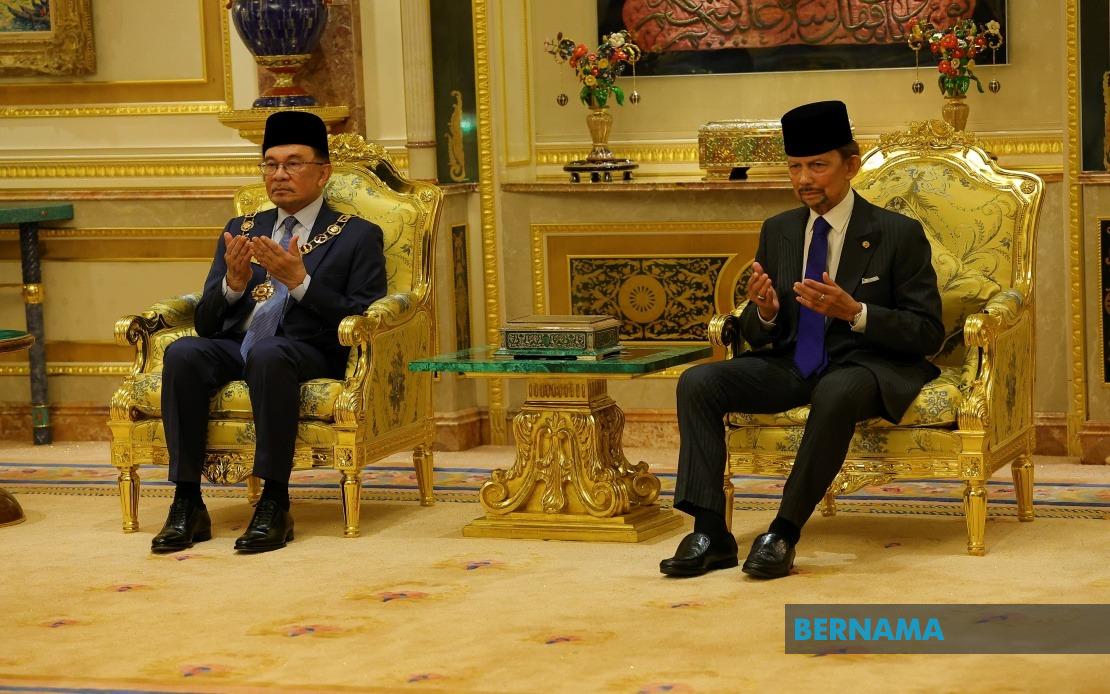
Prime Minister Datuk Seri Anwar Ibrahim was invested with the Darjah Kerabat Laila Utama Yang Amat Dihormati (D.K.), one of Brunei's most prestigious royal honours, during an official ceremony at Istana Nurul Iman in Bandar Seri Begawan on August 22. The investiture took place within the ornate confines of Cheradi Laila Kenchana, underscoring the ceremonial significance attached to the occasion and reflecting the warmth of bilateral relations between Malaysia and its neighbour to the east.
The formal presentation occurred in the presence of Brunei's Crown Prince, Pengiran Muda Mahkota Al-Muhtadee Billah, signalling the importance Brunei places on the relationship with Malaysia at the highest levels of state. This public acknowledgement of the Malaysian leader's stature served as a diplomatic affirmation of Malaysia's standing in the broader Southeast Asian context and its role as a key partner to the sultanate.
The Malaysian delegation accompanying Anwar comprised senior government figures representing key ministerial portfolios and regional leadership. Foreign Minister Datuk Seri Mohamad Hasan and Investment, Trade and Industry Minister Datuk Seri Johari Abdul Ghani attended the ceremony, reflecting the economic and diplomatic dimensions of the visit. The inclusion of Sarawak Premier Tan Sri Abang Johari Tun Openg and Sabah Chief Minister Datuk Seri Hajiji Noor highlighted the significance of Malaysia's state governments in the nation's engagement with neighbouring countries, particularly regarding cross-border cooperation and resource-sharing initiatives.
Anwar's arrival at Istana Nurul Iman around 11 am on the morning of the investiture followed his entry into Brunei the previous day. The two-day working visit provided the framework for substantial discussions beyond ceremonial proceedings, with the Malaysian premier scheduled to participate in the 27th Annual Leaders' Consultation (ALC-27), a biennial gathering that has become the cornerstone of bilateral engagement between the two nations since its inception.
Central to the visit's substantive agenda was the expected witnessing by both Sultan Hassanal Bolkiah and Anwar of a Memorandum of Understanding focused on disaster management cooperation. This agreement carries particular significance for a region increasingly vulnerable to climate-related hazards, including flooding, typhoons, and transboundary haze. The formalisation of such cooperation frameworks reflects both nations' recognition that environmental and natural disasters transcend borders and necessitate coordinated response mechanisms, intelligence sharing, and joint resource deployment during emergencies.
The honour bestowed upon Anwar places him among a select group of international leaders to receive such recognition from Sultan Hassanal Bolkiah, historically reserved for heads of state and government with whom Brunei maintains exceptionally close ties. The D.K. honour system represents the sultanate's means of expressing profound respect and acknowledgment of diplomatic contributions to bilateral relations. For Malaysia, the award validates the country's diplomatic positioning and Anwar's personal standing within regional governance structures.
Brunei-Malaysia relations, while historically strong, have occasionally been tested by outstanding bilateral issues, including maritime boundary disputes in the South China Sea and resource sharing arrangements. The symbolism of this investiture ceremony suggests a commitment from both leadership to consolidate partnership across multiple dimensions, from economic integration within ASEAN frameworks to security cooperation and humanitarian coordination. The presence of multiple ministerial representatives underscores this multi-faceted engagement.
The timing of this visit assumes added weight given regional developments affecting Southeast Asian stability and economic trajectories. As Malaysia continues navigating complex regional geopolitics involving major powers and transnational challenges, strengthening bilateral bonds with smaller ASEAN members like Brunei reinforces the principle of solidarity within the regional bloc. For Brunei, hosting such a high-profile Malaysian delegation and conferring significant honours demonstrates its continued relevance and influence within regional affairs despite its smaller economy and population.
The ALC-27 framework provides opportunities for Malaysian and Brunei leaders to address contemporary issues ranging from pandemic preparedness to digital economy collaboration and education exchange programmes. These consultations, held on alternating grounds between the two capitals, have proven instrumental in maintaining dialogue channels and preventing minor disputes from escalating into broader regional friction. The annual nature of these gatherings ensures continuity of engagement and permits tracking of implementation progress on previously agreed initiatives.
For Malaysian readers, this recognition of their prime minister carries implications beyond ceremonial prestige. It reflects Malaysia's sustained influence within ASEAN and its ability to maintain productive relationships with all member states, including smaller neighbours. The visit and investiture reinforce Malaysia's role as a responsible regional actor committed to cooperative frameworks addressing shared challenges from climate change to maritime security and economic development.
The disaster management MoU represents practical commitment to regional welfare, directly impacting Malaysians living in areas vulnerable to transboundary environmental hazards. Enhanced cooperation mechanisms, early warning systems, and coordinated emergency response protocols can reduce loss of life and economic damage when natural disasters strike. Such agreements, formalised during high-level state visits, gain political weight and resource allocation that informal arrangements cannot command.

