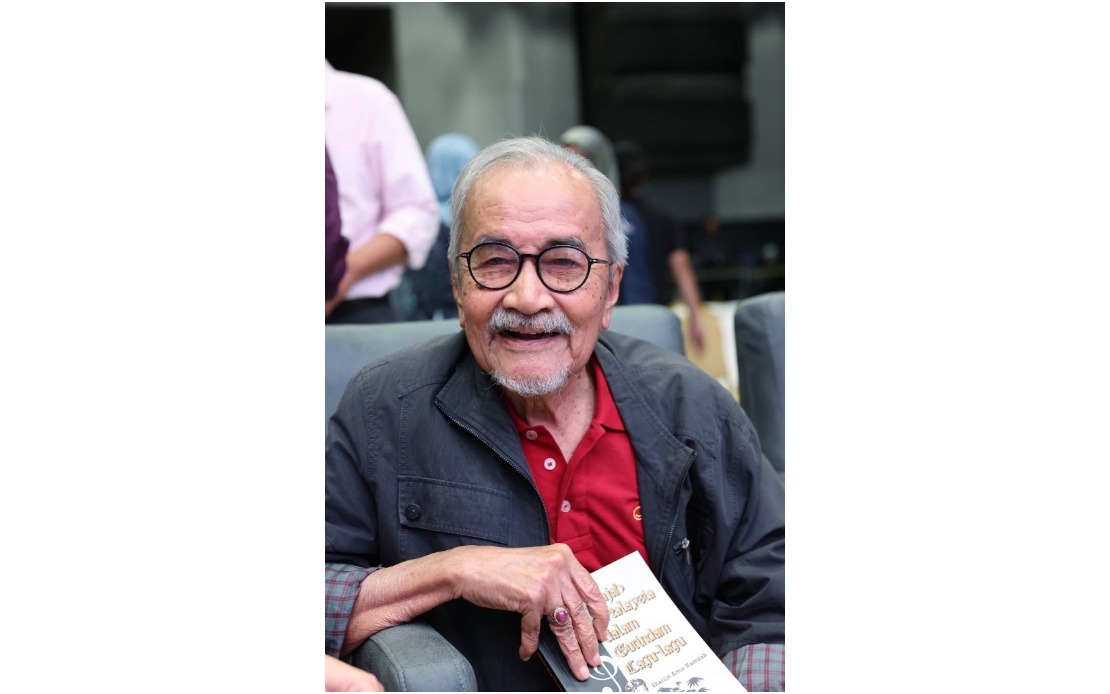
Prime Minister Datuk Seri Anwar Ibrahim has paid tribute to one of Malaysia's most distinguished creative figures, extending birthday greetings to Datuk Rahim Razali on his 87th birthday. Through a Facebook post, Anwar highlighted the veteran filmmaker's remarkable impact on the local arts landscape, describing him as a foundational figure whose body of work has significantly enriched the country's cultural expression and national identity.
Rahim Razali, born on July 3, 1939 in Batu Gajah, Perak, stands as a towering presence in Malaysia's creative industries. His career trajectory exemplifies the kind of cross-disciplinary excellence that has become increasingly rare in contemporary entertainment and media. Beyond his celebrated work in film, Razali has left an indelible mark through his versatility—spanning acting, directing, scriptwriting, sports journalism, and broadcasting. This multifaceted approach has allowed him to shape Malaysian cultural discourse across multiple platforms and generations.
In his remarks, the Prime Minister underscored how Razali's works transcend mere entertainment value, serving instead as vehicles for exploring profound human themes and cultural narratives. Anwar emphasised that these productions have consistently foregrounded values that resonate with Malaysia's diverse society, making them relevant beyond their immediate historical context. The longevity of Razali's career—now spanning more than six decades—testifies to the enduring quality and relevance of his creative output, a rarity in an industry typically dominated by shorter career arcs.
Rahim Razali's achievements have been formally recognised within Malaysia's film establishment. His gallery of accolades includes multiple Best Director and Best Male Actor awards from the Malaysian Film Festival, Malaysia's premier recognition body for cinematic excellence. These honours reflect not merely technical proficiency but the deep artistic vision that has characterised his most celebrated works. Among his most renowned productions is Matinya Seorang Patriot, a film that exemplifies his thematic preoccupation with national identity and moral complexity.
The Prime Minister's public acknowledgement carries broader significance beyond personal courtesy. It reflects a deliberate recognition of the arts and culture sector as integral to national development and social cohesion. In an era when cultural industries frequently compete for resources and policy attention against purely economic sectors, such high-level political validation serves to reinforce their importance within the national narrative. Anwar's explicit confidence that Razali's works will continue inspiring future generations of artists and audiences positions cultural heritage not as nostalgic reflection but as living intellectual capital.
Rahim Razali's trajectory also illuminates the development of Malaysia's film and broadcasting industries across turbulent decades. His career spanned the transition from early post-independence cinema through the consolidation of professional broadcasting standards and into the contemporary digital age. Through these transformations, he maintained creative relevance while mentoring successive waves of practitioners, effectively functioning as a guardian of professional standards and artistic ambition within Malaysian entertainment.
The Prime Minister's blessing for Razali's continued health and longevity, coupled with his prayer for sustained strength to contribute to the nation's cultural sphere, suggests recognition that active cultural participation by senior figures enriches the broader ecosystem. Razali's ongoing presence—whether through mentorship, commentary, or occasional creative work—provides continuity and institutional memory in industries prone to rapid generational turnover. His lived experience bridges multiple eras of Malaysian development and cultural expression.
For contemporary Malaysian filmmakers and performing artists, Razali represents a model of sustained artistic integrity and professional excellence across an exceptionally long career. In an increasingly commercialised entertainment landscape, his body of work demonstrates that culturally significant, values-driven content can achieve both artistic recognition and popular resonance. This exemplary legacy becomes particularly valuable as younger creators navigate pressures to prioritise commercial viability over artistic substance.
The occasion also underscores the demographic transitions within Malaysia's cultural establishment. As pioneering figures from earlier generations reach their later years, questions emerge about succession planning, archival preservation, and institutional knowledge transfer within the arts sector. Razali's case exemplifies why deliberate efforts to document, analyse, and celebrate the contributions of elder statesmen in the cultural realm serve vital national interests beyond immediate ceremonial purposes.
From a regional perspective, Rahim Razali's work has contributed to Malaysia's soft power within Southeast Asia and the broader Malay-speaking world. His films and creative output have circulated beyond national boundaries, shaping regional perceptions of Malaysian cultural sophistication and artistic capacity. This international dimension adds another layer to the significance of recognising his contributions at the highest political levels.

