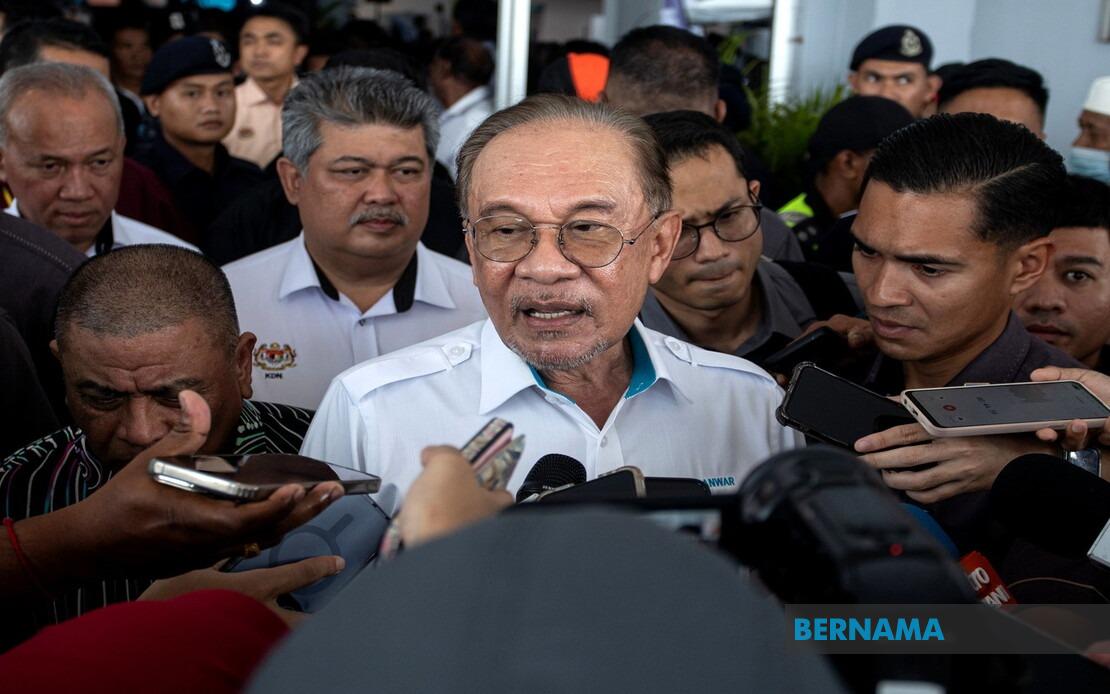
Prime Minister Datuk Seri Anwar Ibrahim has issued a stern reminder to all individuals serving in government positions that they must exercise restraint and avoid launching attacks on the Federal Government while campaigning in state elections. Speaking in Ipoh on July 19 after attending a MADANI KITA community programme in Tambun, Anwar outlined clear expectations for how members of the ruling coalition should conduct themselves during the current electoral period, signalling the administration's concern about maintaining coherence within its multi-party structure.
The caution underscores a delicate challenge facing Malaysia's Unity Government, which brings together parties that maintain separate state-level rivalries despite sharing federal power. Anwar framed the situation with pragmatism, acknowledging that democratic systems routinely accommodate coalition partners competing against one another in regional contests. However, he drew a distinction between legitimate state-level political competition and undermining the federal administration itself. The Prime Minister stressed that while candidates—including those holding ministerial rank—may freely campaign on state-specific issues, crossing into criticism of the federal government represents a breach of the conduct expected from those drawing salaries and authority from that same government.
Recognizing the potential for fracture within his coalition, Anwar outlined what amounts to a conduct code with real consequences. Officials who cannot respect the boundaries between state-level campaigning and federal government loyalty should, in his view, resign from their posts rather than remain in positions of power while simultaneously attacking the administration they represent. This position reflects not merely a matter of etiquette but a functional requirement for governing a country where coalition members compete locally while coordinating nationally. The tension inherent in such arrangements threatens to undermine both the legitimacy and effectiveness of the federal administration if left unchecked.
Anwar indicated that he had already engaged both his deputies, Datuk Seri Dr Ahmad Zahid Hamidi and Datuk Seri Fadillah Yusof, to ensure alignment on this matter. The consultation with his two most senior colleagues signals the seriousness with which the Prime Minister views potential breaches of coalition discipline. Given the stakes involved in maintaining a government that spans multiple political parties with competing interests, securing buy-in from the deputy prime ministers provides a firmer foundation for enforcing expectations across the cabinet and wider government structure.
Beyond the disciplinary dimension, Anwar has urged all coalition partners to actively work toward strengthening relationships at both federal and state levels. Rather than merely prohibiting destructive conduct, the Prime Minister has advocated a constructive approach emphasizing that maintaining goodwill between governing partners serves the practical purpose of enabling effective service delivery to citizens. This perspective connects the somewhat abstract notion of coalition harmony to tangible outcomes that ordinary Malaysians experience—the functioning of government services, infrastructure development, and policy implementation across multiple jurisdictions.
The timing of these remarks reflects specific pressures within Malaysia's current political environment. State elections create natural flashpoints where coalition partners prioritize winning local races, potentially at the expense of the broader federal coalition. When ministers and senior officials campaign aggressively against parties they govern alongside at the national level, they risk communicating contradictory messages to voters and undermining public confidence in the coherence of government itself. Anwar's intervention attempts to establish clearer boundaries before such dynamics fully materialize.
For Southeast Asian observers watching Malaysia's political evolution, this moment illustrates both the challenges and adaptive capacity of multi-party coalitions in maintaining stability. Countries throughout the region have experimented with power-sharing arrangements, and Malaysia's experience offers lessons in how federal governments can navigate the inherent tensions between coalition solidarity and democratic competition. Anwar's approach—combining clear rules with emphasis on pragmatic benefits—represents one strategy for managing these inherent contradictions.
The statements also hint at broader concerns about Malaysia's political landscape, which Anwar explicitly warned could become damaged by undisciplined conduct within coalition ranks. A fractured or visibly contradictory government sends negative signals to investors, international partners, and the domestic constituency seeking stable institutions. In an economic climate requiring confidence and policy continuity, the Prime Minister's emphasis on maintaining a coherent federal administration takes on material significance beyond mere political optics.
Implementation of these expectations will likely depend on monitoring conduct during campaign periods and potentially taking action against officials who breach the guidelines. However, Anwar's framing suggests the government hopes to achieve compliance through clear communication of standards rather than through punitive measures. By articulating the principle that those unwilling to accept the discipline required of government office should resign voluntarily, Anwar invites self-selection while also establishing that violations would leave the administration with no choice but to enforce consequences.
The significance of this moment for Malaysian politics extends beyond the immediate campaign context. As the Unity Government matures and faces electoral cycles at both state and federal levels, establishing norms around how coalition partners conduct themselves becomes increasingly important. Anwar's intervention seeks to establish precedent that federal cohesion and state-level competition need not be mutually exclusive, provided all parties understand and respect the boundaries between them. Whether these expectations hold throughout the current state elections will reveal whether Malaysia's coalition model can function as intended.

