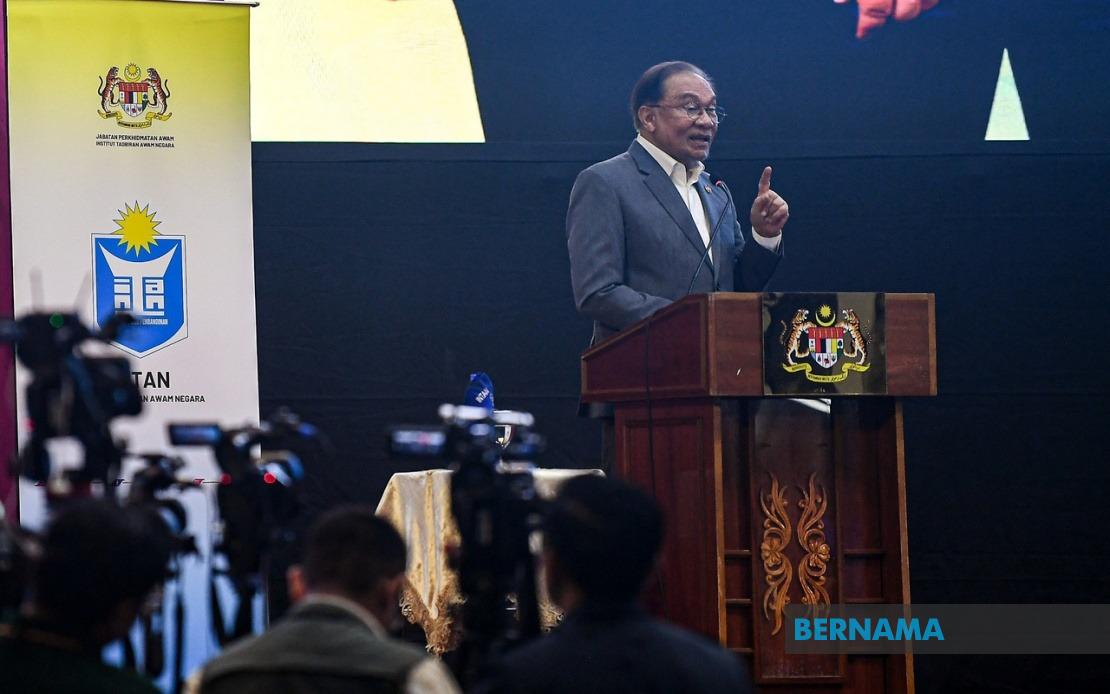
Prime Minister Datuk Seri Anwar Ibrahim has delivered a pointed call for Malaysians to abandon the lingering colonial mentality that continues to elevate Western models, institutions and cultural frameworks above homegrown alternatives. Speaking at a gathering with civil servants from the Central Zone at Universiti Islam Selangor in Bangi, Anwar stressed that true independence extends far beyond the formal cessation of foreign rule—it requires a fundamental shift in how Malaysians perceive themselves and their nation's capabilities.
At the heart of Anwar's message lies a critique of what he characterizes as a persistent psychological dependency on Western benchmarks. He highlighted a troubling pattern among Malaysians, particularly those born after independence, who continue to regard Anglo-American systems and practices as inherently superior across multiple domains of national life. This outlook, he suggested, represents an incomplete decolonization of the mind—a phenomenon where citizens may have achieved political sovereignty yet remain shackled by intellectual and cultural subordination to former colonial powers.
The Prime Minister illustrated his concern through specific examples drawn from contemporary Malaysian society. He pointed to the uncritical assumption that English-medium education represents a higher standard than instruction in Bahasa Malaysia, reflecting a hierarchy of languages imported from the colonial era. Similarly, he observed that some Malaysians unconsciously adopt Western cultural frameworks and economic models as the default template for progress, without subjecting these imports to critical scrutiny or considering whether they align with Malaysia's own values, institutional context and developmental priorities.
Anwar's intervention speaks to a deeper anxiety about national identity and autonomy that periodically surfaces in Malaysian political discourse. More than six decades after independence, Malaysia continues to navigate the tension between integration into global systems—many of which are Western-dominated—and the cultivation of a distinctive national character rooted in local traditions, constitutional frameworks and multicultural foundations. The Prime Minister's remarks suggest frustration that this balance has tilted too far toward uncritical Western emulation among certain segments of the educated elite and civil service.
The platform chosen for these remarks carries symbolic significance. Addressing civil servants directly, alongside Chief Secretary to the Government Tan Sri Shamsul Azri Abu Bakar and Director-General of the Public Service Tan Sri Wan Ahmad Dahlan Abdul Aziz, Anwar was effectively speaking to the apparatus through which national policy is formulated and implemented. This suggests an intention to redirect the bureaucratic orientation toward Malaysian-centric problem-solving and decision-making frameworks rather than reflexive adoption of international best practices assumed to emanate from Western sources.
For Malaysian policymakers and observers, Anwar's intervention raises substantive questions about institutional reform and the explicit consideration of alternative models in governance, education and economic development. While not necessarily rejecting Western ideas outright, his remarks imply that such frameworks should be evaluated on merit rather than accepted as inherently superior merely by virtue of their origin. This distinction matters significantly for a country seeking to position itself as a developed nation by 2050 while maintaining cultural coherence across its diverse population.
The timing of these comments reflects broader regional dynamics. Across Southeast Asia, there is renewed interest in indigenous knowledge systems, governance models and development philosophies as alternatives to wholesale adoption of Western institutional templates. Malaysia's own constitutional provisions, emphasizing Islam's special position, indigenous peoples' rights and a distinctive social contract, represent frameworks that diverge meaningfully from Western liberal democratic norms. Anwar's remarks suggest recognition that these constitutional foundations should inform governance approaches rather than being treated as obstacles to alignment with external models.
Critically, Anwar's message does not amount to a call for isolationism or wholesale rejection of global engagement. Rather, he appears to advocate for selective engagement—adopting valuable external ideas while subjecting them to Malaysian analytical frameworks and ensuring they complement rather than displace indigenous strengths and values. This approach demands greater intellectual confidence among policymakers and civil servants, who must move beyond deference to Western expertise toward critical evaluation of competing ideas based on their suitability for Malaysian conditions.
The emphasis on civil servants reflects recognition that the bureaucracy occupies a pivotal position in either perpetuating or challenging colonial-era institutional patterns. If the senior civil service continues to default to Western organizational models, management philosophies and policy templates, those approaches will persist throughout government regardless of stated national objectives. Anwar's intervention signals expectation that Malaysia's administrative apparatus should exercise greater agency in developing and implementing approaches tailored to Malaysian circumstances and aligned with national values.
For Malaysian businesses and civil society organizations, the Prime Minister's remarks suggest an emerging policy environment where emphasis on national identity, indigenous capabilities and locally-rooted solutions will likely receive greater official encouragement. This could manifest in preferences for Malaysian-developed systems and methodologies, increased investment in developing local expertise across professional domains, and greater skepticism toward imports of foreign institutional models without rigorous adaptation.
Anwar's call also resonates with aspirations for greater regional cooperation and learning within Southeast Asia. Rather than looking exclusively northward to Western examples, Malaysia might better position itself to draw on the experiences and innovations of neighboring countries facing similar developmental challenges within comparable cultural and institutional contexts. This shift could strengthen ASEAN cohesion while advancing national development objectives.
Ultimately, the Prime Minister's address represents an effort to reframe independence not merely as a historical event but as an ongoing project of intellectual, cultural and institutional autonomy. Success in this endeavor requires not rejection of the global knowledge commons but rather confident, critical engagement with it—adopting what serves Malaysian interests while building institutions and practices reflecting authentic national values and aspirations.

