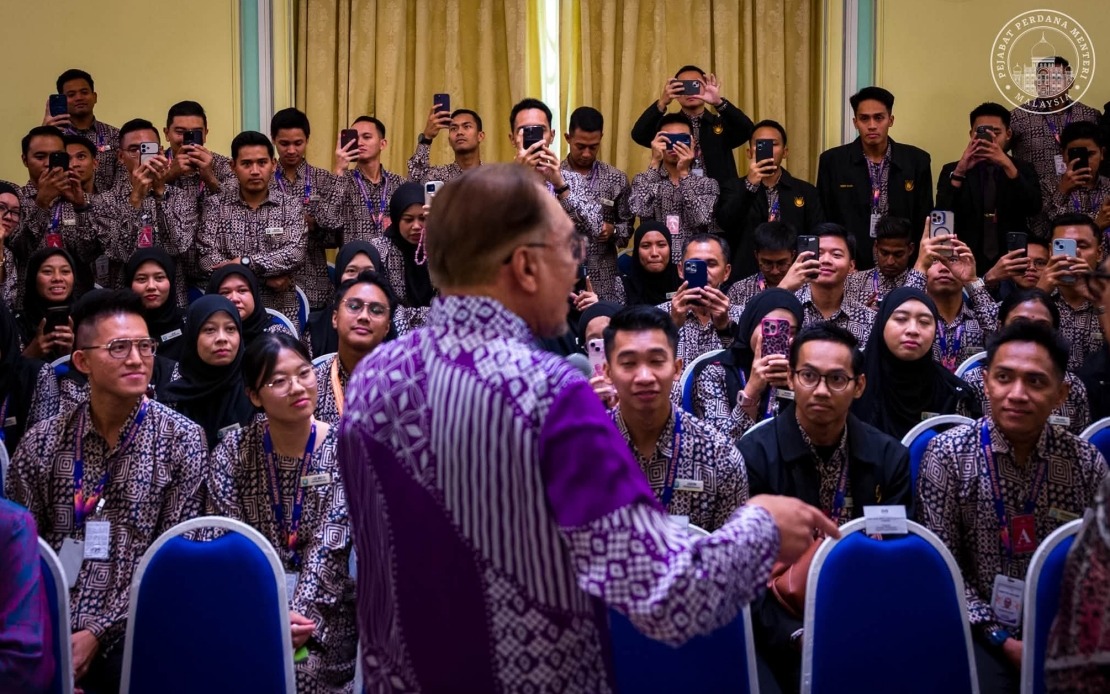
Prime Minister Datuk Seri Anwar Ibrahim has delivered a direct message to Malaysia's emerging civil service leadership: the nation's future hinges on public servants who are simultaneously progressive and principled. Speaking during an encounter with Administrative and Diplomatic Service (PTD) officer cadets pursuing postgraduate qualifications in public management at his Putrajaya office, Anwar underscored three pillars that must define the modern bureaucrat—integrity, operational efficiency, and the courage to accept necessary transformation.
The timing of Anwar's remarks carries particular significance for Malaysia's ongoing administrative modernisation efforts. The government has been pushing several initiatives aimed at revitalising public sector performance, tackling systemic inefficiencies, and rebuilding public confidence in institutions that have faced sustained criticism over recent years. By addressing PTD cadets directly—individuals who will occupy senior positions across government ministries and departments within the next decade—the Prime Minister is attempting to embed these values at the leadership pipeline's entry point, where idealism and institutional responsibility can be deliberately cultivated.
The emphasis on embracing change deserves closer examination within Malaysia's broader context. The civil service, traditionally structured around hierarchical protocols and risk-averse decision-making, has struggled to keep pace with rapidly evolving economic and social demands. Regional competitors like Singapore and Vietnam have demonstrated that agile, adaptive bureaucracies can accelerate development and competitiveness. Anwar's exhortation to cadets to welcome transformation suggests recognition that Malaysia's civil apparatus cannot function effectively by retreating into procedural comfort zones or resisting necessary disruption to outdated systems.
Yet the Prime Minister deliberately balanced this reform message with an insistence on integrity—a pointed reminder that flexibility in process must never translate to compromise in ethics or accountability. Malaysia has confronted recurring scandals involving corruption, nepotism, and abuse of public office that have corroded citizen trust in government institutions. For Anwar, who has himself experienced the consequences of political persecution and has championed anti-corruption causes, this linkage between modernisation and moral uprightness appears non-negotiable. Cadets are being told, in effect, that innovation and ethical conduct are interdependent rather than competing priorities.
The broader implication for Southeast Asia's largest bureaucracy is significant. With approximately 1.7 million civil servants managing everything from education and healthcare to infrastructure and social welfare, the collective mindset of this workforce shapes national outcomes. If a cohort of future leaders internalises the message that their role transcends technical administration to encompass custodianship of the nation's values and interests, cascading effects could ultimately reshape institutional culture across multiple levels of government.
Anwar's invocation of good governance explicitly connects administrative excellence to national prosperity and social justice. This framing is deliberate and politically important. It positions civil service reform not as technocratic optimisation but as a moral and patriotic duty. Officers who absorb this messaging will theoretically approach their roles with heightened consciousness of their responsibility to citizens rather than treating government employment primarily as secure career advancement. This aspirational standard, if successfully transmitted through institutional channels, could gradually recalibrate how public servants conceptualise their function.
The discussion also reflects ongoing tensions within Malaysia's development model. The nation aspires toward high-income status and advanced economic sophistication, yet faces persistent challenges in public service delivery, digital infrastructure adoption, and inter-agency coordination. Bureaucratic reform has become essential to bridging this gap between ambition and execution. PTD officers, as career-track administrators destined for policy-making positions, represent crucial multipliers of any transformation agenda. Their receptiveness to change and commitment to principled governance will substantially determine whether reform directives from the centre translate into meaningful shifts in ground-level implementation.
The Prime Minister's engagement with this specific cohort also signals confidence in institutional renewal through generational succession. Rather than relying solely on external pressure or enforcement mechanisms to drive reform, Anwar appears to be betting that incoming leaders can be socialised into a different ethos—one where innovation and integrity reinforce rather than contradict each other. This represents a more optimistic, investment-oriented approach to institutional change compared to reactive crisis management.
For Malaysian civil servants currently navigating the tension between institutional conservatism and reform expectations, Anwar's remarks offer both encouragement and clarification. Those wrestling with whether to challenge established procedures or suggesting novel approaches receive implicit authorisation to do so, provided such initiatives remain anchored to ethical principles and public interest. This potentially liberates mid-career officers who have hesitated to innovate, fearing institutional resistance or personal professional risk.
The broader Southeast Asian context amplifies the relevance of this message. Across the region, civil services confront similar pressures: globalised economic competition demanding rapid adaptation, demographic shifts requiring innovative service delivery models, and rising citizen expectations fuelled by digital connectivity. Malaysia's experience in negotiating these challenges while maintaining bureaucratic standards carries lessons for neighbouring states also attempting simultaneous modernisation and professionalisation.
Ultimately, Anwar's intervention at this particular juncture reflects the recognition that institutional change cannot be imposed through decree alone. By speaking directly to tomorrow's administrators about the values that should guide their careers, the Prime Minister is attempting to create alignment between policy direction and the intrinsic motivations of those who will execute it. Whether this rhetorical investment in the PTD cadets translates into tangible shifts in how Malaysia's civil service operates will depend on consistent reinforcement, institutional support systems, and whether senior leaders model the very behaviours they are advocating. The coming years will reveal whether this appeal to principled reform takes root across the bureaucracy or remains confined to inspirational rhetoric.

