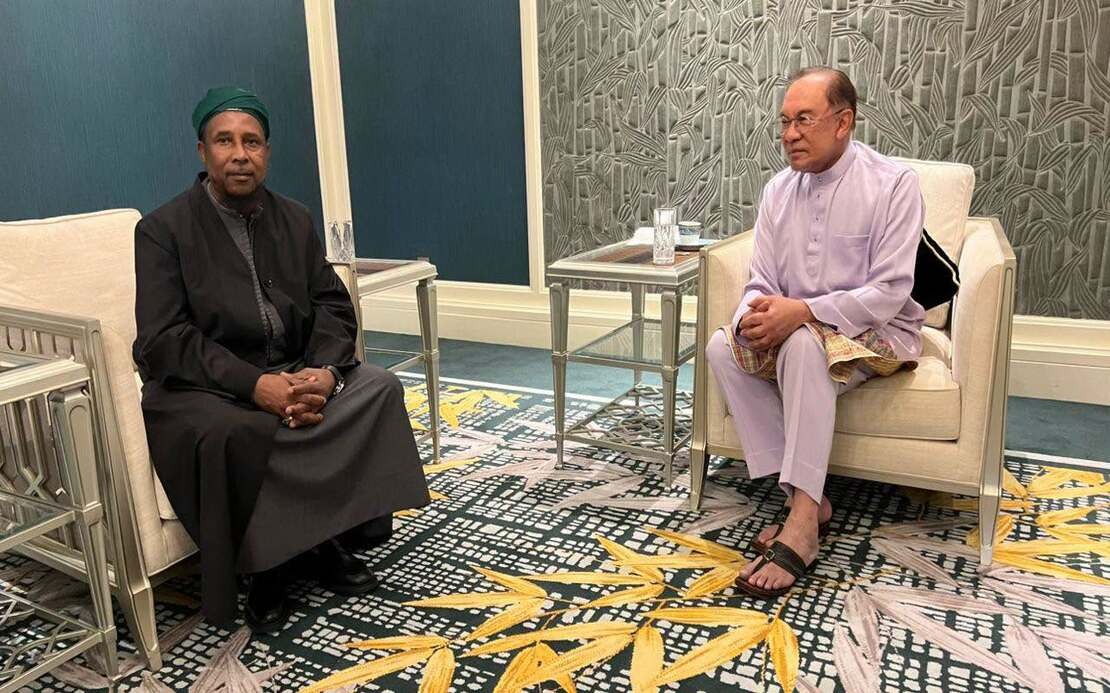
Prime Minister Datuk Seri Anwar Ibrahim extended a formal farewell reception to distinguished Gambian Islamic scholar Sheikh Muhammad Haydara Al-Jilani on Wednesday, June 26, concluding the religious leader's extended month-long engagement across Malaysia. The encounter between the two figures took on added significance as it coincided with the Day of Ashura, a date of considerable spiritual importance in the Islamic calendar, falling on what Anwar noted was a blessed Friday.
During the audience at the Prime Minister's office, Anwar seized the opportunity to request special supplications from the scholar on behalf of Malaysia and its citizens. According to the Premier's statement released through his official Facebook platform, he specifically sought the Sheikh's prayers for the nation's continued prosperity, internal stability, and the comprehensive welfare of all Malaysians. The timing of this spiritual request reflected the Prime Minister's inclination to leverage the religious significance of Ashura week for national prayers and blessings.
Sheikh Muhammad Haydara Al-Jilani's visit to Malaysia represented a significant cultural and religious exchange initiative, organised as part of a broader dakwah, or Islamic outreach, programme. Throughout his tenure in the country, the Gambian scholar orchestrated an expansive calendar of religious gatherings and educational sessions strategically positioned at multiple venues throughout the Malaysian peninsula and beyond. These programmes were designed to facilitate knowledge-sharing among Malaysian Muslim communities and to deepen understanding of Islamic teachings through direct engagement with an internationally recognised Islamic figure.
The scholar's month-long residency underscores Malaysia's continued commitment to fostering international Islamic scholarship and cross-cultural religious dialogue. Such visits by prominent Islamic figures from Africa and the wider Muslim world have become increasingly important in Malaysia's diplomatic and cultural strategy, particularly under Anwar's administration, which has emphasised interfaith understanding and the promotion of moderate Islamic values across the region.
Gambian-Malaysian religious ties have historically been characterised by mutual respect and scholarly exchange, though high-profile visits by prominent African Islamic scholars remain relatively selective events in Malaysia's calendar. Sheikh Muhammad Haydara Al-Jilani's comprehensive tour suggests a deliberate effort to introduce Gambian Islamic scholarship and methodologies to Malaysian audiences, potentially enriching local religious discourse with perspectives from West African Islamic traditions.
The dhikr programmes conducted by the visiting scholar—referring to the Islamic spiritual practice of remembrance of God through recitation and meditation—represent a particular avenue through which Islamic knowledge and devotional practices are transmitted to wider audiences. Such gatherings have proven effective in Malaysia's urban and suburban communities as vehicles for deepening spiritual commitment whilst simultaneously fostering community cohesion among participants from diverse socioeconomic backgrounds.
From a broader geopolitical perspective, the reception afforded to Sheikh Muhammad Haydara Al-Jilani reflects Malaysia's positioning as a hub for Islamic learning and dialogue within Southeast Asia. The country's openness to hosting international Islamic scholars and facilitating their outreach activities enhances its reputation as a centre of moderate Islamic thought, a dimension particularly relevant given contemporary global conversations surrounding Islam and modernity.
The Prime Minister's personal involvement in bidding farewell to the scholar—rather than delegating the task to ministerial subordinates—signals the significance Anwar's administration attaches to such religious and cultural engagements. This direct engagement demonstrates the Premier's investment in promoting Malaysia as an inclusive space where international religious figures can conduct their scholarly and spiritual missions without impediment.
As Sheikh Muhammad Haydara Al-Jilani concluded his Malaysian sojourn, the reverberations of his month-long presence were likely to extend beyond his physical departure. The knowledge imparted during his gatherings, the networks established with local Islamic institutions, and the broader exposure of Malaysian Muslim communities to Gambian Islamic scholarship collectively constitute a lasting contribution to Malaysia's evolving Islamic intellectual landscape. Future collaborations between Malaysian religious organisations and Gambian counterparts may well be facilitated by the groundwork established during this visit.

