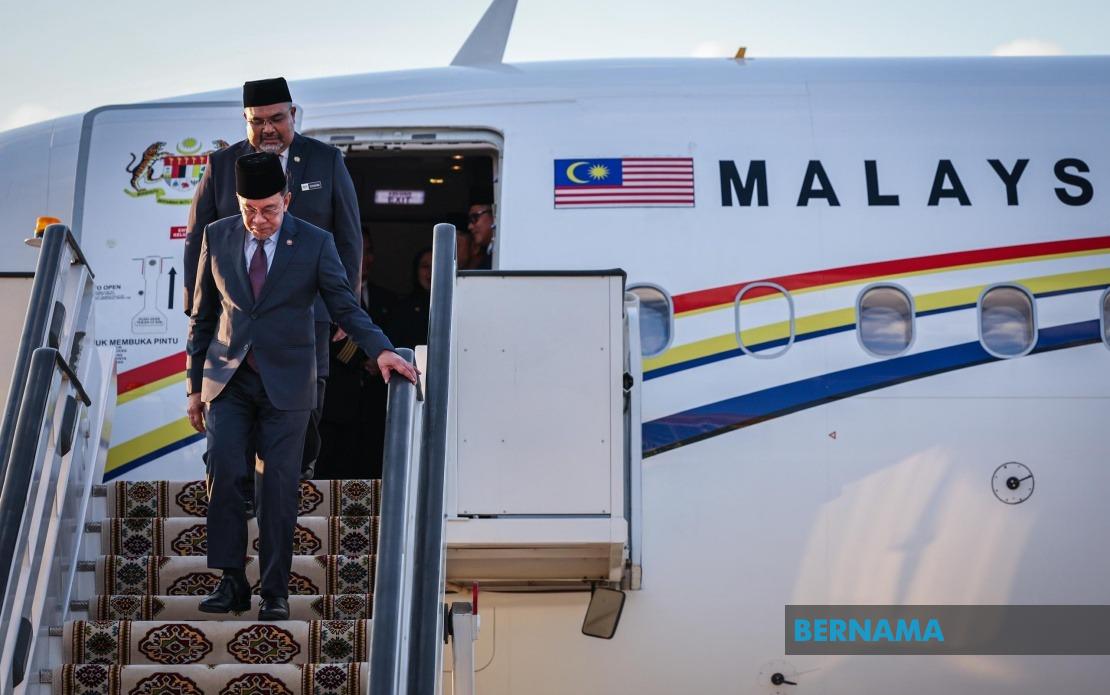
Prime Minister Datuk Seri Anwar Ibrahim touched down in Ashgabat on June 18, concluding his Central Asian tour with a high-profile visit to Turkmenistan, a resource-rich nation strategically positioned between Europe and Asia. The aircraft carrying Malaysia's leader landed at Ashgabat International Airport at 8 pm local time, marking the beginning of an official engagement that carries significant implications for bilateral cooperation and Malaysia's broader positioning within Central Asia's evolving geopolitical landscape.
The delegation accompanying Anwar reflects the multidimensional nature of this visit, encompassing trade, investment, and diplomatic dimensions. Minister of Investment, Trade and Industry Datuk Seri Johari Abdul Ghani and Minister of Economy Akmal Nasrullah Mohd Nasir joined the prime minister, alongside supporting officials from both the Prime Minister's Office and Malaysia's Foreign Ministry. This composition signals that economic engagement stands at the forefront of discussions, complementing the traditional diplomatic courtesies that characterise state visits.
Turkmenistan President Serdar Berdimuhamedov personally extended the invitation, a gesture that reciprocates his official visit to Malaysia in December 2024. This reciprocal pattern underscores a relationship moving beyond episodic engagement toward sustained institutional dialogue. For Malaysia, the significance of this visit extends beyond bilateral niceties. This marks Anwar's inaugural trip to Turkmenistan as prime minister and the fifth such visit by a Malaysian premier to the country, indicating a relationship with historical roots yet contemporary relevance.
On the opening evening, Anwar is scheduled to engage with Malaysia's diaspora community in Ashgabat, a tradition that allows Malaysian leaders to connect with citizens abroad and reinforce cultural and national identity. This event serves a dual purpose: strengthening ties with expatriates while projecting Malaysia's regional presence to the local Turkmen audience. The following day, June 19, promises a substantive agenda. A formal welcoming ceremony at the Presidential Palace will precede bilateral discussions between Anwar and President Berdimuhamedov, during which both leaders are expected to sign a joint statement and exchange previously negotiated agreements and memoranda of understanding.
The scheduled lunch reception and prayer at the Turkmenbashi Ruhy Mosque represent the ceremonial dimension of statecraft, affording opportunities for informal conversation and demonstrating respect for local customs and religious traditions. Such symbolic gestures carry weight in Central Asian diplomatic culture. The joint Malaysia-Turkmenistan Forum at the Chamber of Commerce and Industry promises substantive business engagement, creating a platform for private sector actors from both nations to explore investment and trade opportunities.
Economically, Turkmenistan's significance to Malaysia warrants careful attention. In 2025, the country ranked as Malaysia's fourth-largest trading partner among Central Asian nations, a position reflecting energy interdependencies and growing commercial ties. Two-way trade reached RM75.80 million, with Malaysia exporting goods valued at RM75.50 million, representing a nine per cent increase from the preceding year. While these figures may appear modest compared to Malaysia's trade with larger partners, they reflect the foundation upon which deeper engagement may be built.
The most substantial economic anchor in the Malaysia-Turkmenistan relationship is Petronas, Malaysia's national oil company. Turkmenistan's hydrocarbon wealth and strategic importance in energy markets have attracted sustained investment from the Malaysian energy giant. Since 1996, Petronas has channeled RM52.73 billion into Turkmenistan's petroleum sector, establishing the company as a significant foreign investor in the country's economy. This long-term commitment demonstrates confidence in the stability of the relationship and Turkmenistan's energy sector prospects, particularly as global energy transitions unfold.
Turkmenistan itself occupies a complex position within Central Asia's political economy. Ranked among the world's largest natural gas reserves, the nation has positioned itself as a crucial energy exporter to surrounding regions. However, the country has historically maintained a non-aligned foreign policy, a stance that offers flexibility in international relations but also carries constraints. For Malaysia, engagement with Turkmenistan represents an opportunity to diversify Southeast Asian diplomatic and economic relationships beyond traditional East Asian and Middle Eastern partners.
The timing of this visit coincides with broader developments in global energy markets and geopolitical realignment. Central Asia's strategic importance has intensified as supply chains diversify and nations seek alternative partnerships. Malaysia's proactive engagement in the region signals recognition of these evolving dynamics. Furthermore, as Malaysia pursues economic diversification and seeks to expand its global footprint, building substantive relationships with energy-rich Central Asian nations offers tangible benefits, particularly for companies like Petronas seeking upstream opportunities.
Bilateral cooperation frameworks established during this visit carry implications extending beyond immediate commercial transactions. Agreements signed during Anwar's visit will likely address not only petroleum cooperation but potentially areas such as education, cultural exchange, and political dialogue. These deeper institutional linkages create resilience in bilateral relationships, ensuring that ties persist even when immediate economic incentives fluctuate.
From a Malaysian domestic perspective, Anwar's visit demonstrates the government's commitment to expanding Malaysia's international engagement and presenting the nation as a capable regional actor engaged across multiple continents. This multipronged diplomatic approach serves to enhance Malaysia's soft power and positioning in global affairs. For Turkmenistan, the visit from a Southeast Asian premier signals the country's growing relevance in intercontinental partnerships, particularly as nations from different regions increasingly recognize Central Asia's importance.
The success of this visit will be measured not merely in diplomatic ceremonies or ceremonial photographs but in the substantive agreements reached and their subsequent implementation. Whether the joint statement and memoranda of understanding translate into expanded trade, deepened Petronas involvement, or enhanced people-to-people exchanges will determine whether this visit represents a singular event or an inflection point in Malaysia-Turkmenistan relations. As both nations navigate complex international environments, the relationship established during these two days in Ashgabat carries potential for mutually beneficial long-term cooperation.

