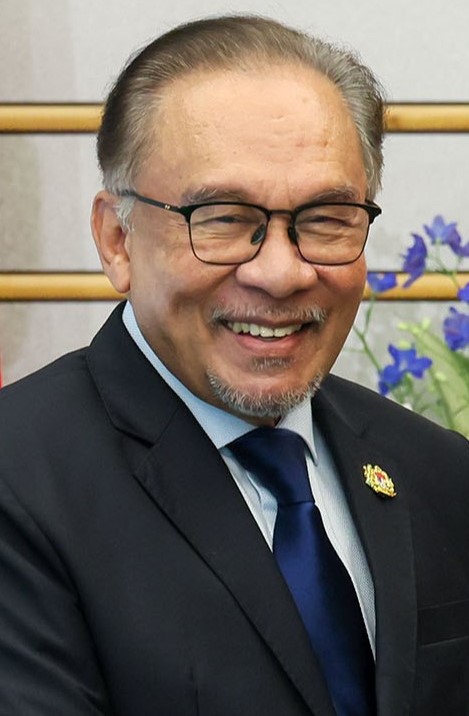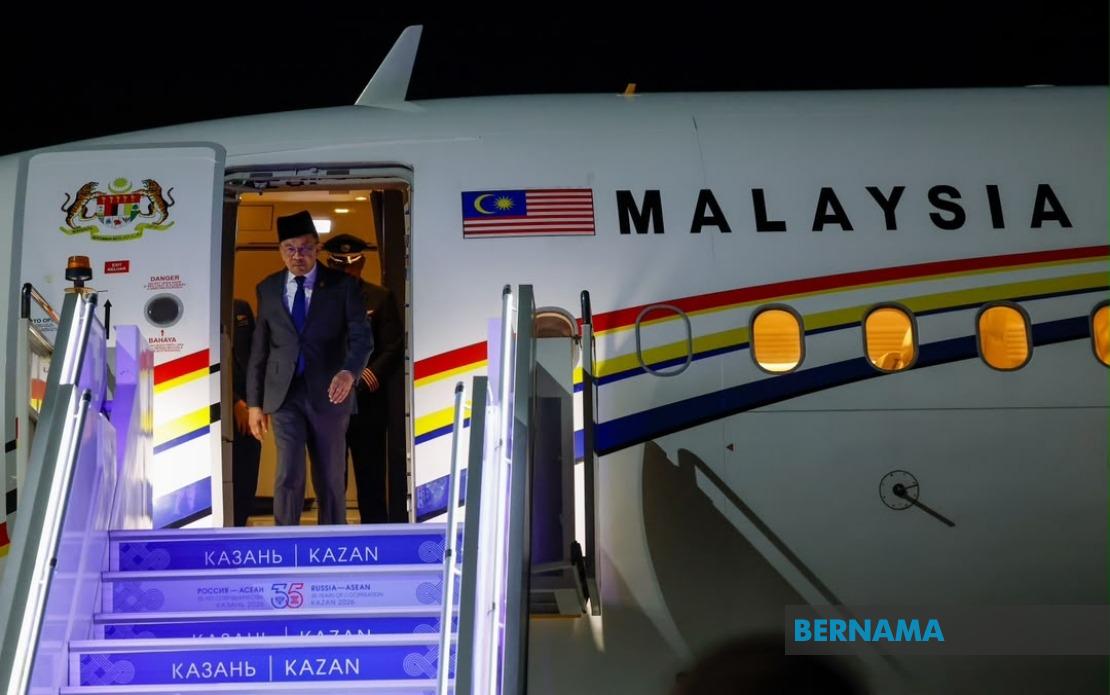
Prime Minister Datuk Seri Anwar Ibrahim touched down in Kazan on June 16 for a two-day working visit centred on the ASEAN-Russia Commemorative Summit scheduled for June 17-18. The delegation's aircraft landed at Kazan International Airport late Tuesday evening, positioning Malaysia at the heart of what promises to be a significant diplomatic engagement between the ten-member ASEAN bloc and the Russian Federation at a moment of considerable geopolitical flux.
Accompanying Anwar were several key economic and diplomatic figures, including Minister of Investment, Trade and Industry Datuk Seri Johari Abdul Ghani and Minister of Economy Akmal Nasrullah Mohd Nasir, along with representatives from the Prime Minister's Office and Foreign Ministry. Malaysia's Ambassador to Russia Datuk Cheong Loon Lai received the prime minister upon arrival, while the Russian side deployed senior officials including Ilya Nachvin, Minister of Digital Development of Tatarstan, Kazan Mayor Ilsur Metshin, and members of the State Protocol Department. This ceremonial reception underscores the formal significance both capitals attach to the occasion.
The summit itself carries symbolic weight for Southeast Asia's relationship with Moscow, marking the 35th anniversary of a partnership formally established in Kuala Lumpur in 1991. Three decades of engagement have evolved through changing international circumstances, from the Cold War's aftermath through the post-9/11 era and into today's multipolar world. The commemorative nature of this gathering provides an opportune moment for both parties to assess what has been achieved and recalibrate expectations for future collaboration.
Several substantive outcome documents are expected to emerge from the two-day proceedings, signalling the breadth and depth of the intended partnership. The Kazan Declaration will commemorate the three-decade milestone, while separate joint statements on energy cooperation and cultural initiatives will address specific sectors deemed critical to regional stability and prosperity. Perhaps most significantly, delegations are anticipated to adopt a comprehensive action plan stretching from 2026 through 2030, establishing a roadmap for sustained engagement across multiple domains.
The cooperation framework encompasses an expansive array of domains reflecting both contemporary challenges and mutual interests. Trade and investment feature prominently, given Malaysia's position as a Southeast Asian economic hub and Russia's resource wealth. Energy cooperation holds particular relevance in an era of global supply chain vulnerabilities and Asia's growing hunger for diverse energy sources. Food security has emerged as an increasingly urgent agenda item across ASEAN, particularly following pandemic-related disruptions to agricultural markets. Digital economy integration aligns with the region's broader technological ambitions, while science, technology, culture, education, tourism and people-to-people exchanges represent the softer infrastructure binding nations together.
This Malaysian participation in the summit reflects a carefully calibrated strategy to advance what Kuala Lumpur terms ASEAN Centrality—the principle that the association of Southeast Asian nations should remain the primary driver of regional architecture and dialogues. By positioning itself at multilateral gatherings with significant powers, Malaysia reinforces ASEAN's claim to shape outcomes affecting its members' security and prosperity. In an increasingly fragmented global environment where great powers compete for influence, ASEAN's collective voice carries weight precisely because it claims to represent diverse interests without aligning rigidly with any single bloc.
Beyond the formal summit proceedings, Anwar is anticipated to hold bilateral discussions with Russian President Vladimir Putin and with the Rais of Tatarstan, alongside engagements with fellow ASEAN leaders attending the summit. These bilateral moments allow for discussion of bilateral concerns and the advancement of specifically Malaysian interests within the broader multilateral framework. Historical precedent suggests such conversations will touch on trade expansion, defence cooperation, and regional security dynamics.
Among Anwar's stated priorities during the visit are advocacy for dialogue and peace resolution in global conflicts, support for economic resilience amid uncertain times, advancement of energy and food security measures, and deepening of interpersonal connections between Russian and Malaysian societies. These objectives reflect Malaysia's broader foreign policy stance as a nation seeking stability and predictable engagement across its diplomatic relationships while avoiding ideological confrontation.
This Kazan visit constitutes Anwar's third venture to Russian territory since assuming the premiership in November 2022, signalling consistent engagement despite the geopolitical challenges Russia has faced. His previous journey to Russia came in September 2024 when he attended the Eastern Economic Forum in Vladivostok, offering opportunities to connect with regional business leaders and explore far-eastern cooperation possibilities. Most recently, Anwar visited Moscow in May 2025 for official discussions with Putin covering trade, investment, agriculture, education, aerospace and energy cooperation—domains that remain relevant to the Kazan discussions.
The accumulation of these visits suggests that the Malaysian government views sustained engagement with Russia as strategically important despite external pressures and changing international alignments. For Malaysia, which pursues a policy of strategic autonomy rather than formal alliance membership, maintaining substantive relationships with multiple powers including Russia serves to preserve room for manoeuvre and protect national interests from great power competition.
The summit's timing occurs amid broader shifts in the international system, with non-Western nations increasingly asserting their agency in shaping regional outcomes. ASEAN's engagement with Russia through this commemorative summit demonstrates the association's determination to maintain relationships across the international spectrum while pursuing its own agenda. For Malaysia specifically, the visit reinforces its role as a significant player within ASEAN's diplomatic architecture and its commitment to bridge-building among diverse international partners.