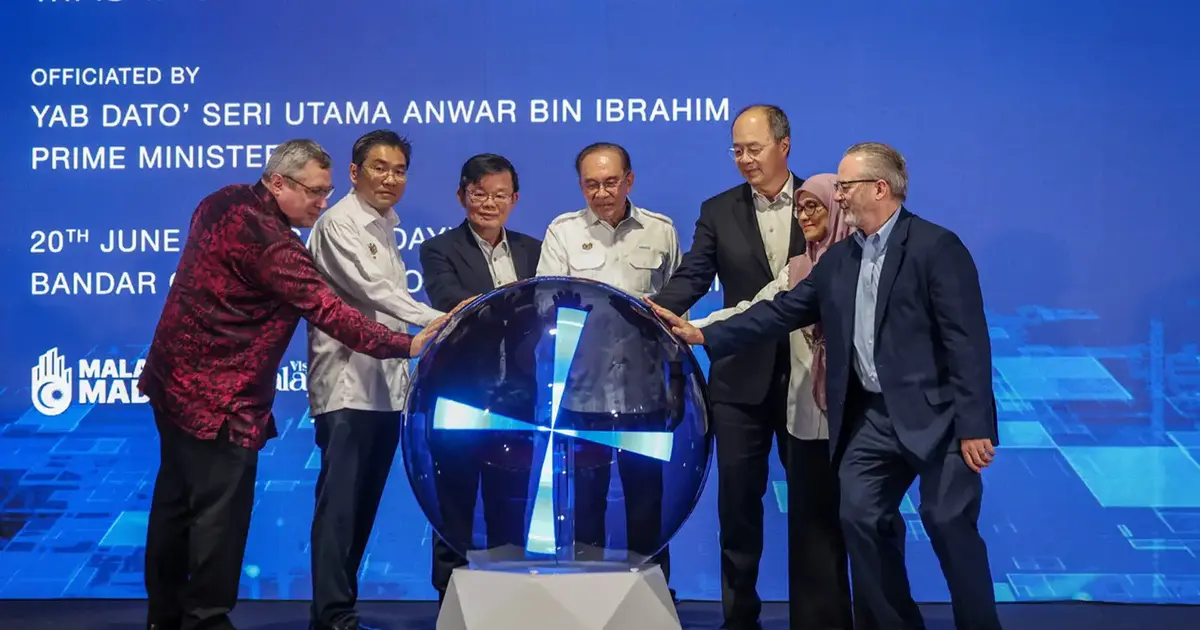
Prime Minister Anwar Ibrahim has moved to strengthen Malaysia's position in the global semiconductor value chain by appointing a dedicated adviser to coordinate efforts between the technology industry and universities across the nation. The appointment signals the government's commitment to leveraging academic research capabilities to support one of the country's most strategically important economic sectors.
The decision reflects growing recognition within the Anwar administration that closer partnership between tertiary education institutions and semiconductor manufacturers can accelerate innovation, talent development, and the transfer of cutting-edge knowledge from campus laboratories to commercial production environments. Malaysia's semiconductor industry, which has historically served as a crucial manufacturing hub for global chipmakers, now faces pressure to move up the value chain and develop local expertise in design, research, and high-margin segments of chip production.
What distinguishes this appointment from other government initiatives is the prime minister's explicit assurance that the advisory role will not generate additional expenditure for the public purse. This cost-neutral approach reflects broader fiscal constraints facing the Malaysian government while simultaneously demonstrating that coordination and strategic facilitation can sometimes yield results without substantial new investment. The arrangement suggests that the adviser's mandate will centre on catalysing connections and removing bureaucratic obstacles rather than deploying fresh capital.
The semiconductor sector holds particular importance for Malaysia's economic future. The country hosts manufacturing facilities operated by major international chipmakers and has traditionally captured significant value through assembly, testing, and packaging operations. However, as global competition intensifies and countries worldwide invest heavily in semiconductor capabilities, Malaysia risks being sidelined if it remains dependent solely on manufacturing outsourcing. Universities possess research strengths in materials science, electronics engineering, and nanotechnology that could contribute meaningfully to advancing local semiconductor capabilities.
Universities in Malaysia have produced researchers with expertise spanning semiconductor physics, microelectronics design, and device fabrication. Yet historically, meaningful translation of this academic research into industry applications has remained limited compared with other regional competitors. The new advisory role aims to bridge this persistent gap by creating formal mechanisms for dialogue, identifying collaborative research opportunities, and facilitating student and researcher engagement with industry practitioners. This intermediary function can prove invaluable in aligning academic research agendas with commercial needs.
The appointment arrives amid global semiconductor supply chain reassessment. The United States, European Union, and several Asian governments have launched ambitious domestic semiconductor strategies, recognising the technology's critical importance to national security and economic competitiveness. China has poured billions into supporting its semiconductor industry. Within this context, Malaysia must differentiate its offerings and maintain competitiveness by focusing on specialised niches where it can leverage existing strengths, including a skilled workforce and established manufacturing infrastructure combined with emerging academic capabilities.
For Malaysian universities, the initiative opens pathways for expanded research funding and industry partnerships without necessarily requiring substantial government budget increases. Academic institutions can potentially attract industry investment for laboratory facilities, equipment, and collaborative research programmes. Companies benefit from access to research talent and emerging graduates with contemporary skills aligned with industry requirements. Students gain exposure to real-world engineering challenges and employment prospects, enhancing the value proposition of science and engineering programmes.
The adviser's role will likely encompass several interconnected responsibilities. These may include mapping existing research capabilities across Malaysian universities and identifying alignment with industry needs, facilitating formation of industry-academic consortia focused on priority research areas, supporting student internship and graduate recruitment programmes, and advising on curriculum development to ensure relevance to evolving industry demands. Effective execution requires diplomacy and deep understanding of both academic and commercial cultures, which often operate according to different timelines and incentives.
Southeast Asia more broadly stands to benefit from strengthened Malaysian semiconductor capabilities. Singapore dominates the region's high-value semiconductor design and research sectors, while Vietnam and Thailand have attracted increasing manufacturing investment. Malaysia possesses the institutional foundations and industrial base to carve out a distinctive regional role, particularly in bridging manufacturing excellence with research innovation. Stronger industry-university collaboration represents a credible pathway toward that positioning without requiring wholesale economic restructuring.
For Malaysian policymakers, this appointment reflects a pragmatic recognition that government's role increasingly involves facilitating and coordinating between economic actors rather than directly providing capital or services. The cost-neutral framing appeals to fiscal realities while acknowledging that strategic coordination can generate substantial value. Success will depend substantially on the adviser's credibility, network, and ability to navigate competing interests within both academic and commercial sectors.
The initiative may also serve as a template for sectoral development across other high-technology industries where Malaysia maintains existing capabilities but requires strengthened innovation ecosystems. Biotechnology, advanced manufacturing, and renewable energy sectors similarly benefit from closer industry-academic integration. If the semiconductor initiative produces demonstrable results, it could encourage broader adoption of similar advisory and coordination mechanisms across the economic landscape.
The true test of this appointment will emerge through concrete collaboration outcomes: research partnerships that advance commercial applications, graduate programmes that reduce industry recruitment challenges, and Malaysian-origin innovations that gain market traction. These metrics will ultimately determine whether strategic coordination alone can significantly enhance Malaysia's semiconductor sector positioning, or whether more substantial investment and policy interventions remain necessary.

