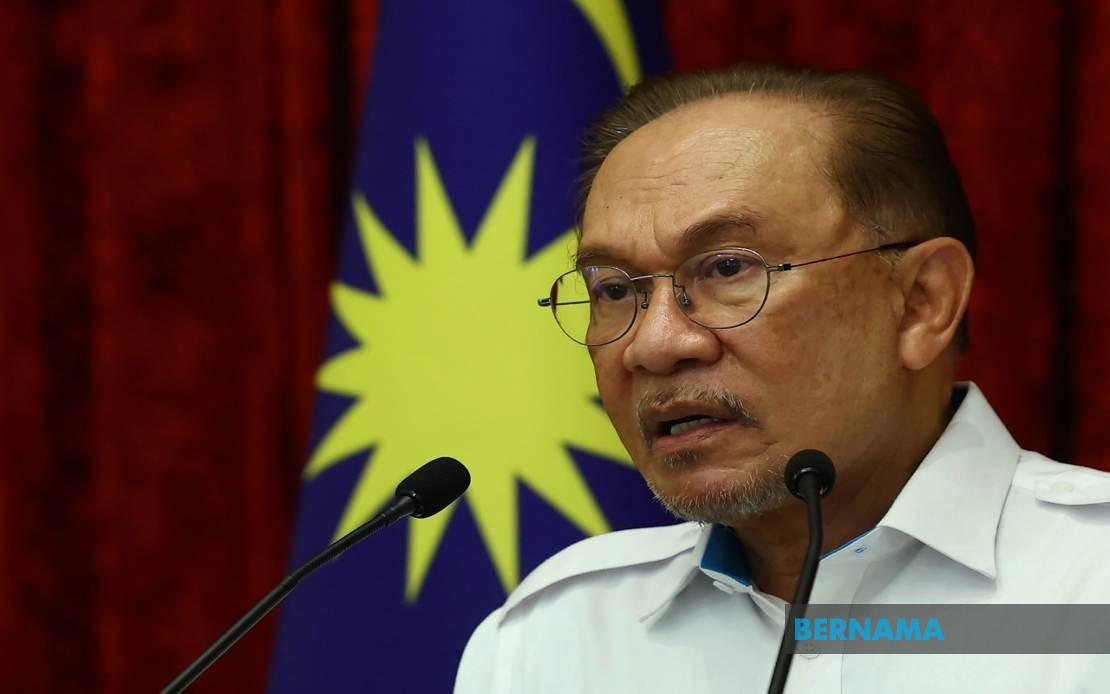
Prime Minister Datuk Seri Anwar Ibrahim has conveyed his apologies for not attending today's Special Sitting of the Dewan Rakyat, where lawmakers are set to examine findings from the Royal Commission of Inquiry (RCI) into Tabung Haji, Malaysia's Islamic pilgrimage fund. Through a statement issued by his senior press secretary Tunku Nashrul Abaidah, the Prime Minister indicated that his current medical circumstances prevent his physical presence at parliament, though he remains engaged with the proceedings.
The 79-year-old Prime Minister, who just celebrated his birthday yesterday, is presently recuperating from a surgical intervention. According to a Facebook statement from Datuk Dr Asri Ranga Abdullah Ramaiah, who heads his medical team, Anwar underwent an elective laparoscopic procedure to address a para-umbilical hernia—a relatively common condition where tissue protrudes through the abdominal wall near the navel. The minimally invasive nature of laparoscopic surgery typically permits faster recovery than traditional open procedures, though post-operative care remains essential.
The Prime Minister's office stressed that while his direct participation in today's debate proves impossible, his commitment to the matter remains unwavering. The statement emphasised that Anwar will maintain close oversight of the parliamentary discussions, underscoring his determination to ensure that public trust in this significant Islamic financial institution continues to receive proper attention and protection. This assurance carries particular weight given the RCI's investigation into Tabung Haji's operations—an institution managing savings from millions of Malaysian Muslims preparing for the hajj pilgrimage.
Tunku Nashrul reported positive developments in Anwar's health trajectory, noting that his condition shows measurable improvement since the procedure. The Prime Minister continues receiving physiotherapy administered under the careful supervision of a dedicated medical specialist team, a standard protocol following hernia surgery to promote proper healing and restore abdominal strength. The structured rehabilitation programme reflects the comprehensive nature of his medical care during this recovery phase.
The timing of Anwar's medical intervention comes as parliament addresses the RCI findings on Tabung Haji—an investigation of considerable significance for Malaysia's Islamic finance sector and the Muslim community at large. The special sitting represents an important opportunity for parliamentary scrutiny and public accountability regarding the institution's management and governance. Though Anwar's physical absence limits his direct participation in floor discussions, his continued engagement with proceedings demonstrates the priority placed on this portfolio even during a period demanding medical attention.
The Prime Minister's office also conveyed his gratitude toward the numerous individuals who have offered prayers, well-wishes, and expressions of support during his health challenges. Such gestures of concern from the public and political colleagues reflect broader well-wishing toward the nation's leader during his recovery period. The acknowledgment of these messages serves to reinforce the personal bonds between political leadership and constituents during times of vulnerability.
Tabung Haji's operations and governance have long constituted a matter of public and religious importance, with millions of Malaysian Muslims relying on the institution to facilitate their religious obligations. The RCI's investigation into its management represents a significant governance review, addressing issues that extend beyond routine financial administration to encompass stewardship of funds entrusted for deeply spiritual purposes. Parliamentary debate on the RCI findings therefore carries weight that transcends ordinary budget or policy discussions, touching upon institutional integrity and public confidence in Islamic financial structures.
For Malaysian lawmakers, today's special sitting provides opportunity to interrogate the RCI's findings, propose remedial measures, and reassure stakeholders regarding institutional reforms. The absence of the Prime Minister, while necessitated by legitimate health concerns, may somewhat diminish executive presence at these proceedings. Nevertheless, government response to the RCI report will likely be articulated through cabinet ministers and parliamentary representatives present in the chamber, ensuring that the executive position receives proper airing alongside opposition and backbench contributions.
Anwar's commitment to monitoring the debate from his recovery location underscores a pattern observed among senior political figures who must balance health exigencies with governmental responsibilities. Modern communication technologies enable remote engagement with parliamentary proceedings, permitting the Prime Minister to remain informed of key developments, statements, and recommendations emerging from the special sitting. This capability, while no substitute for direct parliamentary participation, provides a mechanism through which he can maintain awareness and subsequently direct government responses to parliament's deliberations.
The Prime Minister's age—now 79—inevitably invites consideration of succession planning and the sustainability of concentrated executive authority. Medical events, even when successfully managed, prompt reflection among political observers regarding institutional continuity and the bench strength of Malaysia's political leadership. The smooth operation of government functions during Anwar's recovery period demonstrates that institutional mechanisms continue functioning appropriately, with cabinet colleagues and appointed officials executing their respective responsibilities.

