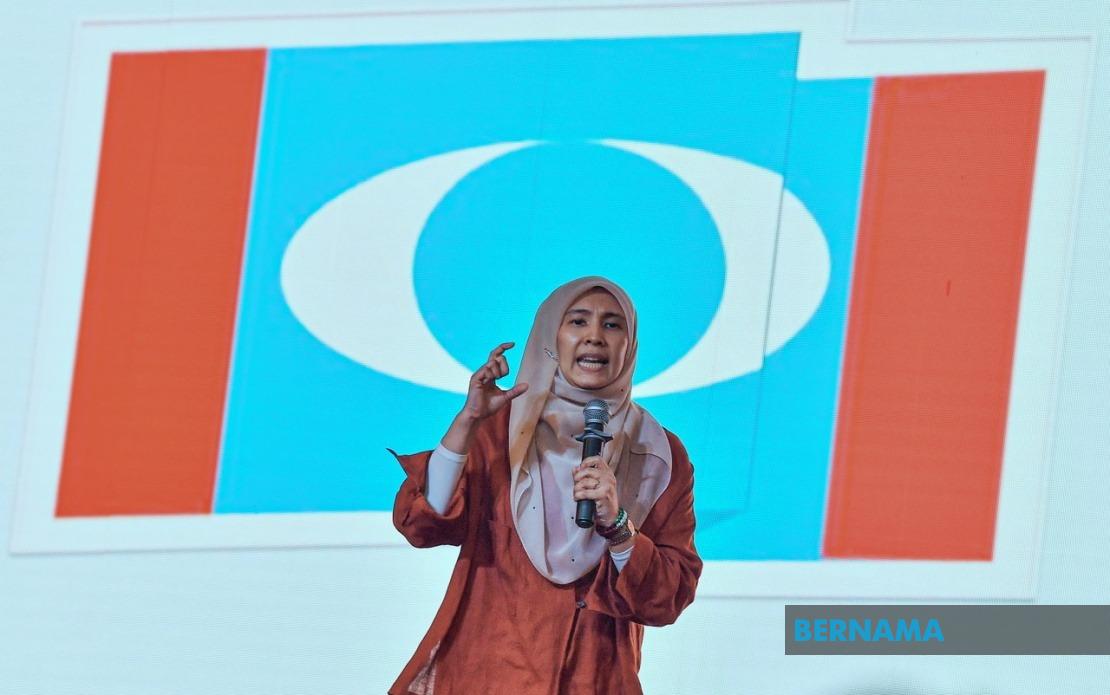
The People's Justice Party (PKR) has approved a significant leadership adjustment, granting Deputy President Nurul Izzah Anwar a temporary leave of absence from her position. The decision, reached by the party's Central Leadership Council (MPP) in a meeting on August 6, comes as the party navigates internal restructuring ahead of its 2026 National Congress. PKR Information Chief Datuk Seri Fahmi Fadzil announced that the arrangement will take effect following the National Congress, with the exact duration to be confirmed at a later date.
Nurul Izzah, daughter of Prime Minister Anwar Ibrahim, submitted a request to step down from her deputy presidential role, and the leadership council unanimously accepted the proposal. The move signals a strategic realignment within PKR's upper echelon as the party prepares for upcoming internal elections and consolidates its organisational structure. Fahmi, who also serves as Minister of Communications, emphasised that the decision followed constructive deliberations with both Nurul Izzah and the broader leadership on the best path forward for the party.
To ensure continuity and effective administration, PKR Vice-President Datuk Seri Saifuddin Nasution Ismail will assume the Deputy President's responsibilities on an interim basis. This arrangement allows the party to maintain operational stability while accommodating Nurul Izzah's request. Saifuddin, who has held various senior positions within the party, is tasked with overseeing the deputy presidential portfolio until a permanent successor is determined, potentially through the upcoming party elections.
Nurul Izzah will maintain certain ceremonial and representational duties in the interim period. She is scheduled to officiate the PKR Women's and Youth Wing congresses on August 14, demonstrating her continued involvement in party affairs despite the broader leave arrangement. These congresses serve as important forums for grassroots mobilisation and youth engagement, roles traditionally significant within Malaysia's major political parties. Her presence at these events underscores that the leave is administrative rather than a complete withdrawal from party responsibilities.
The 2026 PKR National Congress, slated for August 15 to 16 in Melaka, represents a critical juncture for the party's future direction and leadership composition. The congress will provide a platform for the broader membership to engage with party priorities and positions. The timing of Nurul Izzah's leave arrangement, scheduled to commence after this congress, suggests that the party intends to allow for comprehensive internal evaluation and restructuring during the gathering.
Parallel to this leadership change, the MPP approved the transfer of the Election Director position to party Vice-President Datuk Seri Amirudin Shari on a full-time basis. This consolidation of electoral responsibilities under Amirudin reflects PKR's preparations for upcoming electoral cycles, particularly with the next general election potentially approaching. The Election Director role carries considerable weight in Malaysian political parties, overseeing campaign strategies, candidate selection processes, and electoral logistics.
The council also addressed the outcomes of recent state elections in Johor and Negeri Sembilan, formally accepting and acknowledging the results. In a gesture of recognition, PKR expressed gratitude toward former Negeri Sembilan Menteri Besar Datuk Seri Aminuddin Harun for his two-term tenure in the position. Such acknowledgements reflect the party's commitment to recognising the contributions of senior figures, even as electoral fortunes fluctuate across different states and administrative divisions.
In parallel administrative matters, the MPP approved the registration of 3,533 newly recruited members who joined the party through online channels between July 12 and August of the current year. This substantial intake suggests healthy grassroots mobilisation, with digital recruitment proving an effective mechanism for party growth. Membership expansion is strategically important for PKR as it strengthens the party's ground organisational capacity ahead of future electoral contests and internal elections.
For Malaysian political observers, the restructuring carries implications beyond PKR itself. Leadership transitions within coalition parties directly influence the stability and dynamics of the federal government, particularly given PKR's central role in the ruling Pakatan Harapan coalition. Nurul Izzah's stepping back, while temporary, reflects considerations about workload distribution and organisational effectiveness that are becoming more pronounced across major Malaysian political parties.
The succession arrangements also highlight how Malaysian political parties are experimenting with interim leadership structures to balance institutional continuity with the flexibility to accommodate individual circumstances. Rather than permanent departures or contested elections, temporary leave arrangements allow senior figures to address personal or professional priorities whilst maintaining party stability. This pragmatic approach may become increasingly relevant as Malaysia's political landscape matures and complex governance demands compete with internal party management.
Regionally, PKR's internal restructuring occurs within a broader context of coalition politics in Southeast Asia where partner parties regularly navigate sensitive leadership transitions. The transparent announcement of these changes, through formal party channels and established communication protocols, demonstrates institutional maturity in managing sensitive personnel matters within the broader context of coalition governance.
Looking ahead, the 2026 National Congress will provide clearer visibility on PKR's longer-term leadership composition and whether Nurul Izzah's leave becomes permanent or she returns to an executive position. The congress will also determine whether the interim arrangements crystallise into formal restructuring or revert to previous configurations following internal elections.

