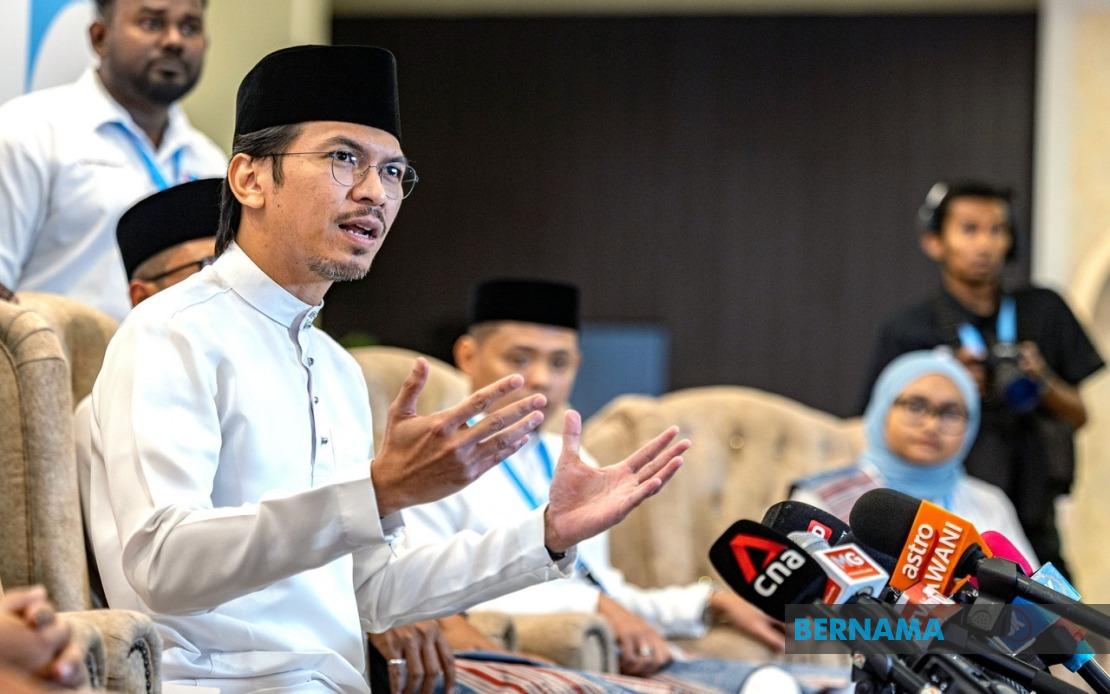
The Parti Keadilan Rakyat's youth wing has moved to reassure the party faithful that recent member departures pose no threat to institutional stability or operational effectiveness, even as rival political movements claim to have attracted defectors from the party's ranks. Speaking during the 2026 Angkatan Muda Keadilan National Congress at the Melaka International Trade Centre, AMK chief Muhammad Kamil Ahmad Munim characterised the exodus as marginal and insufficient to disrupt the party's functioning or undermine its broader strategic direction.
Muhammad Kamil's comments represent a direct response to assertions by Parti Bersama Malaysia co-founder Datuk Seri Rafizi Ramli, who recently highlighted that approximately 25 per cent of the newly formed party's membership originated from PKR. The claim had implicitly suggested meaningful hemorrhaging of PKR support, a charge that the youth wing leadership has now contested. While acknowledging that some members have indeed chosen to exit the party—citing diminished confidence in its direction—Muhammad Kamil emphasised that such decisions reflected individual preference rather than systemic failure. The youth wing's measured tone suggests an attempt to prevent internal anxiety whilst maintaining public composure during what appears to be a period of political flux.
In quantifying the departures, Muhammad Kamil refrained from citing exact percentages but indicated that available data from party structures pointed to numbers that remain negligible relative to PKR's overall membership. This vagueness, whilst politically convenient, underscores the difficulty in obtaining precise figures during periods of internal churn. Nevertheless, he pointed to the substantial turnout of delegates at the ongoing AMK congress as tangible evidence of continued grassroots commitment and determination to remain affiliated with PKR. Such participation, he argued, reflected deeper organisational momentum rather than the dwindling support that defection narratives might suggest.
The stability narrative also encompasses the party's continued operational capacity despite the extended absence of deputy president Nurul Izzah Anwar, who is currently on leave from her formal responsibilities. Rather than presenting this absence as problematic, Muhammad Kamil framed it as manageable within a clearly structured governance framework. He highlighted the active roles of vice-president Datuk Seri Saifuddin Nasution Abdullah and PKR election director Datuk Seri Amirudin Shari in maintaining continuity and execution of party directives.
For Malaysian political observers, the distinction drawn by the youth wing leadership carries analytical significance. The delegation of responsibilities across multiple senior figures suggests PKR has constructed institutional redundancy sufficient to weather temporary absences by individual leaders. This structural approach represents a calculated defence against the notion that any single personality's unavailability threatens organisational viability—a particularly relevant argument in Malaysian politics, where personalities often dominate factional alignments. By emphasising distributed decision-making authority, Muhammad Kamil sought to normalise Nurul Izzah Anwar's leave and forestall speculation about deeper dysfunction.
Communication with the grassroots has similarly been prioritised according to the youth wing chief's account. State and branch-level leadership has provided explanations regarding operational adjustments, which members have ostensibly received with acceptance and pragmatism. This emphasis on transparency and structured communication reflects awareness that permitting rumour and uncertainty to circulate among party activists could accelerate genuine defections. The proactive briefing of lower-tier organisational structures thus serves both informational and morale-sustaining functions.
The broader context illuminating these statements involves PKR's preparatory positioning ahead of state elections and the next general election cycle. Muhammad Kamil explicitly connected the party's organisational strengthening efforts to these electoral horizons, suggesting that internal consolidation constitutes a strategic priority. From this perspective, the public minimisation of defection concerns serves a dual purpose: it reassures committed members that PKR retains coherence and momentum, whilst simultaneously signalling to broader electorate that the party possesses the unified purpose necessary for electoral competition.
However, the repeated assertions about organisational stability merit careful reading. Political parties frequently emphasise cohesion most strenuously during periods of actual vulnerability, when defections risk creating cascading departures through demonstration effects. The specificity with which Muhammad Kamil addressed member concerns—acknowledging departures whilst insisting upon their insignificance—suggests these departures had sufficiently concerned party leadership to warrant formal rebuttal at a major party gathering. The youth wing's statement thus inadvertently confirms that member departures constitute a phenomenon requiring public address, even if the scale is characterised as trivial.
Regionally, the Malaysian situation reflects broader dynamics affecting opposition coalitions across Southeast Asia. As anti-establishment political forces mature into governing or near-governing entities, internal cohesion often fractures as competing visions for direction emerge and personality-based factions crystallise. PKR's experience with defections to Parti Bersama Malaysia exemplifies this phenomenon, as does the emergence of rival platforms articulating alternative progressive agendas. The ability of established opposition entities to retain membership whilst new competitors emerge represents a persistent challenge for established political movements.
Moving forward, the credibility of Muhammad Kamil's stability assertions will face practical testing through observable metrics: membership renewal rates, delegate turnout at future gatherings, electoral performance in state elections, and the trajectory of defections to rival entities. The youth wing's current messaging establishes a baseline against which subsequent developments can be measured. Should member departures accelerate beyond the characterised insignificance, the leadership's current statements will become subject to retrospective scrutiny regarding accuracy and transparency.
The positioning also reflects PKR's particular political moment. As a component of Malaysia's ruling coalition, the party occupies a fundamentally different structural position than when it functioned as unambiguous opposition. Governing status brings both legitimacy and exposure to the complicating realities of administrative responsibility. Some departing members may represent those whose opposition identity was integral to their political commitment, finding governance alignment fundamentally misaligned with underlying motivations. Acknowledging this possibility without explicitly stating it, Muhammad Kamil's measured response suggests sophisticated understanding of the multivalent forces driving contemporary political realignment in Malaysia.

