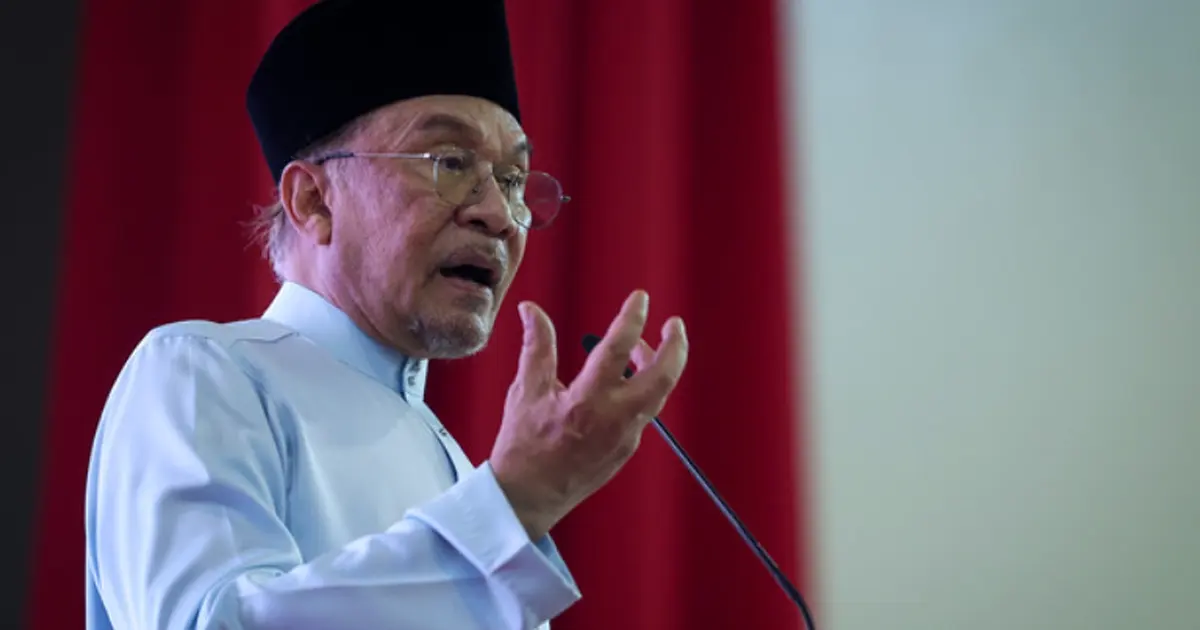
The relationship between Umno and PKR, cornerstone partners in Malaysia's current ruling coalition, faces fresh scrutiny following accusations from PKR Youth that the Islamic Malay party has proven ungrateful to Prime Minister Anwar Ibrahim. Huraimi Husri, youth leader of the Federal Territories chapter of Parti Keadilan Rakyat, has challenged Umno to recognise the assistance it received from Anwar during a period of severe institutional vulnerability, arguing that the party's subsequent conduct represents a fundamental breach of political trust.
The context underlying these tensions traces directly to the 15th general election held in November 2022, which produced a hung parliament unprecedented in modern Malaysian history. The outcome fractured the political landscape, leaving no single coalition with a clear mandate to govern. In this moment of constitutional uncertainty, the coalition-building that followed proved decisive. Umno, despite being the largest individual Malay-Muslim party in parliament, found itself isolated and weakened as Barisan Nasional struggled to negotiate a workable government from a position of relative weakness. Various configurations of power-sharing became possible, and the party faced the prospect of remaining on the political periphery.
Anwar Ibrahim's role in bridging this impasse became central to Umno's survival as a governing force. The formation of the Madani government in late 2022 represented not simply a routine exercise in coalition mathematics but rather a strategic intervention that elevated Umno from potential opposition status into ministerial positions and continued influence over national policy. Huraimi Husri's contention rests on the assertion that Anwar, as PKR president and the successful claimant to the premiership, effectively extended a lifeline to a rival party that might otherwise have faced political marginalisation. This framing casts Anwar in the role of magnanimous statesman, willing to subordinate PKR's numerical strength to the imperative of building a functional, multi-ethnic government.
The accusation of betrayal suggests that Umno has since failed to reciprocate with consistent political loyalty or recognition of this foundational debt. In the volatile environment of Malaysian coalition politics, where parties constantly manoeuvre for advantage and ministerial positions, such grievances typically emerge when one partner feels undervalued or disadvantaged by power-sharing arrangements. The PKR Youth leader's public articulation of these frustrations indicates simmering tensions beneath the surface of the government's public narrative of unity and stability.
For Malaysian observers, this dispute illuminates the fragile nature of consensus-based governance. The Madani coalition, unlike previous administrations anchored to a single dominant party with overwhelming parliamentary majorities, must negotiate continuously among partners with divergent interests and competing claims for resources and influence. PKR, as the numerically smaller coalition member despite providing the prime minister, operates from a structural disadvantage in demanding policy concessions or ministerial allocation. Huraimi Husri's remarks suggest that PKR cadres perceive an imbalance in how contributions to government stability are recognised and rewarded.
The positioning of Anwar as a friend and benefactor of Umno inverts the typical narrative of his political persona. Historically cast as an outsider and dissident, someone persecuted by previous Umno-led administrations, Anwar is here being reframed by his party as a magnanimous operator willing to overlook historical grievances for the sake of national stability. This rhetorical manoeuvre serves multiple audiences: it simultaneously appeals to Umno politicians who might feel indebted to Anwar's role in their party's continued relevance, while also preparing PKR supporters for the possibility that coalition partnership requires PKR to accept less prominence than its policy platform or institutional contributions might warrant.
The timing of such public accusations deserves scrutiny. Coalition tensions typically surface when either distribution of spoils becomes contested or when electoral dynamics shift perceptions of party strength. The expression of these grievances through youth wing channels suggests a deliberate effort to apply pressure on senior leadership while maintaining some distance from official party statements. This tactical approach allows PKR to raise concerns without formal escalation that might destabilise the government.
For Southeast Asian observers, Malaysia's experience with post-election coalition-building presents lessons relevant to regional democracies navigating fragmented electoral landscapes. Thailand, Indonesia, and other neighbours have grappled with comparable challenges, and the success or failure of the Madani government offers instructive precedents. If coalitions built on crisis-management logic prove unable to develop durable power-sharing norms, they risk creating cycles of instability that periodically threaten institutional continuity.
Umno's political trajectory since GE15 reflects both recovery and continued uncertainty. The party has regained ministerial portfolios and policy influence that seemed endangered in 2022. Yet accusations that it has demonstrated ingratitude suggest that Umno leaders may not have fully internalised the extent to which their political options were circumscribed in the post-election environment. The assertion that Anwar should be remembered as a stabilising force fundamentally redefines how the Madani government's origins should be understood—not as a calculated power-grab by PKR but as a principled decision to enable Umno's continued participation despite PKR's demographic and numerical advantages.
As Malaysia's political calendar approaches future electoral cycles, the durability of coalition partnerships will depend partly on whether such historical narratives—about who rescued whom and who owes debts to whom—can be managed without destabilising the working relationships between partners. The PKR Youth leader's intervention suggests that managing these interpretations remains an ongoing challenge for government unity.

