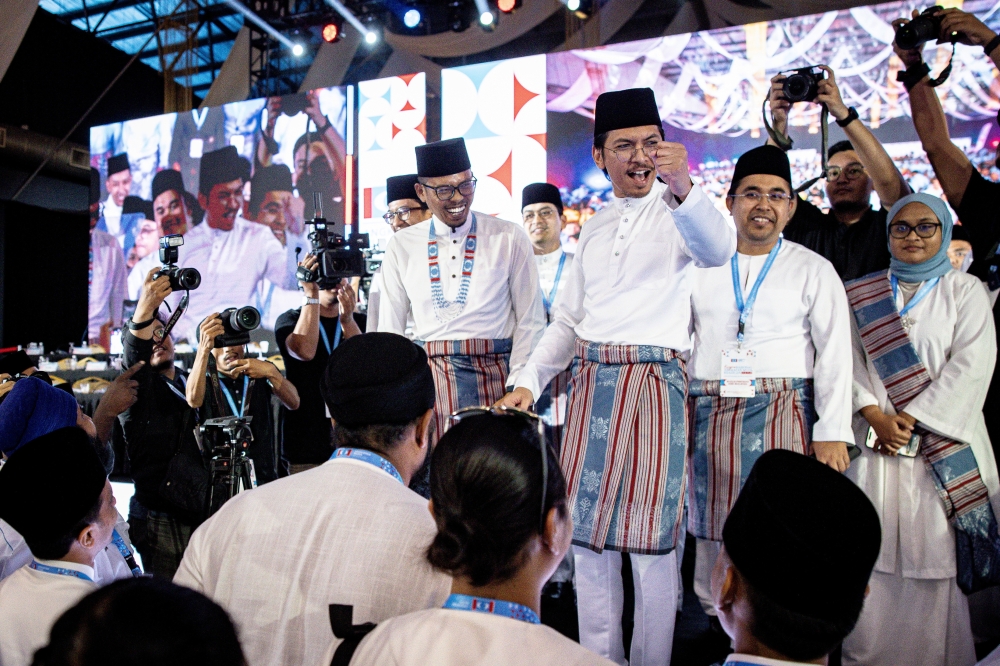
The youth wing of Parti Keadilan Rakyat has aligned itself with Prime Minister Datuk Seri Anwar Ibrahim's initiative to dismantle the Universities and University Colleges Act, signalling growing momentum within the ruling coalition for significant changes to Malaysia's higher education governance framework. The backing represents a notable moment of intergenerational consensus within PKR, with younger party members throwing their weight behind a policy direction that touches on academic freedoms and institutional autonomy — issues that have long animated campus activism across the country.
Prime Minister Datuk Seri Anwar Ibrahim had previously announced the government's intention to repeal the UUCA, a 1971 statute that has been credited with imposing substantial restrictions on student organising and campus political expression for half a century. The legislation has remained particularly contentious in academic circles, where it is widely viewed as a relic of earlier governance approaches that prioritised stability over democratic participation. The act's provisions have effectively constrained the ability of university students to form political organisations or engage in activities deemed to fall outside narrowly defined institutional purposes.
PKR Youth's public endorsement carries strategic weight within Malaysia's political landscape, where the party positions itself as a reform-minded force committed to liberalising restrictive colonial-era and post-independence legislation. The youth organisation's intervention suggests that party strategists believe the UUCA repeal resonates with their core constituency — particularly younger voters and urban professionals concerned about educational quality and individual liberties. By framing the issue as part of a broader modernisation agenda, PKR Youth seeks to mobilise support beyond traditional party loyalists.
The call for students to become active voices in advocating for reform measures reflects a recognition that campus constituencies hold considerable political leverage in Malaysia's electoral calculations. Universities remain significant hubs of social engagement and intellectual ferment, where student activism has historically shaped national conversations on governance, justice, and democratic rights. Students' demonstrated capacity to mobilise around causes they perceive as existential — whether concerning affordability, career prospects, or institutional autonomy — has made them a constituency worth courting for political parties seeking to demonstrate responsiveness to generational concerns.
The UUCA's historical restrictiveness has generated persistent friction between student movements and institutional authorities. Prohibitions on campus political activity have been perceived as fundamentally limiting students' ability to develop civic competencies and participate in democratic deliberation at formative stages of their lives. Critics argue the legislation reflects an approach that treats university campuses as spaces requiring insulation from political engagement rather than as environments where democratic practice should be cultivated. International comparisons with other regional and Commonwealth universities, where students enjoy considerably greater latitude for political organising, have underscored perceived anachronisms in Malaysian frameworks.
For Malaysia's broader institutional development, the question of higher education governance carries implications extending well beyond campus boundaries. Universities serve as engines of intellectual innovation, research productivity, and human capital development — domains where institutional autonomy and freedoms from arbitrary restriction typically correlate with stronger performance metrics. Malaysian policymakers increasingly recognise that global university rankings, research output measurements, and international collaborations reflect not merely resource levels but also the enabling environment universities provide for intellectual work. Restrictive legislative frameworks, when perceived as impediments to academic freedom, can constrain the calibre of faculty recruitment, research ambition, and collaborative relationships.
The UUCA repeal initiative must be situated within Malaysia's ongoing tension between security-oriented governance approaches inherited from earlier periods and contemporary democratic expectations. The 1971 legislation emerged during a historical moment when policymakers prioritised stability and unity above pluralistic expression; subsequent decades have witnessed significant shifts in Malaysian society's composition, education levels, and exposure to international democratic norms. Younger Malaysians, who have come of age in a more connected world with greater exposure to diverse governance models, often question the continued relevance of frameworks designed for substantially different social contexts.
However, the path from policy announcement to legislative repeal involves multiple institutional hurdles and potential political complications. Parliamentary procedures require coalition consensus, and not all coalition members may prioritise higher education liberalisation identically. Questions regarding what legislative framework should replace the UUCA — whether entirely deregulated campus politics or a reconceived statute with updated protections — remain contested. Some conservative constituencies express concerns that repealing restrictions might enable political radicalisation on campuses, a concern likely to receive amplification during parliamentary deliberations.
The international dimension warrants consideration as well. Malaysia positions itself as an attractive destination for regional student recruitment and academic collaboration; perceived restrictions on campus freedoms can disadvantage Malaysian institutions in global academic competition, potentially driving talented students toward universities in regional jurisdictions offering less constrained intellectual environments. Countries that have liberalised higher education governance frameworks have typically witnessed strengthened institutional rankings and expanded research networks. These competitive pressures have prompted some conservative commentators to reconsider earlier positions opposing academic liberalisation.
PKR Youth's mobilisation strategy targeting student constituencies suggests that the party perceives genuine electoral advantages in positioning itself as the force championing institutional reform and democratic expansion. Whether this translates into sustained pressure capable of navigating parliamentary procedures and coalition dynamics remains uncertain. The coming months will reveal whether the announcement represents genuine policy commitment or primarily rhetorical positioning — a distinction that will shape both higher education governance trajectories and student political engagement levels.

