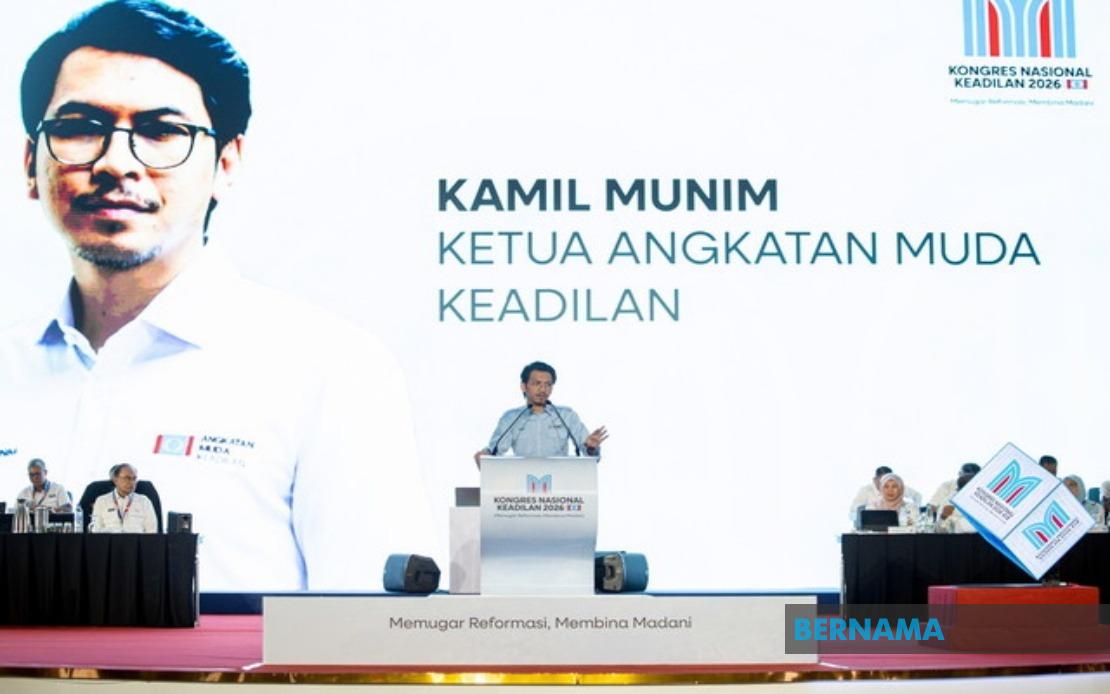
PKR Youth (AMK) must fundamentally restructure its approach to political engagement if it hopes to secure the backing of voters aged 45 and below, a demographic that represents the largest share of Malaysia's voting population. The message came from AMK chief Muhammad Kamil Abdul Munim, who delivered his closing remarks on the second day of the PKR National Congress at the Melaka International Trade Centre, signalling that recent electoral disappointments have prompted serious soul-searching within party leadership.
The timing of Muhammad Kamil's intervention reflects growing concern within PKR that recent state election results in Johor and Negeri Sembilan exposed vulnerabilities in how the party connects with voters. Rather than attributing these losses to broader political headwinds, party leadership has identified internal strategic failures as a key factor. The two-day congress brought together senior figures and grassroots activists from across Malaysia, providing a platform for Muhammad Kamil to articulate what many within the party view as urgent necessary corrections to maintain political relevance.
Central to his argument is a recognition that younger voters—those under 45—are not merely one demographic segment among many but rather the foundation upon which future electoral success must be built. Electoral data consistently demonstrates that this age cohort comprises a plurality of registered voters nationwide, making their support virtually indispensable for any party seeking to secure a governing mandate. This reality should have prompted more sophisticated engagement strategies years ago, yet Muhammad Kamil's remarks suggest that PKR has relied too heavily on conventional approaches that fail to resonate with this generation's distinct concerns and communication preferences.
Muhammad Kamil emphasised that party machinery at the grassroots level must move beyond narrow administrative preoccupations and develop deeper leadership capacity grounded in genuine understanding of community issues. This distinction matters considerably: many political organisations at the local level focus primarily on organisational maintenance—membership drives, event coordination, funding collection—while neglecting the more challenging work of understanding what citizens actually worry about and why they might support or reject particular candidates. The PKR Youth chief appears to be signalling that this imbalance has become a critical liability that the party can no longer afford.
The gap between public perception of government performance and actual electoral outcomes presents a paradox that Muhammad Kamil acknowledged directly. Although feedback on the MADANI Government's performance has been reasonably positive on balance, the state election results demonstrated that positive sentiment has not automatically translated into voter loyalty or turnout support. This disconnect suggests that the government's policy achievements and public messaging have not adequately addressed what voters—particularly younger ones—perceive as the most pressing issues affecting their lives, whether economic opportunity, housing affordability, education quality, or something else entirely.
Muhammad Kamil's call for party leaders to engage directly with community groups in rural and semi-rural settings reflects an understanding that electoral competition is often decided in precisely these areas. Urban voters, particularly younger professionals in major cities, may have different communication channels and information sources than their counterparts in smaller towns and agricultural regions. A one-size-fits-all campaign messaging strategy will inevitably fail to address the particular concerns and lived experiences of these distinct constituencies, leaving openings for rival parties to make inroads.
The party chief articulated a straightforward three-step framework: first, identify the specific concerns and fears motivating voters to withhold support; second, develop practical solutions that address these concerns; third, communicate these solutions credibly through grassroots leaders who have earned community trust. This approach, while seemingly obvious, requires significant institutional capacity and political will to implement properly. It demands that party machinery invest time in genuine listening rather than persuasion, a discipline that many political organisations struggle to maintain, particularly when incumbency creates pressure to defend existing positions.
Muhammad Kamil invoked PKR's recent history as evidence that strategic recalibration and sustained effort can produce surprising electoral breakthroughs. The party's role in denying Barisan Nasional a two-thirds parliamentary majority in 2008 and its central place in the Pakatan Harapan coalition that won the 2018 general election both demonstrate capacity for renewal and relevance. These precedents suggest that the party's current difficulties, while real, may not represent permanent structural decline but rather temporary strategic misalignment that correction can address.
The underlying tension in Muhammad Kamil's remarks points to a broader challenge facing opposition and coalition parties across Southeast Asia. Younger voters increasingly make electoral decisions based on whether they perceive governments—whether incumbent or prospective—as addressing their specific material circumstances and value concerns. Rhetoric about reform or change, however compelling to previous generations, carries diminishing weight if it does not connect concretely to employment prospects, cost of living pressures, or quality of public services that younger voters directly experience. PKR's strategic challenge, in other words, is not fundamentally about messaging tactics but about whether the party has genuinely updated its policy agenda and governing vision to reflect what younger Malaysia actually needs.
As the next general election approaches, Muhammad Kamil's emphasis on preparedness and learning from previous defeats signals that PKR leadership recognises the urgency of the moment. The party cannot rely on residual goodwill from its 2018 electoral victory or assume that anti-incumbency sentiment will automatically restore it to power. Instead, sustained effort to understand, engage, and convince voters—particularly the largest cohort of them—will likely determine electoral outcomes. The congress speeches and strategic declarations will ultimately matter less than whether PKR's grassroots machinery actually internalises and implements these directives in their respective constituencies.

