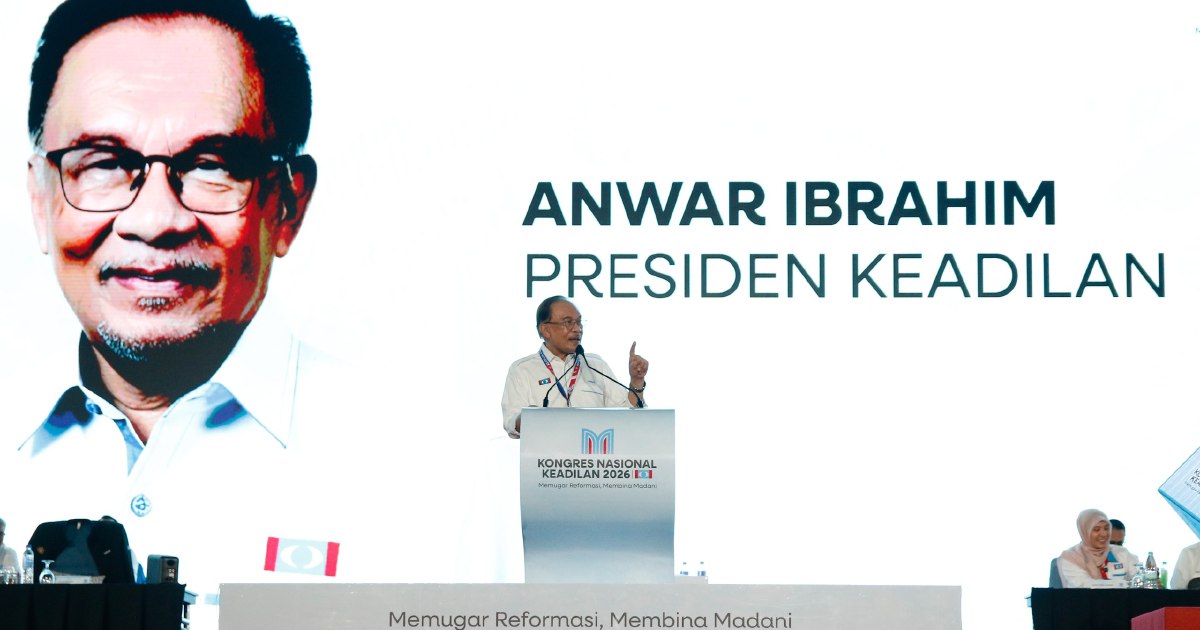
PKR president Datuk Seri Anwar Ibrahim has reaffirmed his party's intention to continue its federal-level partnership with Barisan Nasional and Umno whilst maintaining its commitments to Pakatan Harapan allies DAP and Amanah. The announcement, made at Ayer Keroh, underscores the delicate balancing act that PKR has undertaken since the 2022 general election, navigating between two distinct political blocs to maintain governmental stability.
Malaysia's coalition landscape has undergone significant transformation since the December 2022 election result, which failed to produce a clear majority for any single bloc. The emergence of Anwar's tenure as Prime Minister depended critically on securing parliamentary support from multiple sources, including overtures to Barisan Nasional, which had been eclipsed in electoral performance but retained considerable parliamentary representation. This arrangement departed markedly from the traditional oppositional stance that characterised relations between these coalitions in previous electoral cycles.
The maintenance of working relationships across what were historically opposed camps reflects the pragmatic calculations necessary to govern in a fractionalised parliament. PKR's position as the largest component of Pakatan Harapan has positioned the party as a crucial intermediary between rival groupings. Anwar's emphasis on continuity in these arrangements suggests that PKR views the current configuration as durable rather than merely transitional, despite the inherent tensions that accompany such cross-coalition cooperation.
For Malaysian readers, this arrangement carries profound implications regarding legislative agenda and budget allocations. When PKR commits to honouring both BN relationships and PH partnerships, it effectively constrains the government's latitude to pursue distinctly ideological programmes that might alienate coalition partners. Infrastructure projects, economic policies, and institutional reforms must navigate the preferences of these disparate constituencies, potentially resulting in compromise solutions rather than transformative measures.
The relationship with DAP and Amanah adds another layer of complexity to PKR's positioning. These partners have historical commitments to particular constituencies and policy platforms that may diverge from Umno's priorities. DAP's base, concentrated substantially in urban areas and amongst non-Malay populations, brings distinct perspectives on issues spanning religious administration, vernacular education, and economic inclusion. Amanah, representing a faction that split from Umno itself on matters of principle and governance, brings its own expectations regarding institutional reform and anti-corruption efforts. Reconciling these viewpoints whilst simultaneously collaborating with Umno demands considerable political finesse.
Regional observers have tracked PKR's coalition management with considerable interest, as Malaysia's stability influences broader Southeast Asian political dynamics. Investment communities monitor whether the governing arrangements produce consistent policy environments or whether inter-coalition tensions generate legislative gridlock. The ability of PKR to sustain these multiple partnerships simultaneously will substantially shape perceptions of governance effectiveness and economic predictability in the medium term.
Anwar's statement arrives at a moment when pressure points within these arrangements have become increasingly visible. State-level politics sometimes diverges sharply from federal cooperation patterns, creating situations where PKR representatives and their coalition partners contest elections as opponents. Perak, Selangor, and Negeri Sembilan have witnessed instances where PKR cooperation with BN at the federal level coexists with direct electoral competition at the state level, generating internal party management challenges.
The durability of PKR's dual-alignment strategy depends substantially on material benefits flowing to coalition partners and their respective constituencies. When governmental resources and ministerial portfolios satisfy stakeholder expectations, the incentives for maintaining coalitions strengthen. Conversely, perceived inequitable distribution of benefits provides ammunition for dissident voices within each coalition bloc, potentially destabilising the arrangement. Anwar's commitment to sustaining both relationships implicitly acknowledges that managing these expectations represents an ongoing negotiation rather than a settled matter.
International parallels suggest that such multi-coalition arrangements can endure, particularly when political fragmentation makes single-party dominance impossible. Germany's coalition governments frequently unite parties with contrasting ideological orientations, yet institutional mechanisms and negotiated policy frameworks permit stable governance. Malaysia's system operates with different constraints and incentive structures, however, making direct comparisons limited in applicability. The absence of constitutionally formalised coalition agreements or proportional representation systems means that Malaysian arrangements rely more heavily on personalised relationships and informal understandings.
Anwar's emphasis on maintaining these partnerships reflects broader recognition that alternating power dynamics between coalitions could prove destabilising given parliament's tight margins. If either Barisan Nasional or Pakatan Harapan components withdrew support, the government would immediately face existential challenges. This mutual vulnerability creates paradoxical incentives—partners maintain the coalition partly from fear of the alternatives, yet such reluctant cooperation can prove brittle under pressure.
Looking forward, PKR's balancing act will require constant attention to both coalition partners' evolving expectations and parliamentary arithmetic. Electoral calculations ahead of the next general election will intensify scrutiny of PKR's positioning, potentially forcing the party to clarify whether it envisions the BN-PH arrangement as a permanent realignment or a temporary expedient. Anwar's statement suggests the party leadership views current arrangements as substantive rather than provisional, though future developments could rapidly alter this assessment.

