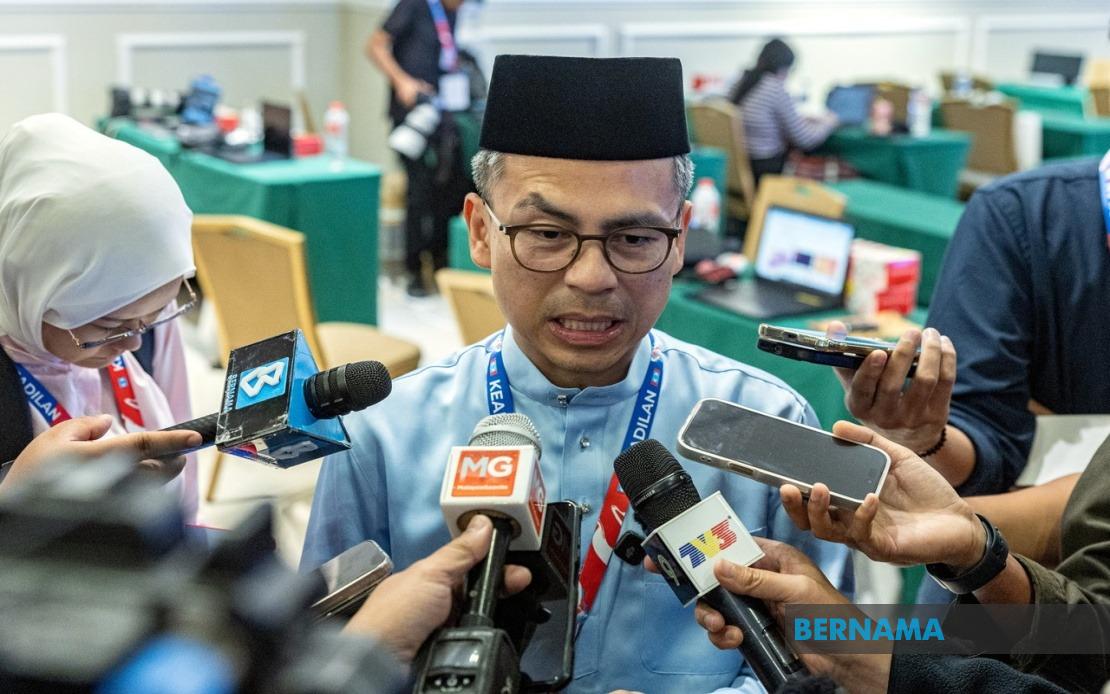
Parti Keadilan Rakyat has resolved to overhaul its communications infrastructure, recognising a fundamental disconnect between the government's policy accomplishments and how these victories are perceived by ordinary Malaysians. The commitment emerged from deliberations at the PKR National Congress 2026, held at the Melaka International Trade and Exhibition Centre in Ayer Keroh, where party delegates raised substantial concerns about information flow and public messaging.
Communications Minister Datuk Seri Fahmi Fadzil, who simultaneously holds the position of PKR Information Chief, articulated the core challenge facing the administration. Despite tangible government initiatives and documented economic progress—particularly concerning macroeconomic stabilisation—these achievements have not visibly translated into measurable improvements in the financial circumstances of Malaysian households. This perception gap represents a critical vulnerability for the ruling coalition as it seeks to maintain public confidence heading toward the next electoral cycle.
The disconnect between headline economic figures and lived experience remains a persistent problem for governments globally, but it carries particular weight in Malaysia's politically fractious environment. When citizens cannot readily connect abstract economic statistics to concrete benefits in their daily lives—whether through employment stability, reduced cost of living, or improved infrastructure—they often default to scepticism about government effectiveness. PKR's acknowledgment of this reality suggests the coalition has absorbed lessons from previous communication failures and recognises the urgency of corrective action.
Fahmi indicated that multiple proposals addressing information dissemination mechanisms emerged during congress proceedings, with detailed recommendations scheduled for presentation during the closing session. This methodical approach reflects institutional learning within the party's machinery, as senior leadership examines how communication channels operate and whether existing structures adequately facilitate dialogue between parliamentary decision-makers and grassroots party workers who directly encounter constituent concerns. The suggestion that "a more formal arrangement is needed" implies current systems lack sufficient rigour or coordination.
The minister emphasised that PKR's Central Leadership Council views these proposals favourably and intends to pilot internal transformations before imposing new protocols on the broader party structure. This cautious sequencing—testing reforms within leadership ranks first—acknowledges that communication strategies often fail when imposed without sufficient buy-in from senior figures. By demonstrating commitment at the apex, party leadership can model the collaborative approach they expect from branch officers and elected representatives.
The planned initiatives carry implications beyond partisan politics. How effectively PKR and its Pakatan Harapan coalition partners communicate policy rationale and achievements fundamentally affects public understanding of governance. When government messaging falters, citizens struggle to distinguish between genuine policy failures and mere failures of narrative. This confusion breeds cynicism and provides ammunition to political opponents seeking to exploit grievances—whether substantive or manufactured—for electoral advantage. Malaysia's opposition parties remain formidable, and the ruling coalition cannot afford prolonged communication deficits.
Fahmi's receptiveness to branch-level input reflects recognition that frontline party workers and elected representatives often possess superior intelligence about constituent preoccupations than senior leadership operating from federal capitals. A more formalised mechanism for channelling these observations upward could enhance policy responsiveness and enable the government to adjust messaging to address genuine concerns rather than pursuing communications strategies divorced from community sentiment. This ground-up feedback loop, if properly institutionalised, could significantly strengthen policy legitimacy.
The specific challenge of translating macroeconomic improvement into household prosperity deserves particular attention. Economists often note that aggregate growth figures obscure distributive outcomes—some demographic groups and geographic regions benefit substantially from economic expansion while others experience stagnation or deterioration. If PKR's communication strategy can help ordinary Malaysians understand which policies directly affect their circumstances, and why certain approaches were chosen despite short-term costs, the coalition may recover ground lost through years of ambiguous messaging. This requires honest communication, not merely optimistic spin.
The congress deliberations also underscore tension between sophisticated economic management and populist demand for immediately visible results. Governments implementing structural reforms—particularly fiscal consolidation or subsidy rationalisation—often face public resistance despite long-term benefits. Communications ministries must navigate this contradiction by building understanding of why painful short-term measures serve broader prosperity. PKR's commitment to clearer messaging implicitly acknowledges previous inadequacy in this regard, creating opportunity for more sophisticated public discourse about economic tradeoffs.
Looking forward, the effectiveness of PKR's revamped communication strategy will likely determine whether Pakatan Harapan can sustain coalition cohesion and electoral viability through the next political cycle. If the party successfully builds public comprehension of government achievements and policy rationale, it strengthens the coalition's political foundation. Conversely, if communication improvements prove superficial or fail to address genuine household-level concerns, cynicism will deepen and opposition narratives will gain traction. The stakes extend beyond single elections, affecting Malaysia's broader capacity to implement coherent long-term economic strategy.

