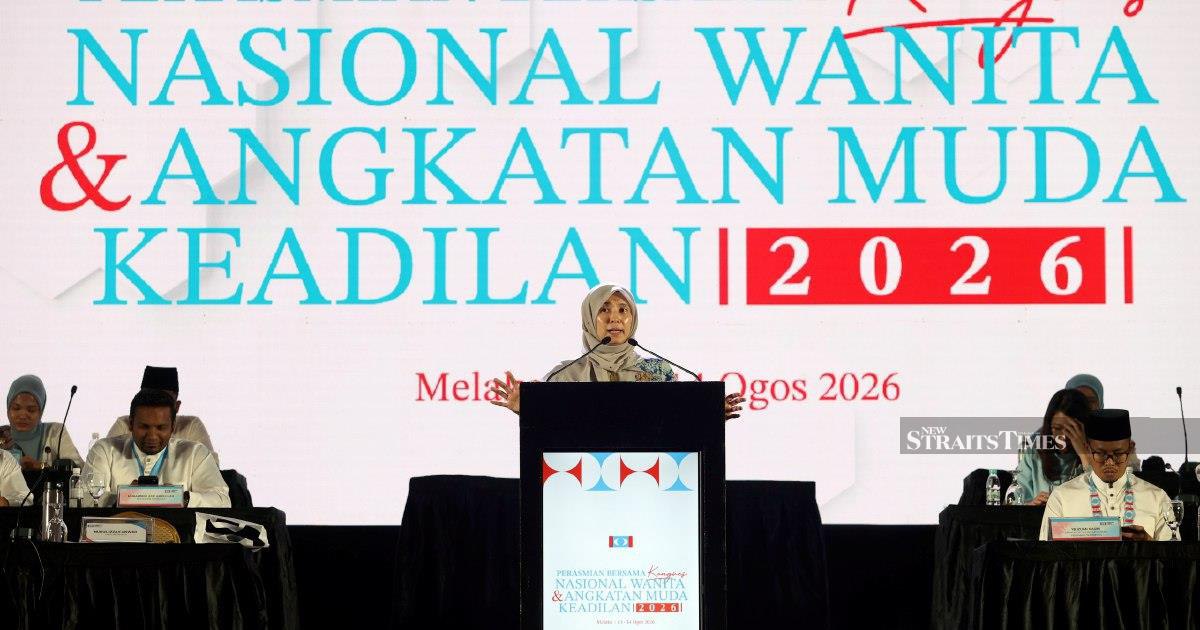
PKR deputy president Nurul Izzah Anwar has issued a forceful call for the party to articulate and enforce clear ethical boundaries, cautioning against allowing political pragmatism to become a cover for institutional wrongdoing. Speaking in Ayer Keroh, she emphasised that the party must draw a firm distinction between necessary political compromise and the surrender of principles that protect democratic integrity.
Nurul Izzah's intervention reflects growing concerns within PKR about the potential risks of maintaining the current political coalition arrangements. As the party navigates complex negotiations within the Pakatan Harapan alliance and discussions with potential coalition partners, the tension between tactical flexibility and moral consistency has become increasingly visible. Her remarks appear designed to address internal party anxiety about the direction of leadership and the compromises required to sustain Malaysia's multiparty political system.
The concept of "red lines" in Malaysian politics typically refers to non-negotiable principles that a party will not compromise on, regardless of electoral or coalition pressures. For PKR, historically positioned as a reformist party, these boundaries might encompass commitments to democratic accountability, transparency in governance, and resistance to authoritarian practices. Nurul Izzah's emphasis on defining these limits suggests that without explicit articulation, party members may lose sight of fundamental values during the give-and-take of practical politics.
Her intervention carries particular significance given PKR's trajectory since entering government as part of the Pakatan Harapan coalition in 2018. The party has repeatedly faced criticism from civil society observers and political analysts about its willingness to work with other political entities and adjust its positions on key issues. While such flexibility may be necessary for coalition management and legislative success, Nurul Izzah appears to be signalling that there must be limits to these accommodations.
The warning against using political compromise to justify corruption and abuse of power directly addresses systemic challenges within Malaysia's political culture. Historically, competing political coalitions have sometimes rationalised questionable governance decisions through arguments about maintaining stability or government survival. By explicitly rejecting this framework, Nurul Izzah is positioning PKR as a party committed to institutional integrity regardless of electoral cost, a stance that distinguishes her from purely transactional politicians.
For PKR members and supporters, particularly younger activists and civil society advocates who form the party's ideological base, such pronouncements serve an important function. They provide reassurance that the party remains committed to reformist principles even as it engages in the necessarily compromising work of parliamentary governance. This matters because disillusionment with reform-oriented parties has been a recurring feature of Malaysian politics, particularly when movements built on anti-corruption platforms eventually become entangled in the same practices they opposed.
The timing of Nurul Izzah's statement also carries significance within broader Malaysian political dynamics. The country's political landscape remains fractious, with questions about potential coalition realignments, the status of various political agreements, and the stability of current governing arrangements. In this context, prominent figures articulating their party's ethical commitments become crucial contributors to the broader debate about what standards Malaysian political institutions should maintain.
Establishing red lines also has practical governance implications. When a party clearly articulates which actions it will not support or participate in, it constrains the behaviour of its leaders and provides party members with criteria for evaluating leadership decisions. This transparency can reduce internal conflict, as supporters understand the boundaries within which leadership operates. For a party like PKR, where internal democracy and member participation are historically important themes, such clarity serves to strengthen rather than weaken party cohesion.
Nurul Izzah's remarks suggest that PKR leadership recognises the risk of what observers term "mission creep" in Malaysian politics—the gradual erosion of founding principles through a series of individually defensible compromises. Each coalition negotiation, each legislative agreement with disputed partners, and each controversial appointment might seem reasonable in isolation but can accumulate into a profound departure from original values. By calling for explicit red lines now, she appears to be proposing that the party take preventive action.
The broader Southeast Asian context also illuminates why Malaysian political parties emphasising institutional integrity matters. Across the region, numerous reform movements have eventually become indistinguishable from the political establishments they challenged, leading to citizen disengagement from electoral politics and weakening of democratic institutions. By contrast, parties that maintain visible commitment to stated principles, even at electoral cost, tend to preserve public trust and democratic participation over longer timeframes.
For observers of Malaysian politics, Nurul Izzah's intervention represents a notable moment when a senior party figure prioritises public emphasis on normative principles over immediate political advantage. Whether PKR can systematically embed these red lines into its decision-making processes, and whether other parties embrace similar commitments, will significantly influence the quality of Malaysian democracy in coming years. The challenge lies not in articulating such boundaries but in maintaining them when political pressures mount.

