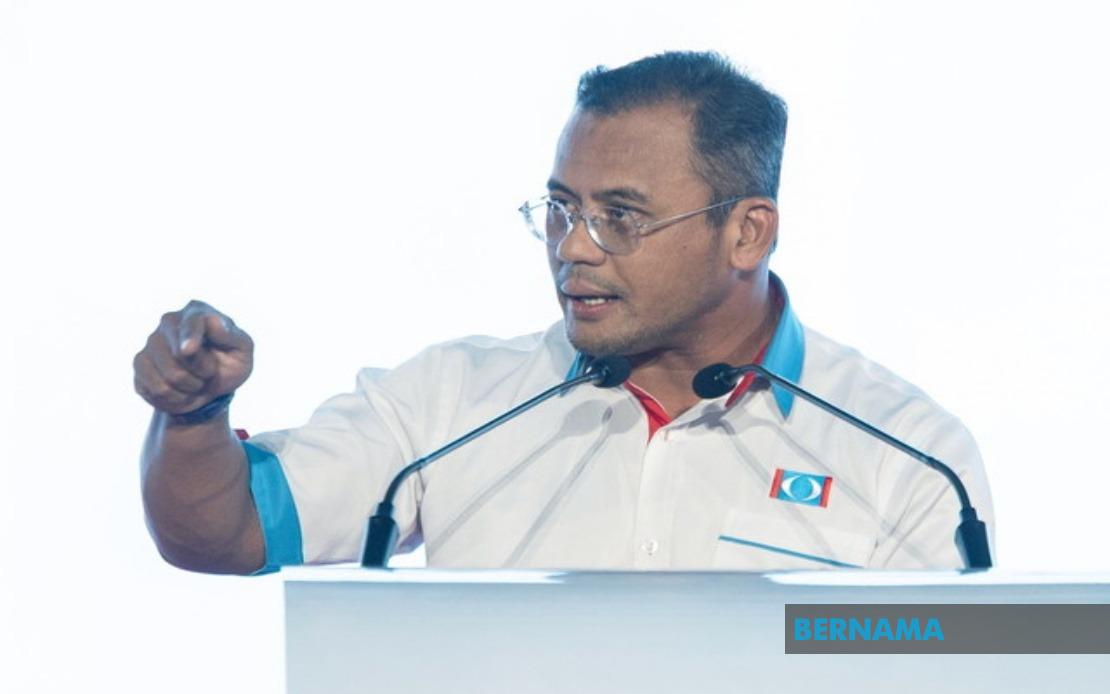
PKR's top leadership has signalled an unequivocal stance on steering the party away from racial politicking, emphasising instead a commitment to equitable governance that serves all communities while respecting constitutional safeguards. Speaking at the party's biennial national congress in Melaka, senior figures outlined a vision of reformist politics that rejects divisive identity campaigns—a message with significant implications for Malaysia's competitive political landscape, where appeals to communal identity have long dominated electoral strategy.
Datak Seri Amirudin Shari, the party's vice president and Selangor Menteri Besar, articulated the core tension that PKR attempts to navigate: honouring the constitutional position of Islam and Malays—a foundational element of Malaysia's social contract—whilst simultaneously extending fair treatment and opportunity to all citizens regardless of race or religion. This formulation reflects PKR's persistent challenge of appealing across demographic lines without alienating its base or appearing to undermine constitutional provisions that remain sacrosanct to Malay-Muslim voters. Amirudin's framing positions PKR as a party capable of respecting constitutional fundamentals whilst pursuing substantive reform in other domains.
The Selangor leader traced PKR's reform agenda back to Datuk Seri Anwar Ibrahim's foundational work in 1998, crediting the party with mainstreaming discussions around democratic enrichment, fundamental liberties, equitable economic participation, and institutional integrity. This historical positioning attempts to establish PKR's legitimacy as a reform vehicle independent of any single communal interest, anchoring the party's identity in governance improvement rather than identity politics. For Malaysian readers, this context matters: it distinguishes PKR's approach from both Islamist parties that prioritise religious governance and ethnonationalist movements that centre Malay supremacy.
Datak Seri R. Ramanan, the Human Resources Minister and fellow vice president, went further in directly naming the problem: certain political actors deliberately exploit racial grievances to accumulate electoral advantage and fracture national unity. His intervention signals PKR's determination to position itself as an explicit counterweight to such strategies, arguing that national cohesion depends on parties rejecting sectarian mobilisation. Ramanan's emphasis that this stance protects the nation's harmony—rather than undermining any community's interests—represents an attempt to reframe resistance to racial politics as patriotic rather than anti-majority.
Ramanan also invoked internal party discipline, calling on PKR's leadership cadre to set aside personal ambitions and ego in service of unified party machinery. This message appears directed at preventing internal factionalisation that could weaken PKR's competitive position or provide ammunition to rivals. He illustrated the cascading damage of top-level conflict: when senior figures squabble, lower-tier branches lose direction, membership becomes confused, organisational effectiveness deteriorates, and ultimately opposition parties benefit. This framing casts party unity as instrumentally necessary for electoral viability, not merely a matter of internal harmony.
A third vice president, Datuk Chang Lih Kang, introduced empirical evidence to support PKR's thesis that multiracial politics need not rely on racial appeals. He cited the Chennah state assembly constituency in Negeri Sembilan as a case study: despite facing identity-based campaigning against him, DAP secretary-general Anthony Loke—a non-Malay politician—secured increased support from Malay voters in recent state elections. For Malaysian observers, this example carries weight because it directly contradicts the assumption that Malay voters automatically reject non-Malay candidates or that identity politics remains electorally decisive. Chang's argument suggests that competent, visible service to constituents can transcend racial categorisation.
The Chennah precedent matters regionally as well. Across Southeast Asia, democratic systems grapple with how to construct inclusive politics in societies with deep communal divisions. Malaysia's constitutional structure—with entrenched protections for Islam and Malay-Bumiputera interests—differs from Indonesia's secular nationalism or Thailand's Buddhist majoritarianism, yet all three nations face pressure from leaders who exploit identity grievances. PKR's attempt to model an alternative pathway gains significance in this broader context: can a multiracial coalition compete electorally without resorting to the divisive tactics that have recently surged elsewhere in the region?
The party's messaging at this congress also reflects PKR's current political positioning. As part of the federal government coalition, PKR carries responsibility for governance outcomes and must present itself as a stabilising, unifying force rather than an insurgent movement. By emphasising commitment to constitutional protections and rejecting racial politics, the party can occupy centrist ground—attractive to urban, educated, multiethnic voters whilst not appearing hostile to Malay-Muslim interests. This positioning distinguishes PKR from both far-right ethnonationalist movements and parties advocating for wholesale constitutional revision.
However, PKR's stance also creates vulnerabilities. Political competitors can characterise the party's commitment to constitutional safeguards as insufficiently robust, or suggest that multiracialism amounts to cultural dilution. Meanwhile, PKR's explicit rejection of racial mobilisation constrains its ability to energise voting blocs through identity-based appeals—a tool that remains potent in Malaysian politics. The party must therefore rely heavily on performance-based legitimacy: demonstrable improvements in living standards, corruption reduction, and service delivery across all communities. This places demanding expectations on coalition partners and state governments led by PKR figures.
The congress speeches also indicate PKR's awareness of rising regional and global currents toward majoritarian nationalism. By explicitly rejecting racial politics and celebrating examples like Chennah, PKR positions itself as defending not merely constitutional formalism but a substantive model of coexistence. This framing resonates with civil society organisations, minority rights advocates, and urban progressives, though it risks appearing out of touch to voters experiencing economic stress or status anxiety. PKR's success will depend on whether it can sustain both the material delivery and the rhetorical commitment necessary to make inclusive politics seem both principled and pragmatic.
Looking forward, PKR's emphasis on unity, constitutional respect, and rejection of divisionism will be tested by electoral competition and coalition dynamics. The party's ability to maintain this positioning whilst governing effectively, managing internal ambitions, and responding to economic pressures remains an open question. Nonetheless, at this congress PKR has clearly signalled its bet: that Malaysian voters, when offered competent multiethnic governance free from racial toxicity, will choose it over alternatives—and that such politics remains viable even in a constitutionally plural society.

