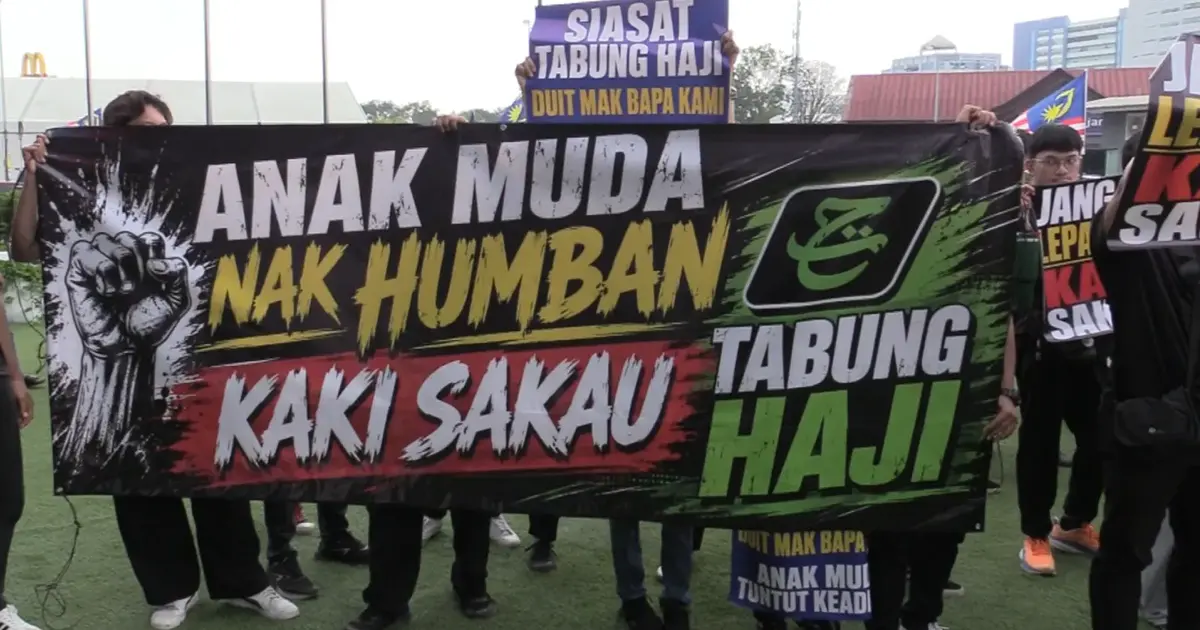
Approximately 250 members of Parti Keadilan Rakyat (PKR) staged a demonstration outside their party's congress venue in Melaka, pressing party leadership to accelerate the investigation into the Tabung Haji controversy. The gathering reflected growing grassroots pressure within the coalition to address concerns centred on the pilgrim fund management issue, which has become increasingly prominent in political discourse across Malaysia.
The protesters emphasised that the Tabung Haji matter holds profound cultural and religious resonance for Malaysia's Malay and Muslim populations. This framing underscores how the pilgrimage savings scheme, which manages funds for citizens undertaking the hajj, transcends ordinary bureaucratic concern to touch on core identity and faith-based issues within the community. The rally represented an attempt to elevate the urgency surrounding the controversy within PKR's own organisational hierarchy.
Tabung Haji, officially known as the Lembaga Tabung Haji, manages billions in savings accumulated by prospective pilgrims over decades. For many Malaysians, particularly those from lower and middle-income backgrounds, the fund represents a crucial repository of lifelong savings dedicated to fulfilling one of Islam's five pillars. Concerns about the fund's governance and financial health therefore carry emotional and spiritual weight beyond typical corporate accountability questions.
The demonstration during the party congress timing suggests the activists sought maximum visibility within PKR's decision-making structures. By positioning themselves outside the congress venue rather than staging a separate event, the group ensured their message would reach senior party officials and potentially influence internal discussions about policy priorities and investigative commitments. This tactical approach reflects understanding of how pressure campaigns function within Malaysia's political establishment.
The insistence on a swift probe indicates frustration with perceived bureaucratic delays or insufficient momentum in existing investigations. Within Malaysia's political context, calls for expedition frequently signal that stakeholders believe current institutional mechanisms are moving too slowly or lack sufficient independence. The protesters' demand thus represents not merely a request for action, but implicit criticism of the pace and possibly the vigour of oversight mechanisms already in motion.
For PKR specifically, the rally highlights tensions between different segments of the party membership regarding which issues deserve priority attention. As a coalition component in Malaysia's political system, PKR must balance competing demands from grassroots activists, senior leadership, and coalition partners. The Melaka gathering demonstrates that ordinary party members increasingly expect their leadership to demonstrate concrete commitment to resolving controversies affecting Muslim constituents' interests.
The Tabung Haji issue has attracted scrutiny across Malaysia's political spectrum, not exclusively within PKR or any single coalition. However, PKR's positioning within the democratic opposition and its emphasis on transparency and good governance creates particular expectations among members that the party will champion investigations into governance failures. The Melaka protesters were essentially holding their own party accountable to its stated principles.
From a regional perspective, the Tabung Haji controversy reflects broader questions about the management of faith-based financial institutions across Southeast Asia. Other nations with significant Muslim populations maintain similar pilgrimage savings schemes, and concerns about governance in such institutions resonate beyond Malaysia's borders. How Malaysian authorities address the Tabung Haji situation may influence public confidence in comparable mechanisms throughout the region.
The involvement of 250 members, while numerically modest compared to the party's total membership, carries symbolic weight. Grassroots mobilisation on specific policy issues, rather than simply elite-driven campaigns, demonstrates genuine constituent concern. Such demonstrations often precede broader internal party shifts or public campaigns, suggesting the Tabung Haji issue may escalate in political prominence during coming months.
PKR's response to this pressure will reveal how the party navigates between grassroots activism and coalition governance responsibilities. Supporting rapid investigation maintains consistency with reform-oriented messaging but could create friction with coalition partners or government institutions moving at different paces. The party's leadership must determine whether to amplify the activists' demands or manage them diplomatically.
The Melaka gathering also reflects how Malaysian politics increasingly operates through decentralised pressure campaigns rather than exclusively through formal institutional channels. Party members, community groups, and civil society organisations now regularly stage targeted demonstrations designed to influence specific policy outcomes. This evolution in political engagement patterns creates new dynamics for how Malaysian institutions process citizen demands.
Looking forward, the Tabung Haji question will likely remain contentious until comprehensive investigations are concluded and findings made public. For PKR members in Melaka and beyond, the intensity of scrutiny applied by their party to this controversy may significantly influence their satisfaction with party leadership and their willingness to mobilise support during future electoral contests. The rally thus constitutes not merely an isolated event but a data point within broader patterns of how Malaysia's Muslim-majority population expects their political representatives to prioritise their concerns.

