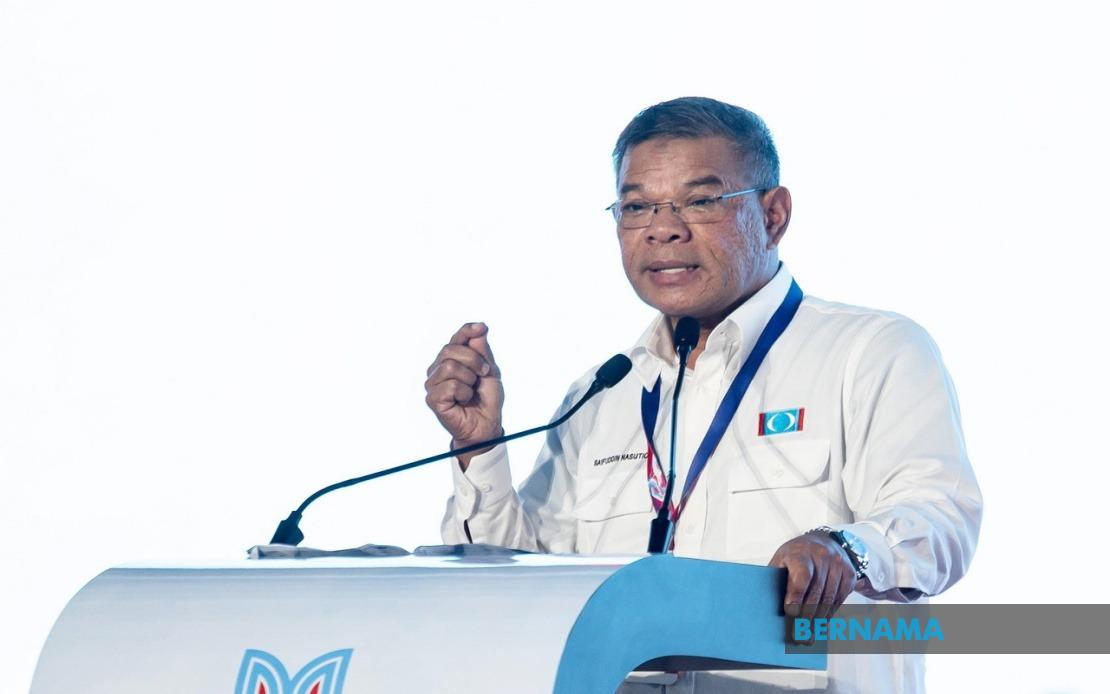
The PKR party has drawn a sharp line against identity and racial politics, insisting that Malaysia's future depends on evaluating governments based on economic performance and tangible improvements to living standards rather than divisive cultural narratives. Speaking at the party's 2026 National Congress in Melaka on August 16, PKR vice-president Datuk Seri Saifuddin Nasution Ismail characterised identity politics as a futile "zero-sum game" that ultimately damages national development prospects. His remarks reflect a broader strategy by the MADANI Government to reframe the political contest away from ethno-religious grievances towards measurable outcomes that affect household incomes, employment, and social stability.
Saifuddin Nasution, who also serves as Home Minister, advanced an argument gaining traction among reform-minded political leaders: that racial and religious identities are descriptive facts of Malaysian reality, not inherently dangerous, but become toxic when deployed instrumentally to manufacture fear. He specifically itemised the multiple overlapping identities that coexist in Malaysia—Malay, Islamic, Chinese, Indian, and the distinct identities of Sabah and Sarawak—as immutable features of the nation's demographic landscape. The implicit critique targets opposition parties and competing factions within the government coalition that have relied heavily on cultural anxieties to mobilise voter support, suggesting such tactics produce electoral gains without advancing national interests.
The Home Minister's call to "grow the pie" rather than quarrel over its division carries significant implications for Malaysian politics, signalling a philosophical departure from zero-sum competition. By framing prosperity as expandable rather than fixed, PKR is proposing that all communities can improve their material circumstances without requiring others to surrender existing rights or privileges. This rhetorical pivot attempts to sideline narratives that frame interethnic relations as fundamentally competitive, where one group's advancement necessarily diminishes another's position. For Malaysia's fractious political environment, such language represents an attempt to reset expectations about what constitutes legitimate political argument.
The second pillar of PKR's stated approach emphasises need-based rather than identity-based resource allocation. Saifuddin Nasution explicitly rejected the notion that government assistance should be calibrated according to ethnicity or religion, proposing instead that welfare, subsidies, and development programmes target populations based on demonstrated economic hardship. This directly challenges existing mechanisms such as bumiputera preferences and community-specific aid schemes that have dominated Malaysian policy for decades. Implementing such a shift would require politically costly reforms to entrenched distribution systems, making the pledge more symbolically important than immediately actionable.
Good governance and anti-corruption efforts constitute the third dimension of the leadership's stated priorities. Saifuddin Nasution argued that unchecked corruption represents a concrete threat to national prosperity that transcends identity boundaries, directly harming all Malaysians through diverted resources and inefficient government. This framing allows PKR to position itself as the party of accountability and institutional integrity, contrasting with opponents potentially susceptible to corruption allegations. For Malaysian voters tired of scandals and wasteful spending, this messaging attempts to offer a basis for electoral choice rooted in administrative competence rather than communal loyalty.
The party leader further contended that the genuine menaces confronting Malaysian communities are not other ethnic or religious groups, but rather poverty, drug abuse, and associated social pathologies that destabilise families and undermine youth prospects. By identifying concrete socioeconomic ills as the primary adversary, Saifuddin Nasution reframed political competition as a technical contest about problem-solving capacity rather than a cultural struggle for group dominance. This argument carries particular weight in urban and semi-urban constituencies where younger voters may prioritise job creation and housing affordability over traditional communal narratives.
PKR's emphasis on engaging young voters reflects awareness that generational attitudes toward identity politics diverge markedly from older cohorts. Younger Malaysians, particularly those educated abroad or active in digital networks, demonstrate relatively lower sensitivity to ethnic and religious appeals compared to older voters. The party's strategy involves documenting success stories from the MADANI Government—economic initiatives, infrastructure projects, reduced unemployment—and disseminating these narratives through channels frequented by younger demographics. This approach risks appearing dismissive of legitimate concerns about cultural preservation and minority rights that remain salient across age groups, potentially creating tension between the stated rejection of identity politics and actual voter priorities.
The call to abandon identity politics must be contextualised within Malaysia's competitive political landscape, where PKR occupies a centre-left position within a fractious coalition government. The party confronts criticism from both the opposition Perikatan Nasional alliance, which frequently mobilises Malay-Muslim solidarity, and from civil society groups concerned that deprioritising identity issues marginalises vulnerable minority interests. PKR's framing attempts to thread this needle by arguing that inclusive economic growth and strong governance inherently protect all communities better than zero-sum cultural competition. However, this gambit depends entirely on the MADANI Government's capacity to deliver measurable economic improvements before the next general election.
The structural challenge facing this political strategy lies in demonstrating that performance-based politics actually produces superior outcomes for ordinary Malaysians compared to existing arrangements. Voter scepticism of such promises has accumulated over decades of unmet pledges by successive governments. Additionally, identity-based political mobilisation has proven remarkably resilient across comparable democracies, suggesting that exhortations to transcend such divisions, however intellectually appealing, encounter formidable psychological and organisational barriers. PKR's initiative may succeed in attracting particular voter segments—economically mobile urban professionals, younger educated cohorts, and those frustrated with incumbent corruption—while leaving other constituencies unmoved.
The implications for Malaysia's broader political trajectory remain uncertain. If PKR's messaging gains traction and influences electoral outcomes, it could gradually shift the register of political contestation toward performance metrics and governance capacity. Conversely, if the party fails to deliver tangible economic improvements while maintaining its rhetorical distance from identity politics, opponents will capitalise on perceived indifference to communal concerns. The MADANI Government's ability to navigate this tension will substantially determine whether Malaysian politics can genuinely move beyond the identity-inflected frameworks that have dominated since independence, or whether such calls represent aspirational rhetoric insufficient to overcome entrenched political incentives.

