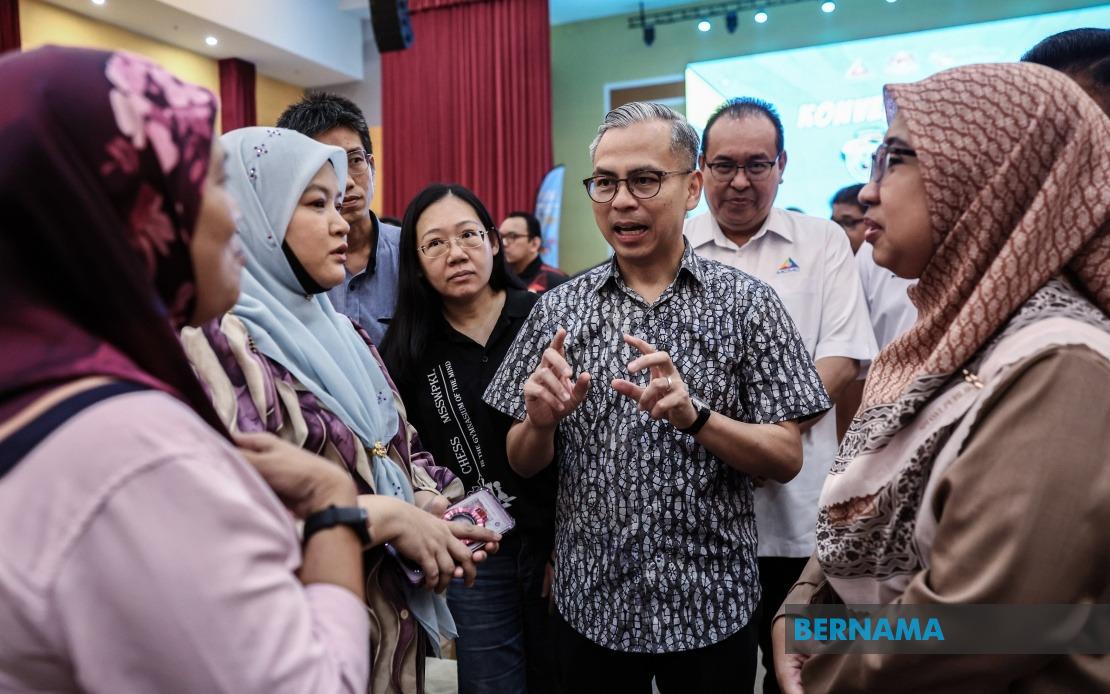
The People's Justice Party (PKR) has moved to reassure members that routine party activities will proceed without disruption following Nurul Izzah Anwar's decision to step back from her deputy president role. Speaking after an event in Kuala Lumpur, PKR Information Chief Datuk Seri Fahmi Fadzil confirmed that the party's senior leadership council had declined her resignation but approved her request for a temporary absence so she could concentrate on personal affairs and doctoral studies. The decision underscores a carefully managed transition within PKR's upper echelons, reflecting how Malaysia's major political parties now navigate leave arrangements for senior figures balancing ministerial or parliamentary duties with personal development.
Under the approved arrangement, Vice-President Datuk Seri Saifuddin Nasution Ismail will assume the interim responsibilities normally carried out by the deputy president, ensuring continuity in party administration and decision-making. This delegation reflects PKR's stated commitment to maintaining organisational stability during the absence. Fahmi's public clarification appears designed to counter any perception that the party's governance machinery might falter, a concern that arises whenever senior positions become vacant, even temporarily. The move also demonstrates that PKR's leadership structure has been designed with sufficient depth to absorb such transitions without operational compromise.
Nurul Izzah, the eldest daughter of Prime Minister Anwar Ibrahim, will retain her full party membership and continue contributing to PKR's political agenda despite her temporary withdrawal from formal responsibilities. This distinction between maintaining party affiliation and stepping back from executive roles has become more common in Malaysian politics, allowing members to address personal or professional commitments without severing their political connections. Her pursuit of PhD studies signals a longer-term intellectual investment, a choice increasingly visible among Malaysian politicians who seek to strengthen their credentials beyond elected office or party posts.
When questioned about whether fellow PKR figure Wong Chen, the Subang Member of Parliament, might surrender his parliamentary seat, Fahmi indicated he possessed no concrete information on the matter. He noted that any such announcement would require official confirmation from Dewan Rakyat Speaker Tan Sri Johari Abdul, placing responsibility for public disclosure squarely with parliamentary authorities. This measured response reflects standard protocol for sensitive political developments, where party officials typically avoid speculation that might trigger market reactions or public anxiety before formal channels complete their processes.
Addressing broader speculation about an early general election, Fahmi rejected suggestions that the government intended to seek fresh electoral authorization before the constitutionally-permitted window closes. He stated that the current administration expected the next general election to occur by the final quarter of 2026 at the latest, consistent with Malaysia's five-year electoral cycle. The government's present focus, he emphasized, remained centered on delivering effective administration and maintaining the stability offered by the current Unity Government coalition, which has now operated for nearly two years following the 2022 elections.
The Communications Minister highlighted the continued commitment of coalition partners to support Prime Minister Anwar Ibrahim's tenure and reform priorities through the established timeframe. This public affirmation carries significance in a political environment where coalition stability has previously proven fragile, with smaller component parties occasionally threatening withdrawal over resource allocation or policy disagreements. By securing multiple public endorsements of coalition continuity, the Unity Government demonstrates an intention to complete its constitutional term without premature dissolution or realignment.
Within Pakatan Harapan and the broader Unity Government framework, leadership has identified key reform initiatives requiring sustained focus and resources. These efforts aim to address persistent governance challenges and implement structural changes that policymakers believe will benefit Malaysian citizens over medium and long timeframes. The emphasis on continuity thus reflects not merely political management but a calculated effort to protect reform agendas that require multi-year implementation cycles and depend on sustained parliamentary majorities.
Fahmi specifically referenced ongoing work to execute recommendations from the Royal Commission of Inquiry investigating Lembaga Tabung Haji's operations across the 2014 to 2020 period. This RCI examined one of Malaysia's most significant institutional failures during the previous administration, with far-reaching implications for millions of Malaysian pilgrims whose savings were affected. The continued emphasis on RCI implementation signals that accountability mechanisms remain relevant to current governance priorities, even as the administration shifts attention toward other agenda items.
Looking ahead, Fahmi hinted that Prime Minister Anwar will soon announce several policy initiatives expected to benefit both Malaysians and the nation's broader development trajectory. While avoiding specifics, the information chief's remarks suggest the administration is preparing fresh announcements on matters judged sufficiently mature for public disclosure. In Malaysian political communications, such advance notice typically precedes developments in economic policy, administrative reform, or social initiatives that governments want to present strategically rather than reactively.
The broader context illuminates how Malaysia's established political parties have professionalized succession planning and temporary role transitions, moving beyond the previous era when senior figure absences created genuine institutional paralysis. PKR's handling of Nurul Izzah's situation reflects this evolution—a recognition that modern political organizations require documented procedures and transparent communication about leadership continuity. For Malaysian readers and regional observers, the episode demonstrates how coalition stability mechanisms and institutional depth increasingly sustain governance, even as individuals adjust their roles in response to personal or professional circumstances.

