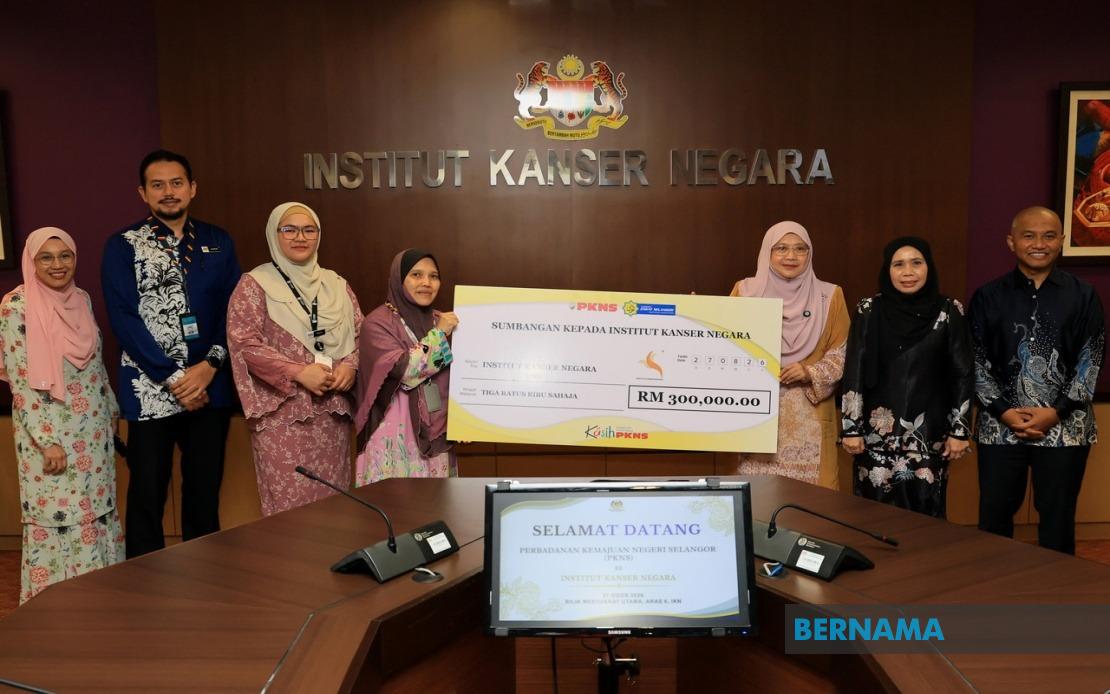
The Selangor State Development Corporation (PKNS) has pledged RM300,000 to alleviate the financial pressures facing cancer patients undergoing treatment at the National Cancer Institute (IKN), with the contribution expected to benefit between 50 and 100 individuals struggling with the mounting costs of their medical care. The funding initiative, unveiled in Putrajaya on August 27, represents a meaningful commitment from the state development agency to address the economic hardships that often accompany cancer treatment and frequently prevent patients from completing their therapeutic journeys.
According to PKNS Corporate Services senior general manager Sapna Turmidi, the organisation views its intervention as extending beyond mere monetary support, encompassing the provision of emotional sustenance, compassionate engagement, and solidarity with those navigating extraordinary personal challenges. She emphasised that PKNS recognised the isolation and psychological toll experienced by cancer sufferers and their families, positioning the contribution as a demonstration that vulnerable populations need not confront their struggles without external backing. The presentation of the cheque to IKN director Dr Nur Aslina Bahakodin occurred against a backdrop of the institution's escalating need for supplementary funding to serve its most economically disadvantaged patients.
The genesis of PKNS's charitable direction traces back to an internal tragedy that crystallised the corporation's awareness of cancer's devastating impact. A PKNS employee diagnosed with glioma in February succumbed to the disease merely four months later whilst receiving care at IKN, a loss that profoundly influenced the agency's decision-making processes. This personal encounter with cancer's lethality prompted PKNS leadership to recognise the multifaceted challenges confronting patients and their dependents, ultimately catalysing the organisation's determination to establish a concrete support mechanism. The timing of the announcement coincided with PKNS's 62nd anniversary on August 1, allowing the corporation to mark the milestone through philanthropic action rather than ceremonial fanfare alone.
The assistance programme operates through a corporate social responsibility framework structured around wakalah zakat, executed in partnership with the Selangor Zakat Board (LZS). This arrangement enables PKNS to channelise its contribution through established Islamic charitable mechanisms, targeting eligible Muslim cancer patients classified under the asnaf al-Gharimin category—individuals burdened by debt or substantial financial obligations. The structure reflects a deliberate alignment of corporate giving with religious principles and existing institutional infrastructure within Selangor, creating a sustainable model that leverages both commercial and spiritual foundations for community benefit.
Dr Nur Aslina articulated the scale of IKN's annual financial requirements, indicating that the institute needs between RM1 million and RM2 million yearly to ensure underprivileged cancer patients can satisfy their fundamental necessities throughout extended treatment cycles. The scope of assistance encompasses far more than therapeutic interventions—it encompasses procurement of medical equipment, acquisition of essential supplies, reimbursement of transportation costs to and from the institute, provision of specialised nutritional support, and welfare considerations for patients' family members who may sacrifice employment opportunities to provide caregiving. This comprehensive understanding of patient needs underscores the reality that cancer treatment involves multidimensional expenditures that frequently overwhelm household budgets, particularly among lower-income families.
Financial constraints frequently compel cancer patients to forgo essential follow-up appointments and monitoring sessions, a situation that carries serious therapeutic consequences. When patients miss scheduled appointments, the continuity of their treatment protocols deteriorates, potentially compromising the efficacy of their medical regimens and delaying the identification of treatment complications or disease progression. This interruption cycle represents a critical vulnerability in cancer management where timely, consistent intervention substantially influences survival rates and quality of life outcomes. By addressing the economic barriers to attendance, PKNS's contribution directly facilitates uninterrupted care delivery and maximises the likelihood of successful treatment completion.
Dr Nur Aslina emphasised that assistance from corporate entities, charitable organisations, and non-governmental bodies constitutes an indispensable complement to the hospital's own resources and government funding allocations. The reality of public healthcare systems throughout Southeast Asia reveals that institutional budgets, whilst significant, cannot fully absorb the totality of patient welfare needs, particularly when addressing vulnerable populations with minimal financial reserves. Corporate participation in healthcare philanthropy, therefore, represents not merely supplementary action but rather a structural necessity within contemporary health delivery ecosystems. The IKN director's acknowledgement of this interdependence reflects the practical recognition that comprehensive cancer care requires layered financial support mobilised from multiple societal actors.
The Medical Social Work Unit at IKN will oversee the allocation of PKNS's contribution, implementing a rigorous assessment process to identify eligible patients and their families according to established socio-economic criteria. This methodical approach ensures that resources reach those facing the most acute financial hardship whilst maintaining the transparency and accountability that public healthcare institutions and charitable programmes require. The assessment framework protects against arbitrary distribution whilst guaranteeing that support reaches individuals whose circumstances most urgently demand intervention, thereby optimising the impact of limited financial resources.
Dr Nur Aslina noted that the increasing incidence of detected cancer cases partly reflects expanded public awareness and participation in screening initiatives throughout Malaysia. Enhanced educational campaigns highlighting cancer risks and screening benefits have encouraged more individuals to seek early diagnostic evaluation, resulting in earlier-stage diagnoses that carry significantly improved prognoses compared to advanced presentations. This epidemiological shift demonstrates the tangible benefits of prevention-focused health communication, though it simultaneously generates additional clinical burden and financial requirements for treatment services. Among Malaysian populations, breast cancer predominates as the most frequently diagnosed malignancy in women, whilst colorectal cancer leads among male patients, patterns that inform both screening programme design and resource allocation within cancer institutions.
The PKNS initiative arrives within a broader Malaysian context where cancer imposes escalating emotional and financial burdens on affected households and healthcare systems alike. The contribution exemplifies a growing recognition among corporate entities that social responsibility encompasses engagement with healthcare challenges that transcend immediate commercial interests. For cancer patients in Malaysia, particularly those from economically marginalised backgrounds, such corporate support programmes can represent the difference between completing life-saving treatment and abandoning therapeutic protocols due to insurmountable costs. The partnership between PKNS, the Selangor Zakat Board, and IKN demonstrates how institutional collaboration can amplify the effectiveness of charitable resources, creating integrated support networks that address both material needs and the psychological dimensions of cancer's impact on individuals and families.

