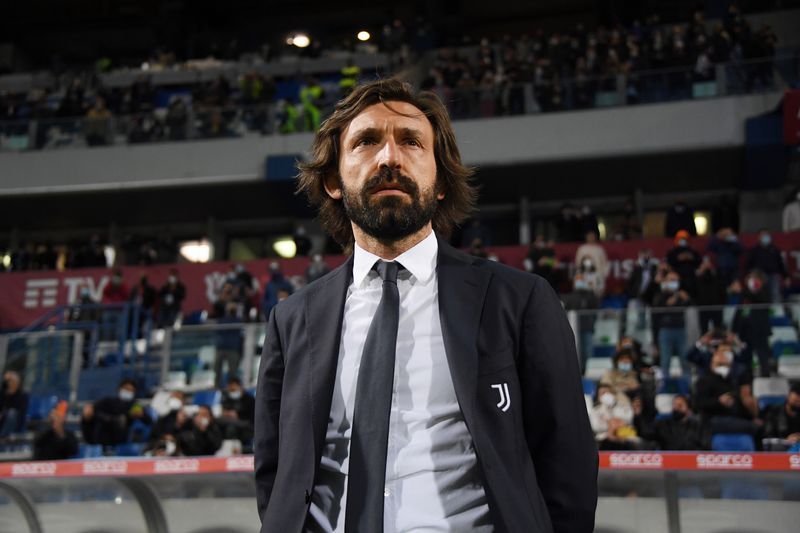
Andrea Pirlo's bid to become Italy's next head coach has stalled amid political pushback over his association with a Russian gambling operator, creating an unexpected headache for the newly elected leadership of Italian football at a moment when the sport desperately requires stability and renewal.
The 47-year-old World Cup-winning midfielder had emerged as the frontrunner to replace Gennaro Gattuso following the reported rejection of the role by Pep Guardiola, but his appointment is no longer assured. Officials within the Italian Football Federation and members of the Italian Parliament have begun raising alarm bells about Pirlo's role as a global ambassador for Fonbet, a Moscow-based betting company, citing concerns about the reputational implications for the national team.
Pirlo's current position managing United FC in the United Arab Emirates Pro League did not prevent him from taking the ambassadorship with Fonbet in October. The arrangement thrust him into the spotlight when he appeared at an event organised by the bookmaker at Moscow's Luzhniki Stadium alongside former Italy teammate Marco Materazzi. The timing of this appearance coincided with Russia's ongoing military campaign in Ukraine, drawing criticism from observers who questioned the wisdom of such high-profile promotional activity.
Although Pirlo characterised his involvement as apolitical, the controversy has created genuine tension within Italian football's power structure. Giovanni Malago, who recently assumed the presidency of the federation following tumultuous years highlighted by Italy's third consecutive failure to reach the World Cup, faces a complicated start to his tenure. The dispute demonstrates how geopolitical tensions can intersect with sporting governance in unexpected ways, particularly when dealing with commercial relationships that transcend national boundaries.
Support for Pirlo from Paolo Maldini, the newly installed technical director, has proven insufficient to overcome the political opposition. Maldini's backing carries significant weight given his legendary status as both player and administrator, yet parliamentarians and federation figures have concluded that such commercial entanglements are fundamentally incompatible with leading a national team.
Pina Picierno, vice-president of the European Parliament, articulated the criticism pointedly on social media, framing the potential appointment as a step backward rather than forward. She argued that Italian football required transformative change across cultural, ethical and managerial dimensions, suggesting that Pirlo's appointment would represent a failure to deliver on that imperative. Her intervention illustrates how the matter has transcended football to become a political issue with implications for Italy's international standing.
Ignazio La Russa, who heads the Italian Senate and belongs to Prime Minister Giorgia Meloni's political coalition, expressed hesitation when directly questioned. Despite professing respect for the federation's decision-makers and acknowledging Pirlo's credentials as a player, La Russa characterised appointing him as coach a risky venture into the unknown. His measured but clearly sceptical response signals that maintaining the appointment would generate friction with significant political players in Rome.
Carlo Calenda, leader of the centrist Azione party, took an even firmer stance, declaring that anyone promoting Russian interests since 2022 should be disqualified from national office. His intervention establishes a broader principle that extends beyond Pirlo to encompass questions about how Italian public institutions should engage with Russia during the Ukraine crisis. This framing transforms the appointment question into a matter of national principle rather than mere personnel management.
The controversy reveals a broader tension affecting European football as the sport grapples with geopolitical realignment following Russia's invasion of Ukraine. Commercial arrangements forged in more straightforward times now carry unintended political weight. For Malaysian and Southeast Asian readers, the situation illustrates how even sports administration decisions cannot remain insulated from international tensions, a lesson particularly relevant as regional sporting bodies navigate their own relationships with various international partners amid evolving global alignments.
The Federation has neither confirmed nor denied Pirlo's appointment while claiming that his Russian connections are under evaluation. This ambiguous position suggests deliberation rather than decisive action, leaving the appointment in limbo. Resolving the matter will require either Pirlo's withdrawal from consideration, a political compromise that satisfies federation and parliamentary concerns, or Malago and his team accepting the political friction that would accompany pushing through with the appointment against significant resistance.
Ultimately, the saga underscores how Italian football's institutional crisis runs deeper than tactical questions or squad composition. With the national team facing a genuine performance and credibility deficit, the federation's ability to make decisive appointments free from political interference has become compromised at precisely the moment when it most needs autonomy. Whether Pirlo's appointment proceeds or whether the federation turns to an alternative candidate, the episode has exposed the challenges facing Italian football as it attempts to rebuild following sustained disappointment on the international stage.

