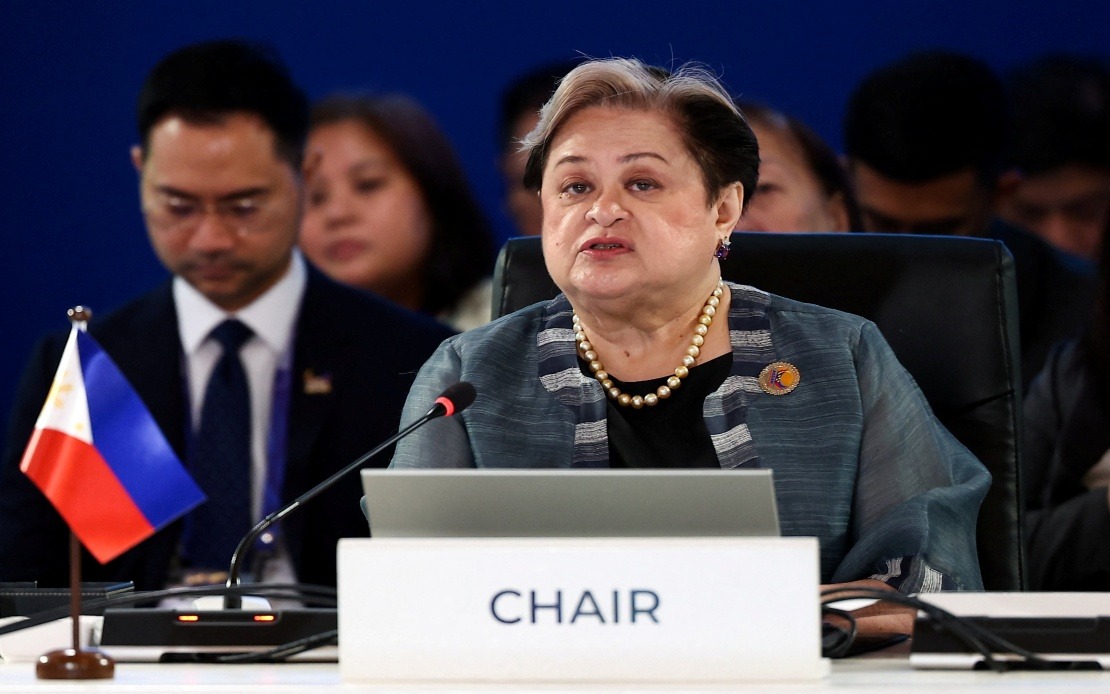
Philippine Foreign Affairs Secretary Ma. Theresa Lazaro, who carries the mantle of special envoy for the ASEAN chair, is preparing to spearhead a humanitarian mission into Myanmar before year-end, according to the Department of Foreign Affairs. The initiative represents a concrete step forward in regional efforts to address the deepening humanitarian crisis within the conflict-affected nation, marking ASEAN's commitment to delivering tangible assistance despite the complex political environment.
The mission announcement comes hot on the heels of intensive diplomatic engagement undertaken by Lazaro across Thailand during mid-July. Over two days of back-to-back consultations, she convened discussions with fellow Southeast Asian foreign ministers and various Myanmar stakeholders to assess the broader political landscape. These talks reflected growing recognition within ASEAN capitals that sustained dialogue, even amid tensions, remains essential to preventing further regional destabilisation.
According to the DFA statement, Lazaro has "committed to lead" the humanitarian venture in the final quarter of 2026, with the added significance that all participating stakeholders have already signalled their support. While specific operational details remain under wraps, the department clarified that the mission's core objective centres on broadening humanitarian access into areas across Myanmar where vulnerable populations face acute shortages of assistance. This measured approach suggests ASEAN is pursuing incremental engagement rather than attempting comprehensive interventions.
The diplomatic choreography became evident on July 12 when Lazaro sat down with Myanmar Foreign Minister U Tin Maung Swe to examine progress on the Five-Point Consensus, ASEAN's foundational framework for addressing Myanmar's crisis. The 5PC, adopted in 2021, encompasses dialogue, humanitarian assistance, non-interference, and support for a political settlement—principles that have proven challenging to implement amid ongoing armed conflict. The conversation focused on identifying pathways through which ASEAN could facilitate Myanmar's gradual re-engagement with the regional community.
That same day, Lazaro chaired an informal gathering bringing together ASEAN foreign ministers with U Tin Maung Swe, transforming a bilateral encounter into a multilateral forum. The Myanmar minister provided briefings on recent developments within his country, outlined implementation progress on the 5PC action items, and detailed his government's 100-day peace initiative. Additionally, discussions addressed transnational criminal networks—an increasingly pressing concern as Myanmar's instability has created space for organised crime to flourish, threatening security across Southeast Asia.
During these consultations, ASEAN's foreign ministers collectively reaffirmed that the Five-Point Consensus remains the cornerstone for addressing Myanmar's tumultuous situation. Lazaro's own interventions underscored a critical message: Myanmar's status as an integral ASEAN member remains unshakeable despite the military junta's controversial 2021 coup and subsequent armed conflict. This rhetoric serves dual purposes—maintaining diplomatic channels while signalling to ASEAN publics that the bloc refuses to permanently ostracise a founding member, even amid severe governance concerns.
The significance of these meetings extends beyond ceremonial engagement. This gathering represented the first in-person session between ASEAN foreign ministers and their Myanmar counterpart since 2021—a striking gap that underscores how relations have deteriorated. The fact that such a meeting could occur at all, and with apparent civility, indicates shifting perceptions that continued isolation serves no party's interests. Both ASEAN and Myanmar's junta appear to recognise that some degree of engagement, however constrained, offers better prospects than complete rupture.
On July 13, Lazaro pivoted toward civil society dimensions of Myanmar's crisis, meeting with representatives from ethnic armed organisations and the National Solidarity and Peacemaking Negotiation Committee. These discussions centred on advancing an inclusive national political dialogue that would bring together competing parties within Myanmar. The DFA noted that participants from all sides demonstrated openness to dialogue processes, whilst emphasising the necessity of careful preparation and constructive engagement. This multi-stakeholder approach acknowledges that durable solutions require involvement from armed groups, ethnic minorities, and civil society—not merely government-to-government discussions.
The humanitarian mission proposal carries particular resonance for Southeast Asia given the region's vulnerability to spillover effects from Myanmar's instability. Protracted conflict has already generated significant displacement, with refugee populations straining resources in bordering nations including Thailand and Bangladesh. Expanded humanitarian access could theoretically alleviate pressure on host countries whilst addressing root causes of forced migration. For Malaysia, traditionally cautious about ASEAN activism, the mission represents a relatively non-interventionist form of engagement focused on impartial assistance rather than political conditionality.
Yet the initiative faces substantial obstacles that the diplomatic success of recent talks should not obscure. Myanmar's military leadership remains locked in active conflict with multiple armed groups, complicating access for humanitarian workers. Previous ASEAN humanitarian proposals have foundered on disagreements over monitoring mechanisms and coordination frameworks. The commitment to lead this mission by year-end suggests ambitious timelines, raising questions about preparedness and whether regional consensus can be translated into operational reality.
The broader context matters considerably for understanding ASEAN's Myanmar strategy. The bloc's traditional emphasis on non-interference and consensus decision-making has constrained its ability to impose meaningful pressure on any member state, including Myanmar. Humanitarian missions represent a less confrontational approach than sanctions or suspensions—methods that ASEAN has historically avoided. This trajectory reflects the organisation's structural limitations but also pragmatic recognition that Myanmar's junta will not respond to coercive approaches.
For Malaysian observers, these developments signal that ASEAN intends to persist with engagement rather than abandon Myanmar to regional isolation. The Philippines' leadership role in advancing the humanitarian mission underscores how individual member states drive ASEAN initiatives within the consensus framework. Whether this mission ultimately succeeds in expanding assistance access will largely determine whether ASEAN can maintain credibility as a bloc genuinely committed to humanitarian principles rather than merely performing concern whilst Myanmar's tragedy deepens.

