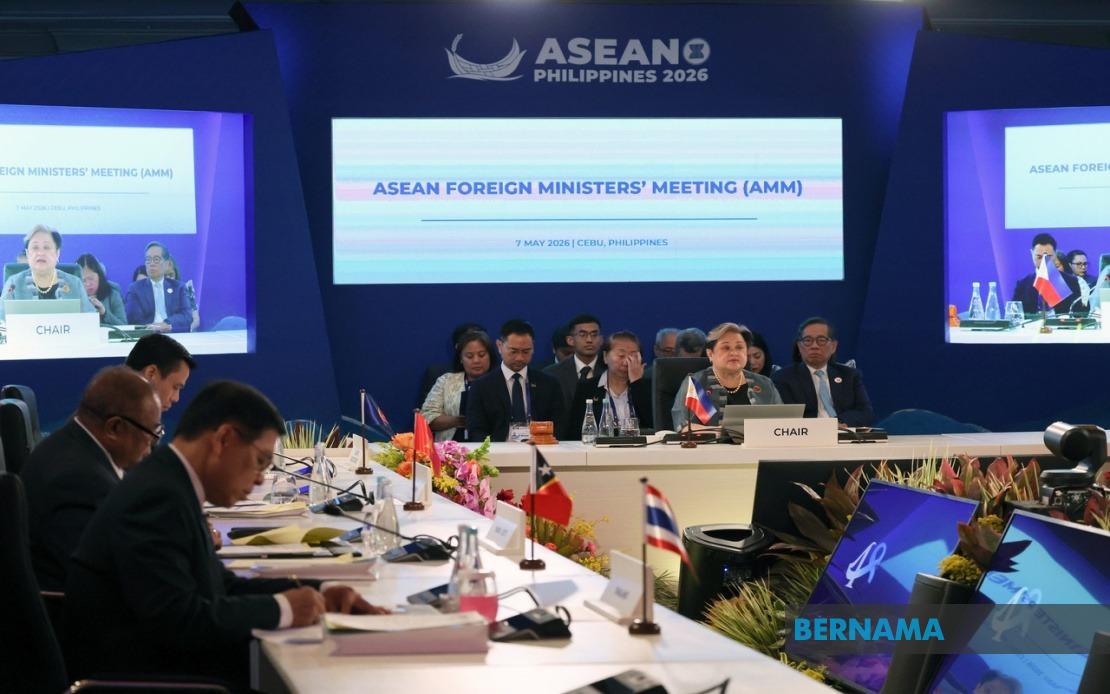
The Philippines has doubled down on its commitment to ASEAN's Five-Point Consensus as the cornerstone for resolving Myanmar's protracted political crisis, yet simultaneously endorsed calls for a more pragmatic and adaptive approach to how the framework is implemented across the region. This nuanced position reflects growing recognition among Southeast Asian capitals that rigid adherence to the original consensus, adopted in April 2021, has failed to produce tangible improvements in Myanmar's deteriorating security and humanitarian situation.
In remarks to the Malaysian news agency Bernama, Philippine Foreign Affairs Secretary Ma. Theresa P. Lazaro articulated a position that many ASEAN members privately hold: the Five-Point Consensus remains valid, but its execution must evolve in lockstep with the rapidly shifting realities confronting Myanmar. The consensus, which mandates an immediate end to violence, promotes inclusive dialogue among conflicting parties, establishes an ASEAN Special Envoy to mediate disputes, facilitates humanitarian aid delivery, and enables the envoy to engage with all stakeholders, was conceived before the Myanmar crisis reached its current intensity. Nearly three years of military rule and intensifying armed resistance have rendered some implementation strategies outdated or ineffective.
Lazaro's intervention carries particular weight given that the Philippines currently holds the ASEAN chair, positioning Manila as the bloc's spokesperson and coordinator on regional challenges. Her emphasis that adaptation does not constitute abandonment serves to reassure both hardliners within ASEAN who fear dilution of collective positions and pragmatists seeking flexibility. This linguistic distinction—between rethinking implementation and rejecting the framework—allows ASEAN member states to pursue different tactical approaches while maintaining a facade of institutional unity, a recurrent feature of the bloc's crisis management approach.
The question of Myanmar's participation in ASEAN forums has become increasingly contentious, with the junta's military leadership barred from attending ASEAN summits since the February 2021 coup ousted civilian leader Aung San Suu Kyi. Currently, only non-political representatives from Myanmar are permitted at high-level meetings, a compromise that satisfies neither those demanding complete exclusion nor those advocating full readmission. Lazaro indicated that any decision to restore Myanmar's full representation hinges on demonstrable progress across three specific metrics: meaningful de-escalation of violence, constructive dialogue involving all parties, and provision of humanitarian assistance to affected populations. Setting such conditions provides ASEAN with measurable benchmarks, though sceptics question whether the military junta possesses either the will or capacity to satisfy them.
The annual ASEAN Leaders' Review and Decision on the Implementation of the Five-Point Consensus has become the principal mechanism for assessing Myanmar's compliance and determining the bloc's future stance. This institutionalized review process offers ASEAN member states periodic opportunities to recalibrate their Myanmar strategy without convening emergency meetings or issuing crisis declarations that might further alienate the junta. Lazaro framed the chair's role as facilitating dialogue among member states on Myanmar's trajectory, acknowledging implicitly that consensus on the issue remains fractious. Some members, particularly Vietnam and Singapore, have pushed for stronger ASEAN pressure on the military regime, whilst others have resisted measures they view as interventionist or counterproductive to engagement.
Malaysia's foreign policy establishment has signalled parallel thinking on the need for operational flexibility within the Five-Point Consensus framework. Foreign Minister Datuk Seri Mohamad Hasan declared in late June that ASEAN was actively exploring enhanced approaches to strengthen the consensus's implementation, thereby acknowledging that the original methodology required refinement. Malaysia's commitment to engaging with multiple stakeholders—including the Myanmar military government, the parallel National Unity Government established by ousted civilians, the People's Defence Force representing armed resistance, and various ethnic armed organizations—reflects an attempt to maintain communication channels across Myanmar's deepening factional divide.
The evolution toward adaptive implementation reflects uncomfortable truths that ASEAN leaders have gradually internalized. The violence in Myanmar has not abated since the 5PC's adoption; instead, it has metastasized across provinces as resistance movements have become increasingly organized and militarized. Humanitarian needs have expanded exponentially, with millions facing food insecurity and disease, yet ASEAN's capacity to deliver aid or influence its distribution remains severely constrained. Inclusive dialogue, the framework's centerpiece, has proven elusive when the military junta refuses to negotiate with entities it designates as terrorists and opposition groups reject any settlement that preserves military institutional power.
For Southeast Asian observers, particularly in Malaysia and Singapore, the Philippines' nuanced repositioning signals that ASEAN may be preparing for prolonged Myanmar instability rather than imminent resolution. Rather than abandon collective frameworks, member states appear to be calibrating expectations and accepting that the bloc's influence over Myanmar's internal trajectory has inherent limits. This represents a maturation of ASEAN's crisis management thinking, acknowledging that consensus-based regional mechanisms, whilst valuable for maintaining solidarity and preventing intervention spirals, cannot substitute for direct regional leverage or fundamental shifts in the willingness of Myanmar's conflicting parties to compromise.
The practical implications for Malaysia and other ASEAN neighbours remain significant. Continued Myanmar destabilization risks generating refugee outflows, criminal trafficking networks, and militant recruitment among displaced populations. Thailand, which shares a lengthy border with Myanmar, faces particular vulnerability to these spillover effects. Malaysia's position as a significant economic power within ASEAN and its historical engagement with diverse Myanmar stakeholders positions it as a potential contributor to any refined implementation strategies, though actual policy instruments available to Southeast Asian nations remain constrained by Myanmar's geopolitical complexities and the junta's strategic alignment with extra-regional powers.
The consensus that emerges from Manila's latest positioning is that ASEAN will persist with its Five-Point framework whilst simultaneously lowering expectations for near-term resolution and increasing tolerance for tactical variation among member states. This pragmatic reorientation may frustrate those seeking bold regional action on Myanmar, yet it reflects hard-won wisdom that sustainable approaches to regional crises require matching ambition to actual capability. For Malaysia and other ASEAN members, the challenge ahead involves translating this flexibility into meaningful support for Myanmar's suffering populations whilst preserving sufficient institutional coherence to prevent the bloc's fragmentation on this enduring crisis.

