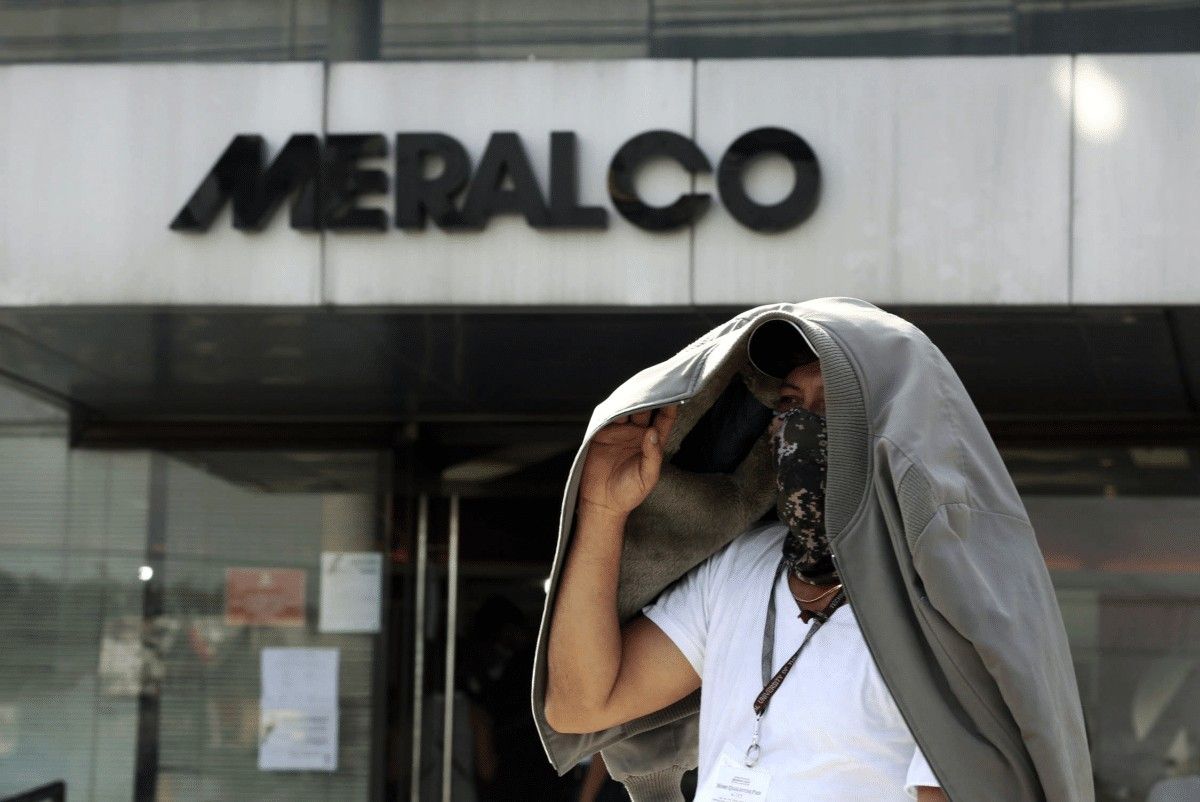
Manila's largest power distributor, Manila Electric Co. (Meralco), has been ordered by the Philippine Energy Regulatory Commission to return ₱9.5 billion to its millions of customers in a decision that provides some relief from the persistently high electricity costs that have burdened households and businesses across the capital region. The ruling, issued on July 31, directs Meralco to distribute the refund at a rate of ₱0.3449 per kilowatt-hour as a distinct entry on consumer bills, with the entire amount to be returned within a six-month window. Energy Regulatory Commission chair and chief executive officer Francis Saturnino Juan confirmed that implementation will commence during the next billing cycle once the utility formally receives the regulatory order.
The refund addresses a structural quirk in the Philippine electricity pricing system known as the "lapsed period," which refers to the interval between successive rate adjustment cycles. During 2025, consumers were charged using tariff structures that had not been updated to reflect Meralco's current operational costs and capital investment requirements, resulting in what regulators determined to be an excessive accumulation of revenues. This gap between outdated rates and actual service delivery costs created what the energy sector calls an "over-recovery," meaning the distributor collected more money than its approved formula permitted.
Under the regulatory framework governing major utility providers in the Philippines, companies like Meralco must periodically submit comprehensive filings to the ERC detailing their projected expenditures and planned infrastructure investments over a specified period, typically spanning five years unless extended at regulatory discretion. These submissions form the evidentiary foundation for determining the rates that utilities may charge consumers during the subsequent regulatory period. The rate-setting mechanism is designed as a balance: it ensures utilities recover legitimate costs while protecting consumers from excessive pricing. However, when months elapse between rate adjustment cycles—as occurred throughout 2025—the protection deteriorates, and utilities may collect revenue streams that exceed what the preceding approved tariff structure contemplated.
The ₱9.5 billion refund represents the regulatory commission's determination of the full extent of Meralco's over-recovery during the entire lapsed period spanning January through December 2025. The ERC's reasoning emphasized that because Meralco had accumulated surplus revenues beyond its regulated entitlement, prudent utility regulation required restoration of those funds to the customer base. Importantly, the commission's decision incorporated interest costs into the refund calculation, recognizing that consumers had been deprived of the purchasing power represented by overcharges throughout the year. This approach treats the over-recovery not merely as a pricing technicality but as funds that rightfully belonged to consumers and should be returned with the time value of money factored in.
For Malaysian observers of regional energy regulation, the Philippine situation illustrates both the promise and limitations of independent utility commissions in developing Asia-Pacific economies. The ERC's willingness to order substantial refunds demonstrates institutional capacity to push back against dominant utilities, yet the mechanism itself reveals systemic vulnerabilities. The existence of protracted lapsed periods—where consumers pay outdated rates for extended intervals—reflects capacity constraints in regulatory agencies and the complexity of managing rate adjustments in inflation-prone environments with volatile input costs. Many Southeast Asian countries grapple with similar dynamics, where regulatory lag creates windfalls for utilities that consumers eventually recover only through formal commission orders, often after considerable delay.
Meralco's billing system will present this refund as a separate line item rather than incorporating it into the standard tariff, a procedural choice that serves pedagogical purposes. By isolating the refund credit on individual bills, consumers can see precisely how much they are receiving back and understand that the regulator has intervened on their behalf. This transparency contrasts with alternative approaches that might have buried refund adjustments within normal rate calculations, rendering them invisible to end-users. The separation also creates clear documentation of the regulatory action, which matters for consumer advocacy groups and civil society organizations monitoring utility performance.
The refund's magnitude—nearly ₱10 billion across Meralco's vast customer base spanning Metro Manila and surrounding regions—underscores the scale of revenue collection under regulatory lapse conditions. While individual household credits may appear modest when divided across millions of consumers, the aggregate figure demonstrates that utility regulation in the Philippines involves sums capable of materially affecting government budgets and consumer welfare. For context, the refund amount rivals development spending allocations in Philippine provincial budgets, illustrating how electricity pricing intersects with broader fiscal and distributional questions in the economy.
Meralco's position as the country's dominant power distributor—serving roughly 7 million customers—means that regulatory decisions affecting the company generate economy-wide consequences. Meralco's operational efficiency or inefficiency, the rates it charges, and the quality of service it provides influence industrial competitiveness, household budgets, and the overall attractiveness of investing in the Philippines. The ERC's enforcement of refund obligations signals that even major, politically-connected utilities remain subject to regulatory discipline, though the extended interval required to identify and remedy the over-recovery raises questions about real-time regulatory oversight capacity.
Looking ahead, this refund decision may catalyze discussion about how to shorten lapsed periods and accelerate rate adjustment cycles, reducing the window during which pricing misalignment accumulates. Some regulatory frameworks employ automatic adjustment mechanisms that modify tariffs quarterly or semi-annually based on indexed cost movements, thereby minimizing prolonged periods of rate stasis. The Philippine energy sector may increasingly consider whether such mechanisms could reduce both consumer exposure to overcharges and utility exposure to under-recovery of legitimate costs. The ongoing challenge for energy regulators across Southeast Asia remains calibrating the frequency of rate adjustments to balance the competing interests of investment sustainability and consumer affordability without creating administrative burden that regulators lack capacity to manage.
The practical implementation of the ₱9.5 billion refund will unfold across millions of individual transactions over the next six months, creating the technical and administrative challenge of ensuring credits reach the correct consumer accounts and accurately reflect the approved per-kilowatt-hour rate. Any implementation failures or billing errors could undermine the regulatory victory and fuel consumer frustration. The ERC's careful specification of the refund amount and timeframe reflects awareness of these operational risks, though execution ultimately depends on Meralco's systems and personnel. Consumer awareness campaigns will likely prove necessary to educate households that incoming bill credits reflect regulatory action rather than errors or promotional offerings, a distinction that matters for public understanding of how utility regulation functions in practice.

