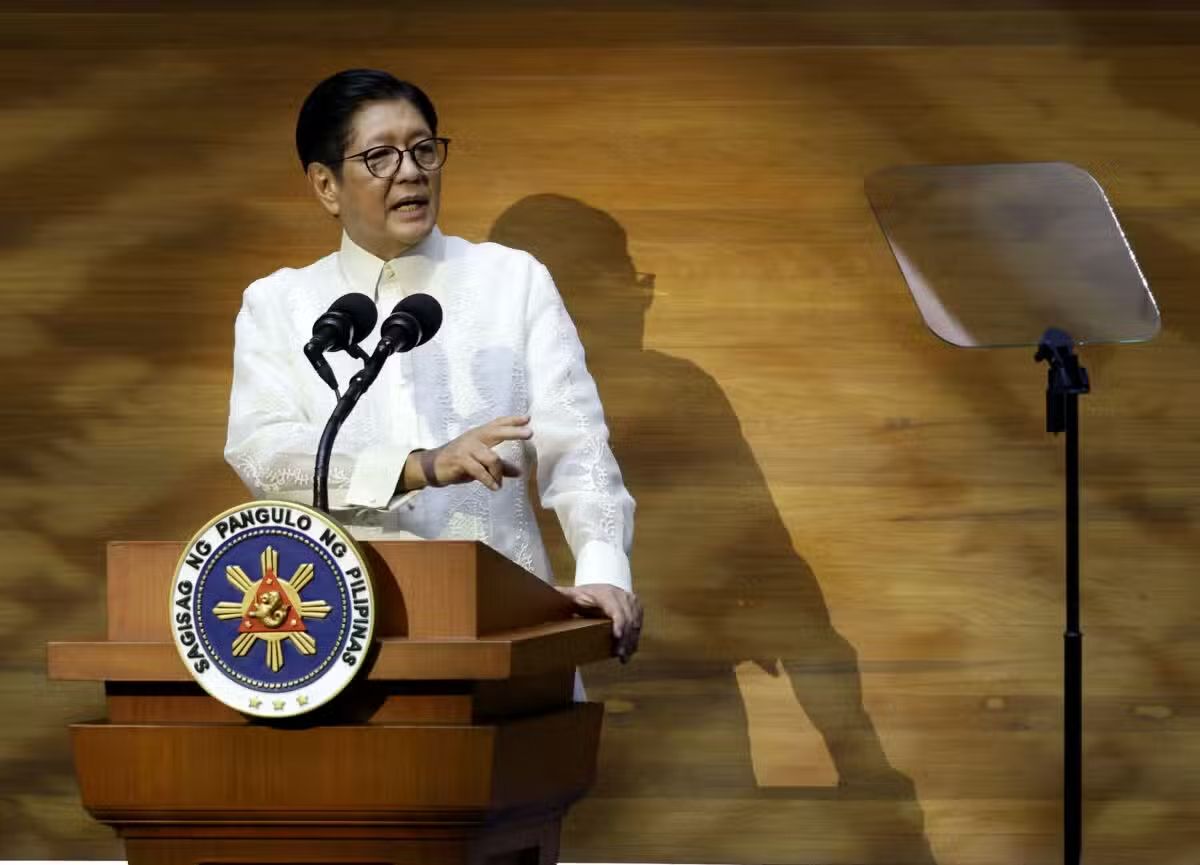
President Ferdinand Marcos delivered his fifth State of the Nation Address in 2026 with a focus on economic support for ordinary Filipinos and entrepreneurs struggling with the fallout from international crises. At the centre of his message was a recognition that policymakers cannot afford to overlook the middle class and small business sector, which continue to absorb the shocks of global instability alongside mounting local economic challenges.
Marcos framed his tax relief initiatives as essential to sustaining the Philippines' development trajectory during a period of heightened uncertainty. The President acknowledged that workers and business owners face mounting pressures as the ripple effects of regional conflicts, particularly tensions in the Middle East, continue to disrupt supply chains, inflate costs, and dampen consumer confidence across Southeast Asia. He argued that deliberate fiscal intervention is necessary to prevent erosion of household purchasing power and entrepreneurial momentum.
The centrepiece of the administration's economic agenda involves expanding the personal income tax exemption threshold to ₱350,000 annually—a significant measure that would lift considerable numbers of middle-class earners out of the income tax net. This approach aims to preserve disposable income among professionals, managers, and semi-skilled workers who form the backbone of domestic consumption. By allowing these wage earners to retain additional earnings, the government hopes to sustain domestic demand for goods and services, thereby supporting broader economic growth.
Beyond individual income tax adjustments, the administration is proposing reductions to marginal tax rates for other wage earners who remain in the taxable bracket. These graduated decreases would benefit mid-to-upper income workers, whose spending patterns typically influence retail sectors, property markets, and professional services across the economy. The cumulative effect of lower tax burdens on this cohort could provide meaningful stimulus without requiring direct government expenditure.
Small and medium enterprises, which account for the vast majority of Philippine businesses and employment, would receive targeted relief through exemptions from minimum corporate income tax requirements. This provision recognises that small businesses often operate with thin profit margins and limited cash reserves, making fixed tax obligations particularly burdensome during economic slowdowns. By lifting this compliance burden, the government signals support for entrepreneurial activity and the job creation these enterprises generate in local communities.
The administration is simultaneously proposing an expansive tax amnesty programme that would allow individuals and businesses to settle outstanding tax liabilities with reduced or eliminated penalties. This amnesty would cover unpaid income tax, estate tax, donor's tax, and value-added tax obligations alongside associated surcharges and interest. Such programmes, when structured carefully, can broaden the tax base by bringing previously non-compliant taxpayers into the formal system while generating revenue windfalls that help offset initial revenue losses from rate reductions.
Marcos explicitly connected these tax measures to the goal of building economic resilience in an unstable international environment. His framing reflects a wider regional concern that protectionist policies and geopolitical tensions threaten the open trade system upon which countries like the Philippines depend. By strengthening domestic demand and business viability through tax relief, the administration aims to create an economic foundation less vulnerable to external shocks. This approach prioritises stimulus over austerity during periods of global uncertainty.
The Philippines' tax-to-GDP ratio remains relatively low by regional standards, suggesting that tax relief need not precipitate immediate fiscal crisis if paired with prudent spending management and revenue measures elsewhere. However, the timing of these proposals demands scrutiny from Malaysian observers. Southeast Asian economies face similar pressures from Middle Eastern tensions, supply chain volatility, and inflation, yet countries approach fiscal stimulus differently depending on their debt levels, currency stability, and revenue bases.
Marcos called on the Philippine Congress to move swiftly in enacting the necessary legislation, underlining the administration's sense of urgency. The legislative calendar and political dynamics in the Philippine legislature will determine how quickly these proposals advance and whether they face significant modification. Delayed passage could limit their effectiveness as immediate economic stimulus, though proponents might argue that permanent tax relief has value regardless of timing.
The broader strategic aim appears to be a rebalancing toward what the administration frames as a more equitable fiscal system. Rather than viewing taxation solely as a revenue instrument, Marcos presented tax policy as a tool for managing income distribution, incentivising behaviour, and sustaining social cohesion. This perspective aligns with international trends toward progressive taxation and targeted relief, though it contrasts with some fiscal orthodox approaches favoured in previous Philippine administrations.
For Malaysian policymakers and observers, the Philippine approach offers comparative insight into how neighbouring countries address similar economic pressures. Malaysia's own tax system, debt position, and economic structure differ significantly from the Philippines, yet both nations grapple with balancing stimulus and sustainability. The effectiveness of Marcos's tax relief package in achieving stated objectives—economic resilience, business growth, and equitable development—will provide valuable data for regional economic policy discussions.
The proposed reforms ultimately reflect a political calculus that prioritises near-term relief and sentiment among working Filipinos and entrepreneurs over longer-term fiscal consolidation. Whether this approach proves sustainable depends on complementary spending discipline, continued growth in tax compliance among amnesty participants, and the extent to which global conditions stabilise. The Middle East situation and its economic consequences will remain crucial variables shaping the effectiveness and necessity of these measures.

