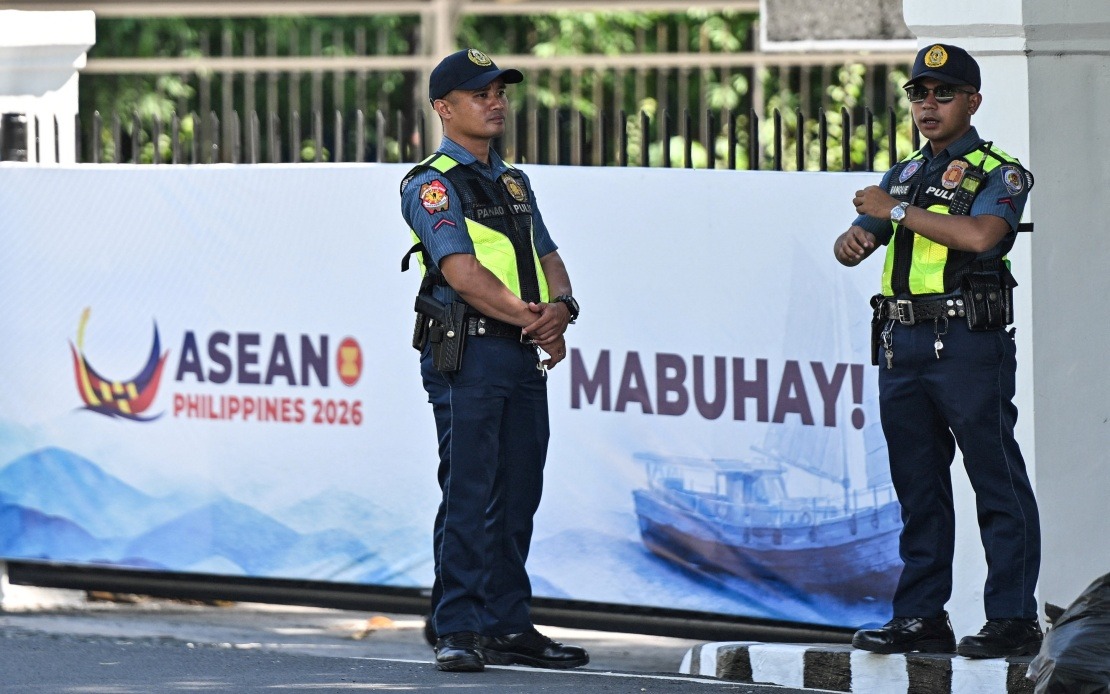
The Philippines took the helm of regional diplomacy this week as it hosted the 59th ASEAN Foreign Ministers' Meeting and related gatherings in Manila, positioning itself at the centre of critical conversations reshaping Southeast Asia's geopolitical landscape. The five-day gathering running through July 24 represents far more than a routine diplomatic rotation—it provides a crucial platform for candid dialogue on the security pressures, human rights obligations, and territorial tensions that increasingly define the region's strategic environment.
Philippine Foreign Affairs Assistant Secretary Dominic Xavier Imperial, speaking as ASEAN Spokesperson, framed the meetings as a continuation of momentum built over the preceding seven months, with the emphasis clearly on solidifying the bloc's collective identity precisely when global tensions threaten to splinter regional unity. The undertaking encompasses multiple ministerial forums layered across the week, each designed to address specific dimensions of ASEAN's institutional and strategic responsibilities. This architecture reflects how Southeast Asian diplomacy has evolved to manage competing pressures from major powers while maintaining the region's voice in shaping its own future.
The week commenced with an interface between ASEAN Foreign Ministers and the ASEAN Intergovernmental Commission on Human Rights—the 16th such formal engagement. This meeting underscores an institutional commitment that many outside observers underestimate: despite perceptions of ASEAN's non-interventionist tradition, the bloc has gradually embedded human rights considerations into its policy framework, particularly regarding vulnerable populations. Imperial's framing deliberately emphasised this dimension, signalling that the Philippines' chairmanship views human rights not as peripheral activism but as central to regional stability and community legitimacy.
Parallel discussions at the Southeast Asia Nuclear Weapon-Free Zone Commission proved equally consequential. Regional foreign ministers reviewed the strategic plan guiding the mechanism through 2027 and examined protocols for admitting new member states. The SEANWFZ represents perhaps ASEAN's most tangible security achievement—a decades-old commitment to exclude nuclear weapons from Southeast Asian territory, a safeguard that persists despite surrounding great power competition. Maintaining and strengthening this framework sends a quiet but unmistakable message that the region will not become a theatre for weapons escalation, even as security anxieties mount elsewhere.
The formal 59th AMM session opened on Tuesday with the symbolic gathering of foreign ministers and the diplomatic corps stationed in Manila. The agenda stretched across ASEAN's traditional pillars: the Political-Security Community, the Economic Community, and the Socio-Cultural Community. Ministers were expected to assess progress on existing initiatives while exchanging perspectives on international developments that touch Southeast Asia's interests—a deliberately broad formulation that encompasses everything from Middle Eastern conflicts to global economic shifts.
Two major outcome documents dominated the Tuesday proceedings. The Joint Communiqué functions as ASEAN's collective voice, capturing agreed positions and strategic priorities that external stakeholders watch carefully for signals about regional consensus or fracture lines. Equally significant were the Guidelines on Modalities for Engagement with Treaty of Amity and Cooperation signatories. This deliverable of the Philippine chairmanship establishes structured protocols for countries without formal ASEAN partnerships, addressing a longstanding ambiguity about how the bloc manages relationships with states outside its formal institutional framework. Imperial characterised these guidelines as essential to maintaining the TAC's role as the region's foundational peace architecture.
Wednesday's Post-Ministerial Conferences with dialogue partners—India, the United States, Canada, Russia, China, South Korea, Japan, Australia, New Zealand, the United Kingdom, and the European Union—elevated the gathering's significance beyond intra-ASEAN business. These sessions function as pressure relief valves and negotiating forums where dialogue partners present their regional visions directly to the assembled ASEAN ministers. In the current geopolitical environment, characterised by sharpening US-China competition and increasing strategic hedging among middle powers, these multilateral spaces acquire heightened importance. Imperial noted explicitly that the meetings provide venues for dialogue partners to address issues affecting both the region and global affairs, a diplomatic acknowledgment that Southeast Asia's stability increasingly intertwines with broader international dynamics.
The bilateral meeting between Philippine Foreign Affairs Secretary Ma. Theresa Lazaro and Chinese Foreign Minister Wang Yi commanded particular attention, reflecting the sensitivity surrounding Manila-Beijing relations. Imperial confirmed the encounter would address bilateral issues while examining regional implications of global developments—diplomatic language that masks the underlying tensions over maritime claims and strategic alignment. The inclusion of this meeting in the official ASEAN week schedule indicates both powers' commitment to managing their differences within multilateral frameworks rather than allowing disputes to overwhelm regional architecture.
Two perennial challenges animated behind-the-scenes discussions: the Myanmar crisis and South China Sea territorial disputes. While Imperial acknowledged that final negotiating positions remained malleable, he confirmed that the Code of Conduct negotiations and the Five-Point Consensus on Myanmar would feature prominently. The COC has become a touchstone of ASEAN's diplomatic efforts to establish ground rules for South China Sea activity, though progress toward finalisation has repeatedly encountered obstacles linked to competing national interests. Similarly, the Myanmar situation reflects ASEAN's ongoing struggle to balance non-interference principles with pressure to enforce accountability for the military junta's actions. Imperial's statement that engagement continued with both the State Administration Council and other Myanmar stakeholders suggested a pragmatic acceptance that progress would be incremental rather than transformative.
The week's concluding ceremonial activity—marking the Treaty of Amity and Cooperation's 50th anniversary—carried symbolic weight beyond its commemorative function. The TAC represents ASEAN's most successful institutional export, having attracted signatures from major and middle powers seeking frameworks for peaceful coexistence in an anarchic international system. Fifty years of continuous endorsement by diverse states testifies to the document's continuing relevance, even as great power competition complicates Southeast Asian statecraft. For Malaysian observers and policymakers, these meetings underscore both the opportunities and constraints inherent in ASEAN diplomacy: the bloc remains the region's most effective multilateral mechanism, yet its decisions increasingly depend on managing tensions between member states' differing strategic preferences and external powers' competing interests in Southeast Asian stability.

