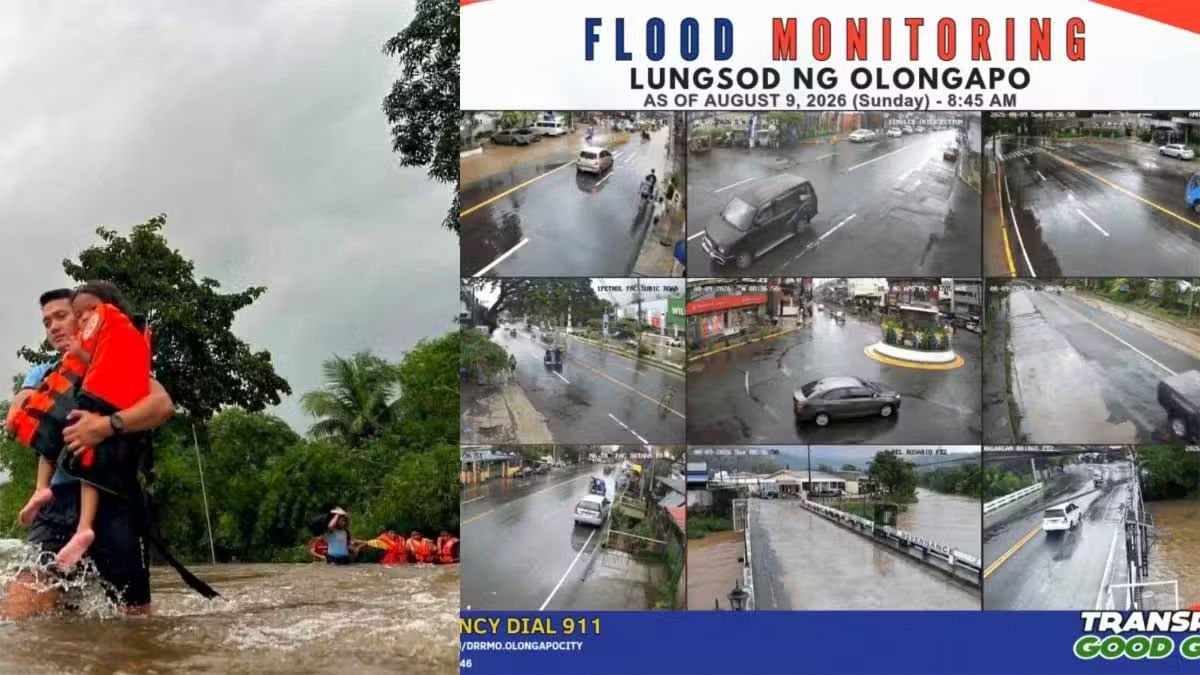
The Philippines is confronting one of its most serious monsoon disasters in recent months, with rescue teams mobilising across flood-ravaged regions as the southwest monsoon—locally known as the habagat—intensifies thanks to the concurrent influence of Tropical Depression Luis and Tropical Storm Maymay. By Sunday, authorities reported that more than 382,000 people spanning approximately 110,000 families had been displaced or affected, predominantly concentrated in eight regions stretching across the archipelago's major islands of Luzon and Mindanao.
The human toll has been mounting steadily, with at least nine confirmed deaths as of Sunday evening. Casualties range from drowning victims caught in swollen rivers to those struck down by falling debris and landslide impacts. One particularly tragic incident involved a policeman in Negros Occidental who perished while attempting to rescue two colleagues from a fast-flowing river, exemplifying the dangerous conditions emergency personnel face in such disasters. Another fatality involved a 28-year-old man from Batangas who was electrocuted while traversing a water-logged highway, underscoring the hidden hazards that floodwaters create for ordinary citizens.
The Philippine Atmospheric, Geophysical and Astronomical Services Administration (Pagasa) has warned that heavy downpours will persist through Wednesday, with particular concern for elevated and mountainous terrain where rainfall accumulation could be substantially heavier. The forecasting agency cautioned that areas already saturated by intense precipitation face compounded risks of further inundation and secondary hazards such as mudslides and rockfalls. This persistent weather pattern, driven by converging atmospheric disturbances, has overwhelmed flood management infrastructure across multiple provinces and metropolitan zones.
Central Luzon bore particularly severe impacts, with flooding affecting 98 villages and touching nearly 170,000 residents. In Nueva Ecija and Zambales provinces, local government units conducted precautionary evacuations for more than 2,500 people as water levels rose precipitously. The Calabarzon region, encompassing five provinces, reported over 7,000 families forced into evacuation centres scattered across 29 localities. In Zambales, the situation deteriorated when a protective dike breached in San Marcelino, severing road access for entire communities and rendering normal commerce and transportation impossible.
The crisis has exposed significant strain on critical water infrastructure. Angat Dam in Bulacan, which serves as the primary reservoir supplying Metro Manila with water, experienced a dramatic surge of nearly 15 metres in just ten days. The water level climbed from 161.30 metres above sea level at dawn to 164.80 metres by mid-afternoon on Sunday, approaching critically high thresholds. This rapid ascent from the reservoir's record low of 150.61 metres recorded in late July demonstrates the intensity of the current weather system. Downstream, Ipo Dam approached its 101-metre spilling threshold while discharging over 314 cubic metres of water per second into receiving rivers and valleys.
Transportation networks have sustained extensive damage across multiple provinces. Two bridges spanning the Chico River in Cagayan became impassable due to swollen waters, while major thoroughfares experienced temporary or complete closures from landslides, rockfalls, and debris accumulation. Nueva Vizcaya, Abra, and Mountain Province all reported road blockages from geological hazards triggered by sustained heavy precipitation. In Zambales, a bridge connecting Barangay Santa Fe was destroyed by forceful currents, while strong winds inflicted damage on at least 11 houses and public infrastructure in San Antonio. Iloilo City experienced what authorities suspect was a tornado accompanied by intense monsoon gusts, which damaged 52 residences, toppled utility poles and trees, and displaced more than 150 residents.
Maritine operations ground to a standstill as well, with the Philippine Coast Guard reporting that 543 passengers, commercial drivers, and cargo handlers were stranded across 28 ports spanning four regions. Ferry services, which form crucial transportation arteries for island communities and interregional commerce, suspended operations indefinitely due to hazardous sea conditions generated by the monsoon system. This disruption compounds the economic strain already being imposed by terrestrial flooding and infrastructure damage.
Philippine National Police leadership, represented by chief Gen Jose Melencio Nartatez Jr, coordinated rescue and evacuation efforts while emphasising the importance of public cooperation and adherence to official guidance. Police commanders mobilised additional personnel and resources to reach stranded residents and prevent loss of life in secondary disasters. The police chief also issued guidance asking communities to rely solely on verified official information channels, warning that unconfirmed reports circulating on social media could trigger panic and hamper disaster response operations.
The flooding disaster has reignited political scrutiny regarding the administration's infrastructure spending and flood mitigation programmes. The Makabayan coalition, comprising left-leaning political parties, contended that the Marcos Jr. administration's flood control infrastructure projects have proven inadequate and that systemic failures were being laid bare by the current calamity. Critics pointed to the use of unprogrammed appropriations—discretionary budget allocations—as potential vectors for inefficiency and corruption, particularly during 2027 budget deliberations. This political dimension adds complexity to what is fundamentally a public safety and humanitarian emergency, as policymakers face mounting pressure to demonstrate competence in disaster preparedness and infrastructure development.
For Southeast Asian observers, the Philippines' monsoon flooding underscores the region's shared vulnerability to seasonal weather patterns and the chronic challenge of adapting ageing infrastructure to intensifying climate impacts. Neighbouring countries including Malaysia, Thailand, and Indonesia face similar monsoon-driven flooding risks, making the Philippine experience instructive for regional disaster management approaches. The convergence of natural hazards—monsoon rains amplified by tropical cyclone activity—creates compound risks that challenge even well-resourced disaster agencies, suggesting that regional cooperation on weather forecasting, early warning systems, and mutual aid during extreme events deserves heightened priority as climate variability increases.

