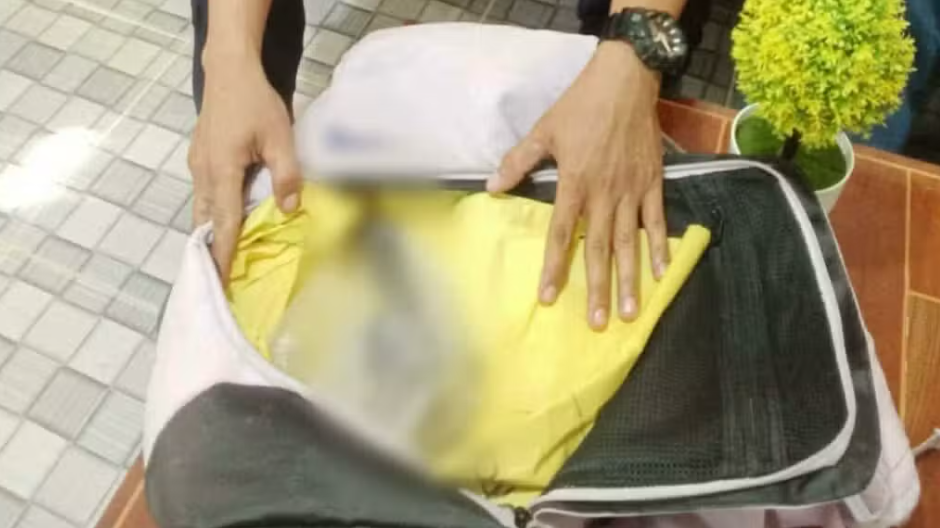
A loaded firearm was discovered inside a secondary school student's bag in the Philippines this week, prompting fresh scrutiny of how weapons are stored in households and raising alarm about school safety across the region. Police in Pinamungajan, Cebu seized a .357 Smith & Wesson Magnum revolver on Thursday afternoon when a teacher conducting a routine bag check at the school encountered the weapon in the possession of a 14-year-old pupil. The discovery occurred at approximately 3.50pm and immediately triggered protocols that led to police involvement and the student's temporary placement in social welfare custody.
According to investigators, the minor had taken the revolver from a locked cabinet at his grandparents' home and deliberately transported it to school. The teenager's parents work outside the municipality, leaving him under the supervision of his elderly relatives—a domestic arrangement common in many parts of the Philippines where extended family care structures predominate. Police documented that the weapon had been stored inside the residential cabinet as the property of the boy's grandfather, an arrangement that proved inadequate in protecting against access by a curious or troubled adolescent with unsupervised hours at home.
The recovery represents a significant security lapse that extends beyond the individual case. The incident unfolded against a backdrop of heightened tension surrounding school safety in Cebu province, itself triggered by an earlier shooting at a senior high school in Zamboanga that claimed two lives. That incident prompted Governor Pamela Baricuatro to issue directives strengthening security protocols across all educational institutions, both public and private, in her jurisdiction. Her order to police authorities emphasized the need for sustained police presence on campuses, systematic screening procedures, and enhanced coordination between law enforcement and school management.
In response to the governor's mandate, Cebu Police Provincial Office Director Police Colonel Abubakar Udang Mangelen Jr implemented a one-police-to-school arrangement, deploying officers directly to campuses through collaboration with municipal governments and educational administrators. This scheme places uniformed personnel within or near school grounds during operating hours, designed to deter weapons smuggling and provide immediate response capacity in emergencies. The deployment represents a substantial commitment of police resources and signals official acknowledgement that contemporary school environments require visible security infrastructure.
The circumstances surrounding this particular discovery highlight how firearms can reach educational facilities through pathways authorities struggle to monitor effectively. The teenager's act of taking a weapon from home was impulsive and opportunistic rather than the result of coordinated criminal intent, yet it demonstrates the thin margin separating tragic possibility from actual disaster. That the revolver was located through routine administrative inspection—a standard precautionary measure rather than intelligence-led investigation—underscores how easily such items might otherwise pass undetected in crowded school environments where bag checks remain inconsistently applied.
For regional security experts and parents across Southeast Asia, the case illustrates broader tensions in societies with substantial civilian firearm ownership. The Philippines permits private gun ownership under regulated licensing frameworks, yet enforcement of safe storage standards in domestic settings remains inconsistent, particularly in rural areas and households where security culture is less developed. The revolver's placement in a cabinet accessible to an unsupervised teenager—rather than in a locked safe with ammunition stored separately—reflects common household practices that prioritize convenience over protection.
The student's immediate fate involved transfer to the Municipal Social Welfare and Development Office pending his parents' arrival, following protocols designed to protect minors from the criminal justice system while enabling intervention and counselling. Authorities indicated that appropriate support measures were being coordinated, though the full spectrum of psychological assessment and family counselling required to address whatever prompted the teenager's dangerous decision remained undisclosed. The case raises uncomfortable questions about whether the boy fully comprehended the lethal potential of his actions or whether deeper behavioral concerns preceded this specific incident.
Police authorities used the incident to reiterate guidance directed at all weapon owners, particularly those living in households containing children or adolescents. Official statements emphasized the imperative to store firearms in secure, locked containers and maintain ammunition in separate secured locations—basic safeguarding principles that experience suggests require continuous reinforcement. The message proved timely given that many firearm owners inherited weapons from family members or maintained them primarily for property protection in rural areas where police response times extend beyond minutes.
The discovery's timing, occurring as Cebu schools remain under enhanced alert status following the Zamboanga shooting, created particular anxiety among educational administrators concerned about recurring violence patterns. School leaders face mounting pressure to implement increasingly intrusive security measures—metal detectors, bag searches, police presence—that fundamentally alter campus environments while offering only probabilistic protection against determined individuals. The tension between maintaining educational spaces that feel welcoming and supportive versus transforming them into secured compounds continues to challenge institutional leadership throughout the Philippines and across the region.
Moving forward, the case is likely to intensify pressure on provincial and national authorities to strengthen both household firearm storage regulations and the enforcement mechanisms that ensure compliance. Legislative bodies in various Southeast Asian nations have grappled with balancing legitimate civilian rights to gun ownership with compelling public safety imperatives, particularly regarding minors' access. The Philippine situation reflects broader regional challenges as urbanization, improved policing capabilities, and rising awareness of firearm risks collide with deeply rooted gun-owning cultures in certain communities and demographic groups.

