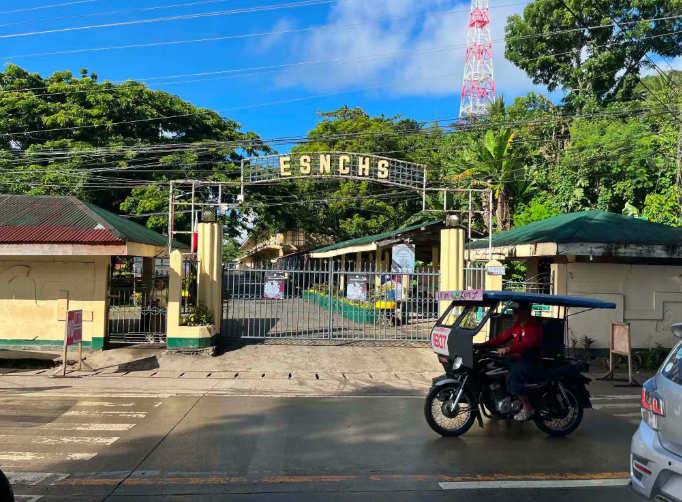
Eastern Samar National Comprehensive High School in Borongan City, one of the Philippines' largest public secondary institutions, halted operations on Friday following circulation of an online post that contained alleged bomb and gun threats attributed to Grade 11 Kitchen Operations students. The threat prompted immediate police intervention and led Acting School Head Dean Ernest Paul Hermano to order a full class suspension aimed at protecting the safety of the school's thousands of students and staff members.
The decision to close the campus represented a coordinated response between the school administration, the Borongan City Police Station, and the Department of Education's local division offices in Eastern Samar. Authorities treated the online post with considerable urgency, deploying a Special Weapons and Tactics team to conduct comprehensive security sweeps across areas mentioned in the photographs included with the threat. By 8:35 a.m. that morning, PLTCOL Silver Cabanillas, the acting chief of Borongan City Police Station, publicly declared the campus secure following the thorough inspection.
The incident cannot be separated from the broader context of rising school security concerns across the Philippines. Just twelve days earlier, on June 22, a student at San Jose National High School in nearby Tacloban City opened fire on campus, resulting in three fatalities and twenty injuries. That tragedy galvanized educational institutions and local government units throughout the Eastern Visayas region to substantially strengthen their security protocols, enhance police presence on school grounds, and reassess their emergency response procedures. The quick action at Eastern Samar National Comprehensive High School reflects how rapidly the climate around school safety has shifted in the region.
Eastern Samar National Comprehensive High School holds particular significance in the local education system, functioning as the provincial flagship secondary institution and serving student populations drawn from Borongan City and surrounding municipalities. The school's size and status mean that any security incident disrupts educational activities for a substantial portion of the region's student body. The closure therefore carried implications extending beyond the immediate campus community, affecting families and educational planning across multiple communities that depend on the institution.
At the time of the school closure, authorities had not yet identified the specific individual or individuals responsible for creating and posting the online threat. The investigation remained active as police worked to establish the authenticity of the claims and determine the motivation behind the post. School administration issued a public statement emphasizing their commitment to taking all security threats with utmost seriousness and their full cooperation with law enforcement agencies investigating the matter. The statement underscored the institution's determination to maintain a secure learning environment for all community members.
The incident exemplifies a troubling pattern of school-related security incidents that have surfaced across Eastern Visayas in recent weeks. Beyond the Tacloban shooting and the Borongan threat, additional security-related incidents have emerged across the region, creating a cumulative effect on public confidence in school safety. These developments have prompted regional authorities to issue appeals urging the public to refrain from sharing unverified information online, cautioning that such circulation of unconfirmed threats can itself trigger widespread panic and unnecessary disruptions to educational services.
The online nature of the threat at Eastern Samar National Comprehensive High School highlights how modern security challenges extend into digital spaces. A post circulated through social media platforms precipitated the same urgent law enforcement response as would a direct on-campus threat, reflecting the reality that school administrators and police must now monitor and assess threats originating from multiple channels. The speed with which an online post can trigger regional and institutional responses demonstrates both the effectiveness of current alert systems and the vulnerability of schools to disruption through digital means.
For Malaysian educators and administrators observing developments in the region, the cascade of incidents in the Philippines underscores the importance of comprehensive security planning that addresses both physical and digital threat vectors. The Eastern Visayas region's experience demonstrates that effective school safety requires coordination across multiple stakeholder groups including police departments, education ministry divisions, school administrations, and local government units. The rapid deployment of specialized police units and the coordinated decision-making evident in the Eastern Samar case reflects institutional capacity that other jurisdictions in Southeast Asia may seek to emulate or adapt to their own contexts.
The authorities' appeal to the public to report genuine threats to law enforcement rather than circulating unverified information online represents a critical element of sustainable school safety policy. In an environment where false alarms can trigger costly disruptions and erode public confidence in safety systems, distinguishing between credible threats and hoaxes becomes essential. Police and school administrators must balance the imperative to investigate all potential threats thoroughly with the need to avoid creating a climate of constant disruption based on unverified online claims.
Moving forward, schools across Eastern Visayas face the challenge of implementing enhanced security measures while maintaining an educational environment that does not feel oppressively fortified to students and families. The June 22 shooting at San Jose National High School catalyzed immediate security responses, yet the system must now sustain these heightened measures over time while working toward addressing the underlying factors that contribute to school violence. The incident at Eastern Samar National Comprehensive High School, whether ultimately confirmed as a genuine threat or determined to be a false alarm, demonstrates that the region's schools now operate within a transformed security landscape where swift response protocols have become standard practice.

