The Philippine Department of Justice has opened an investigation that may result in criminal charges against government officials in connection with a shooting incident at the Senate building on May 13 and the subsequent escape of Senator Ronald dela Rosa from protective custody early the next morning. Justice Secretary Fredderick Vida announced the department is actively examining the circumstances surrounding both events, with a focus on determining whether there is a direct connection between the two incidents.
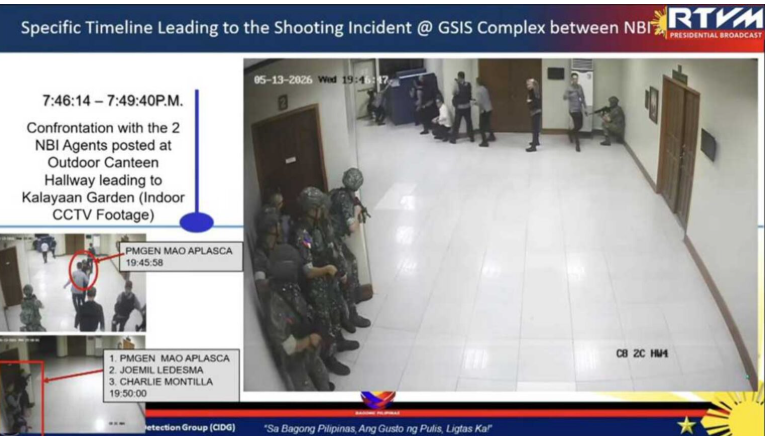
The investigation has already gathered substantial evidence from multiple sources, according to Vida's account to media representatives. Prosecutors on the assigned panel have reviewed witness statements from members of the National Bureau of Investigation, interviewed media personnel who were present at the scene, and analysed CCTV recordings from the area surrounding the Senate complex. This combination of eyewitness testimony and visual documentation is forming the factual foundation of the inquiry.
A critical piece of evidence has emerged from the CCTV footage: sniper fire was discharged from the fifth floor of the Senate building directed at an NBI vehicle that was stationed at the GSIS premises nearby. The identification of this vehicle and the location of the shots provides investigators with concrete details about the nature and scope of the incident, suggesting this was not a random act but a targeted shooting with a specific objective.
When questioned about whether individual suspects have been identified at this early stage, Vida declined to name specific persons but made a telling observation about the profile of those under scrutiny. Speaking in Filipino, he indicated that the department has not yet formally charged or designated particular individuals as suspects, but emphasized that preliminary findings suggest many of the personalities involved occupy positions within the government bureaucracy. This suggestion that public officials may be implicated has significant implications for how the investigation will proceed and how the public may perceive the matter.
The Justice Secretary's remarks underscore the gravity with which the department is approaching the case. Vida stressed that the investigation remains fluid and ongoing, suggesting that new evidence or leads continue to emerge as prosecutors conduct their work. The active nature of the inquiry indicates that multiple lines of questioning are still being pursued and that the full scope of potential wrongdoing has not yet been determined.
Vida provided assurances about the department's handling of the investigation, pledging that prosecutors would conduct their work with professionalism and objectivity. He explicitly stated that the inquiry would proceed without fear or favour, a commitment that addresses potential public concern about whether political considerations or official pressure might influence the outcome. For a case of this sensitivity involving both a violent crime and an apparent breach of security protocols affecting a sitting senator, such reassurances carry weight.
The Justice Secretary also articulated a principle that will likely guide the investigation: no person should face judgment before evidence has been thoroughly examined. This statement appears designed to temper expectations and prevent premature conclusions, while simultaneously reasserting the fundamental legal principle that evidence must precede accusation. The dual emphasis—that no individual stands above the law while equally no person should face prejudgment—reflects the delicate balance prosecutors must maintain in a case touching on both public security and government accountability.
The circumstances of the case present multiple layers of complexity. The shooting itself suggests either a security breach or a deliberate act by someone with access to the Senate building. The subsequent escape of dela Rosa from protective custody raises questions about the adequacy of security measures and whether protocols were properly followed. The potential connection between these two events could indicate either a coordinated operation or merely a coincidental sequence of incidents, a distinction that the investigation must clarify.
For Southeast Asian observers and Malaysian readers familiar with similar security challenges in the region, this case illustrates the institutional vulnerabilities that can persist even in established democratic systems. The Philippines, as the region's second-largest democracy, faces ongoing struggles with enforcing the rule of law and maintaining institutional integrity amid political tensions. The involvement of public officials in what appears to be either a serious crime or a security failure raises questions about command responsibility and institutional oversight that extend beyond this single incident.
The investigation's progress will likely be closely watched not only by Philippine political circles but also by regional observers concerned with governance and institutional accountability. How thoroughly the Justice Department pursues leads that may implicate high-ranking officials will signal whether the country's justice system can maintain independence when confronted with sensitive cases. The outcome may also influence public confidence in the capacity of Philippine institutions to police themselves and hold officials accountable.
For context, dela Rosa is a prominent political figure with a military background who previously served as Philippine National Police chief. His sudden escape from protective custody suggests either deliberate action on his part or a significant security lapse by his protective detail. The circumstances surrounding his departure remain unclear, adding another dimension to the investigation that prosecutors must resolve. The intersection of these events—the targeting of an NBI vehicle and dela Rosa's disappearance—may indicate broader institutional dysfunction or coordinated activity that reaches into multiple government agencies.
The investigation represents a critical test for the Philippine Justice Department's capacity to conduct impartial inquiries into serious matters involving government officials. As the case develops, the department's willingness to pursue evidence wherever it leads, including toward powerful figures if warranted, will determine whether this incident produces meaningful accountability or becomes another example of institutional compromise.