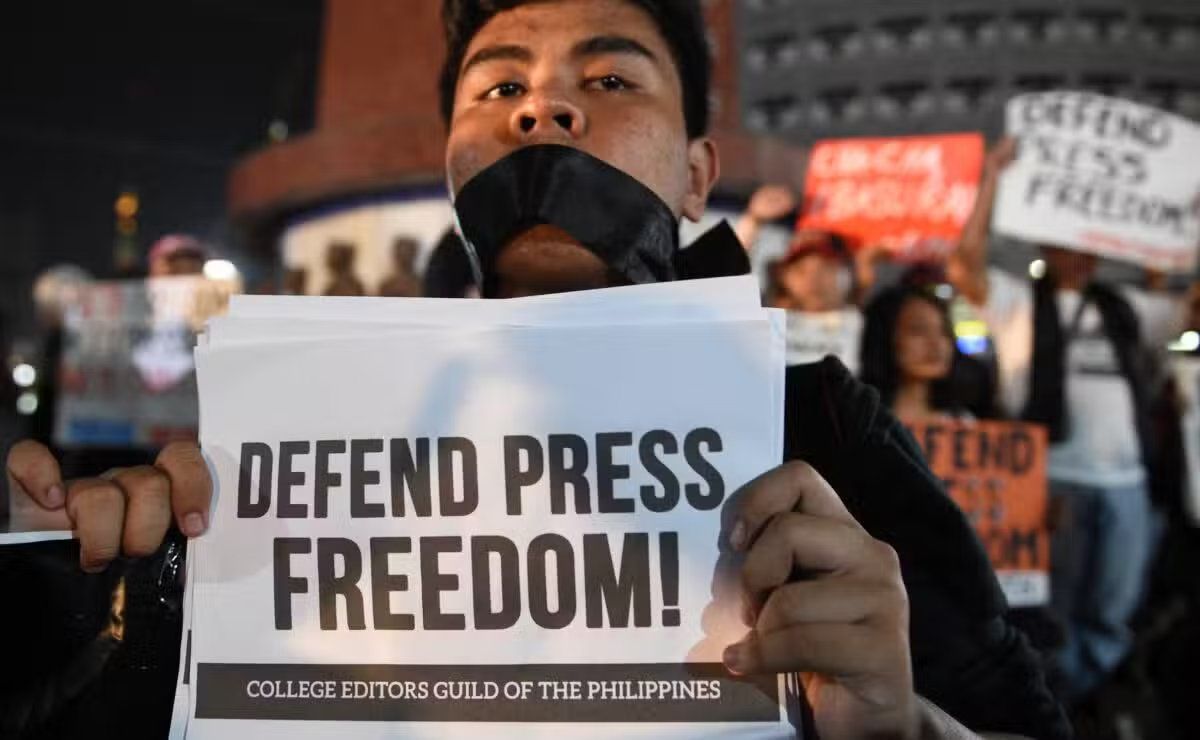
The safety of journalists in the Philippines has deteriorated markedly during President Ferdinand Marcos Jr.'s tenure, with the National Union of Journalists of the Philippines documenting approximately 260 attack cases since his administration began more than four years ago. This troubling accumulation of incidents reveals a pattern that extends beyond raw numbers: the violence disproportionately targets those working furthest from the corridors of power.
A closer examination of the NUJP data exposes a structural vulnerability within Philippine journalism. Of the recorded cases, more than 180 involved journalists employed by community newspapers, provincial radio stations, alternative media operations, and university publications. This distribution underscores a critical disparity in press freedom protections — smaller news organisations and independent outlets operate with constrained budgets, inadequate staff, minimal resources for security, and virtually no institutional machinery to shield their workers from threats. For journalists in these positions, the financial compensation rarely justifies the personal risks they undertake.
Provincial journalism in the Philippines carries distinctive perils that metropolitan counterparts often escape. Journalists working outside Manila's established newsrooms must navigate communities where institutional safeguards are sparse and where local political and business interests wield substantial leverage. The absence of major corporate backing leaves these reporters exposed to direct pressure from powerful figures who may view critical coverage as a personal affront rather than legitimate scrutiny. Yet despite these institutional disadvantages, community journalists persist in investigating stories that major outlets overlook, serving as vital information sources for populations without alternative access to accountability journalism.
The experience of Jay Lavapiez, a 48-year-old station manager at Baskog Radyo in Roxas City, Capiz, exemplifies the heightened vulnerability facing provincial media workers. Last June, Lavapiez survived an assassination attempt when two motorcyclists blocked his vehicle and fired four shots from a nine-millimetre pistol. This near-fatal incident emerged amid a pattern of legal harassment targeting both Lavapiez and his wife, India, stemming from their coverage of a cemetery operated by a local official and allegations of administrative misconduct and financial impropriety. Beginning in 2023 when they first published their investigations, the couple has faced multiple cyberlibel complaints filed across Manila, Muntinlupa, and Capiz — a strategy observers recognise as weaponising the legal system to silence critical reporting.
The mechanics of harassment against provincial journalists employ a multifaceted strategy designed to exhaust and intimidate. Beyond physical threats, journalists encounter libel suits, cyberlibel allegations, coordinated online attacks, public smear campaigns, intimidation by associates of officials under scrutiny, and in extreme cases, armed violence. Lavapiez articulated a particular burden that distinguishes community journalism: provincial reporters cannot simply relocate or create emotional distance from those they cover. They inhabit the same geographic and social spaces as the subjects of their investigations, encountering them repeatedly in daily life while continuing their work. This proximity, while enabling deeper community connection and understanding, creates constant vulnerability.
The economic dimension of this predicament cannot be overlooked. Provincial media staff typically earn modest salaries that bear no proportion to the dangers they face. Journalism in these regions has never been financially rewarding, yet the compensation-to-risk ratio has become increasingly untenable. Unlike journalists at well-resourced metropolitan outlets who may access security consultants, legal support, and institutional backing, provincial reporters navigate threats largely alone. Lavapiez observed that community journalism attracts practitioners motivated by civic purpose rather than financial gain, a factor that enables media proprietors to exploit idealism through inadequate compensation and minimal protection.
The killing of community journalist RJ Ledesma in April in Toboso, Negros Occidental, illustrates the ultimate consequence of this vulnerability. Ledesma was conducting community research and reporting on renewable energy projects and their agricultural impacts when he was killed alongside 18 others during a military operation. A subsequent fact-finding mission documented serious violations, including allegedly indiscriminate fire despite military personnel reportedly having clear sightlines. Ledesma's death represents one extreme point on a spectrum of violence, yet reflects the environment in which provincial journalists operate.
The structural inequality in press freedom protections raises particular concerns for Southeast Asian media landscapes. The Philippines shares with neighbouring nations a pattern wherein provincial and community journalism operates in zones of reduced institutional protection compared to capital-based operations. As authoritarian pressures intensify across the region, independent journalists in provincial areas — often the most effective monitors of local governance — become increasingly vulnerable. The targeting of community media suggests a deliberate erosion strategy that seeks to eliminate scrutiny at the grassroots level where power often operates with minimal oversight.
Lavapiez's account of provincial journalism reveals another dimension: the asymmetrical knowledge that both empowers and endangers local reporters. Community journalists typically know their sources, their environment, and the networks of power intimately. This familiarity enables them to identify corruption, malfeasance, and abuse that outside observers might miss. Simultaneously, this same familiarity makes them visible, their movements predictable, their vulnerabilities apparent to those they investigate. The irony Lavapiez identifies — that proximity to community creates vulnerability — represents a fundamental tension in grassroots journalism that institutional protections elsewhere partially mitigate.
The implications for press freedom extend beyond individual safety. When community journalists are systematically targeted, entire populations lose access to local accountability mechanisms. Citizens in provincial areas depend disproportionately on local media to report on governance, infrastructure, resource allocation, and official misconduct affecting their immediate circumstances. Suppressing community journalism effectively erases local information ecosystems, leaving populations dependent on national outlets that may lack capacity or interest in provincial concerns. This creates information deserts precisely where democratic accountability is most fragile.
Lavapiez and his colleagues do not seek exceptional treatment or security privileges. Their basic request reflects fundamental democratic principles: the freedom to conduct journalism without threat, harassment, legal persecution, or physical harm. Provincial journalists in the Philippines continue their work despite escalating risks, motivated by conviction that communities deserve information about the decisions and officials affecting their lives. As the NUJP emphasises, behind each documented attack stands an individual journalist, a newsroom, and a community whose access to truth is endangered. The pattern of targeting community media suggests a deliberate strategy to eliminate the journalists least capable of defending themselves, operating in areas where accountability mechanisms are already weak.

