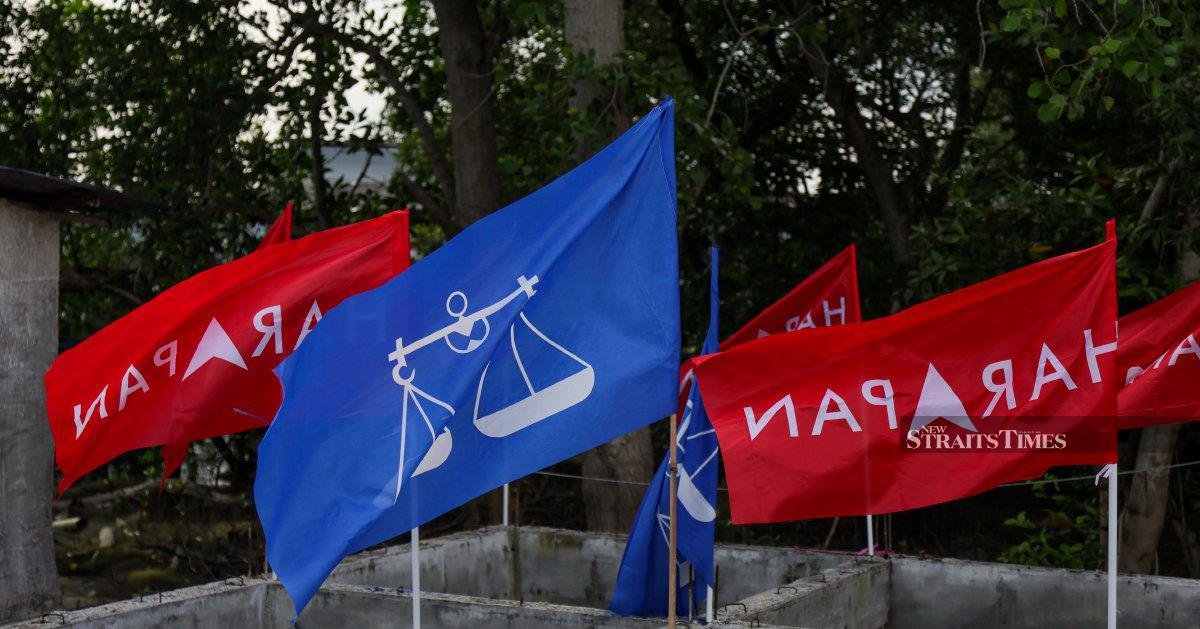
The Pakatan Harapan youth coalition has intensified pressure on the federal government by issuing a direct ultimatum to all Barisan Nasional ministers and deputy ministers, calling for their immediate resignation from the cabinet. The move represents a significant escalation in intra-coalition friction, centring on what PH youth leaders characterise as a fundamental betrayal of the principles underlying Malaysia's unity government arrangement.
At the heart of the dispute lies the recent conduct of BN parties during state elections in Johor and Negri Sembilan, where Barisan Nasional has publicly worked alongside Perikatan Nasional rather than maintaining exclusive alignment with its Pakatan Harapan coalition partners. This collaborative approach in the state contests has prompted PH's youth wing to argue that such electoral cooperation violates the implicit understanding that underpins the unity government structure established at the federal level.
The unity government itself emerged from Malaysia's fractured political landscape following the 2022 general election, where no single coalition achieved an outright parliamentary majority. This unprecedented arrangement brought together Pakatan Harapan, Barisan Nasional, and other supporting parties to form a stable federal administration, with power-sharing agreements meant to distribute ministerial portfolios and strategic influence. However, the model has proven inherently unstable, requiring constant negotiation between coalition partners who retain fundamentally different political ideologies and electoral ambitions.
Barisan Nasional's pragmatic approach to state-level politics reflects deeper institutional realities that PH youth leaders may underestimate. State elections operate under distinct electoral mathematics, with local conditions, demographic patterns, and historical voting preferences often diverging significantly from federal political alignments. BN's decision to work with Perikatan Nasional at the state level represents a strategic calculation that such cooperation maximises electoral prospects in specific geographical contexts where BN and PN share overlapping voter bases or structural advantages.
For Malaysian governance, this escalating dispute carries serious implications. The unity government, despite its evident tensions, has provided relative political stability that has allowed the cabinet to address pressing economic and administrative challenges. Forcing wholesale resignations of BN ministers would destabilise this arrangement and potentially trigger governmental collapse, throwing the nation back into the legislative uncertainty that preceded the unity government's formation. The demand therefore carries consequences far beyond intra-coalition politics.
Peikatan Nasional's position as a kingmaker on the federal level gives it particular strategic importance in this dynamic. The party group has carefully maintained ambiguity about its ultimate political trajectory, neither wholly committing to nor breaking with the unity government arrangement. PN's willingness to cooperate with BN in state elections creates the precise friction points that PH youth leadership now seeks to weaponise, though doing so threatens the equilibrium that PN itself benefits from.
The timing of this demand warrants scrutiny within Malaysia's political calendar. With Johor and Negri Sembilan elections concluded, the spotlight now falls on other scheduled state contests and the medium-term prospect of a general election. PH's youth wing may be positioning their party for a more combative stance ahead of these contests, signalling to the broader electorate that Pakatan Harapan refuses to tolerate coalition partners pursuing independent electoral strategies. However, such posturing risks backfiring if rank-and-file BN members interpret it as an existential threat to their political representation.
BN's response to these demands will fundamentally shape coalition dynamics moving forward. Should Barisan Nasional's senior leadership capitulate to PH pressure and withdraw ministers, they would effectively subordinate BN's electoral autonomy to Pakatan Harapan's political agenda—an arrangement that contradicts BN's historical positioning as an independent political force. Conversely, if BN ministers ignore the demand and remain in cabinet, PH faces the prospect of enforcing consequences through parliamentary mechanisms, potentially triggering a governmental crisis.
The philosophical disagreement underlying this dispute reflects genuine tensions between coalition-building and political competition in Malaysia's current system. Unity governments inherently require partners to sacrifice certain electoral advantages for the sake of governmental stability. Yet parties cannot reasonably be expected to abandon entirely their own political interests, particularly when state-level contests offer opportunities to strengthen organisational capacity and electoral credibility ahead of general elections.
For Southeast Asian observers, Malaysia's unity government experiment represents an important test case for how ethnically diverse, multi-party democracies navigate deep political divisions and institutional instability. The current dispute demonstrates both the fragility of such arrangements and the genuine commitment of major political players to avoiding the full governmental breakdown that would likely accompany the collapse of the current framework.
Longer-term resolution of this conflict likely requires either explicit renegotiation of the unity government's foundational terms to permit state-level electoral cooperation, or the emergence of a clear victor from the next general election that can govern without requiring such internally contradictory arrangements. Until then, Malaysia's cabinet ministers must navigate an increasingly unstable coalition environment where their continued tenure depends partly on factors beyond their direct control.

