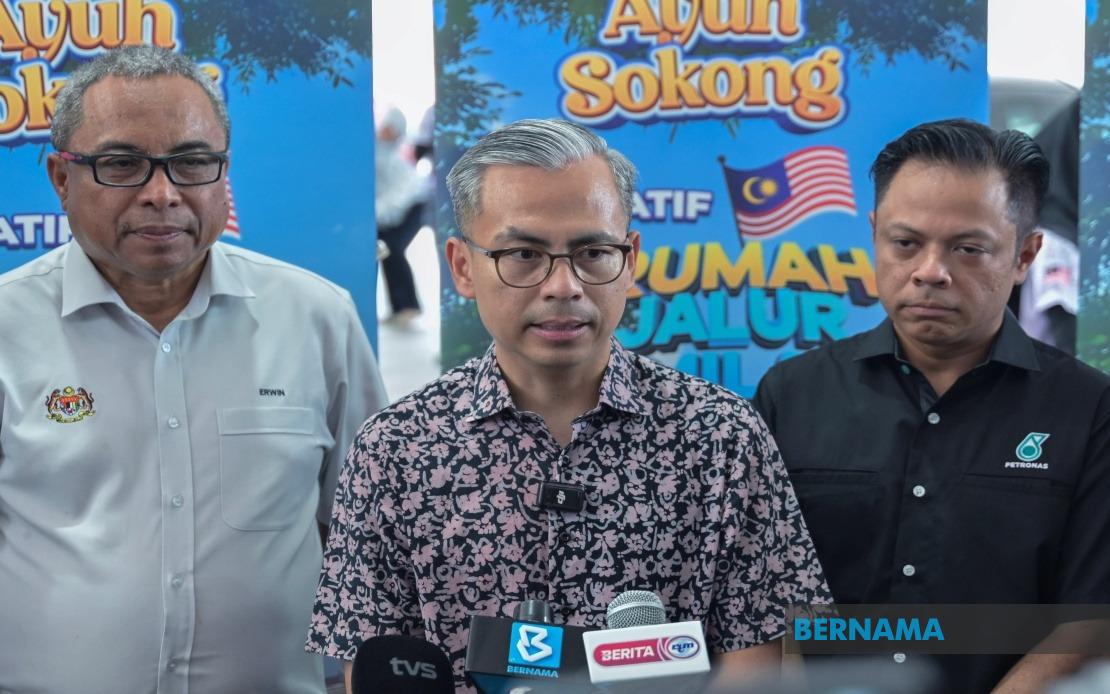
Pakatan Harapan has expressed cautious optimism over Barisan Nasional's willingness to discuss the distribution of state legislative assembly seats for the forthcoming Melaka election, signalling that both coalitions may be moving towards a collaborative approach in the state. Communications director Datuk Seri Fahmi Fadzil characterised the overture as a constructive development that warrants serious examination, particularly given the significant disparity in current representation and the potential benefits for Melaka's political future.
The mathematical reality of the current parliamentary configuration in Melaka underscores why such negotiations matter. With BN commanding 21 state assembly seats compared to PH's five, any electoral arrangement necessarily reflects this substantial majority. Fahmi acknowledged this imbalance during remarks made at a public health initiative in the Lembah Pantai area, emphasising that PH views the negotiating position as grounded in realistic assessment rather than idealistic expectations. This pragmatic stance suggests both coalitions recognise that seat-sharing arrangements, rather than winner-take-all contests, may offer mutual benefits in Melaka's complex political landscape.
Keadilan Melaka's chairman, Yang Berhormat Adam Adli, has already initiated direct conversations with Melaka Chief Minister Datuk Seri Ab Rauf Yusof on this matter, indicating that discussions have moved beyond theoretical interest into substantive dialogue. Such back-channel communication between state-level leaders often precedes broader coalition-level agreements, and the involvement of the Chief Minister himself signals the seriousness with which Melaka's administration regards these negotiations. For PH, this engagement represents an opportunity to strengthen its footprint in a state where it has historically struggled to translate popular support into significant parliamentary representation.
The broader context extends beyond Melaka's borders. Political stability at the state level carries implications for federal governance, particularly given the delicate balance that has characterised Malaysian politics since 2018. Any arrangement that reduces zero-sum electoral competition and encourages cross-coalition cooperation potentially stabilises the national political environment. Fahmi's emphasis on the national significance of Melaka's political situation reflects PH's understanding that developments in this state reverberate through federal calculations and coalition dynamics.
Barisan Nasional chairman Datuk Seri Dr Ahmad Zahid Hamidi had previously outlined the parameters for negotiation with notable clarity. His statement that the coalition remained open to discussing not merely seat allocation but potentially seat exchanges demonstrated flexibility while establishing important boundaries. Critically, he emphasised that any arrangement must proceed on the basis of honesty and sincerity, ruling out arrangements that would erode either coalition partner's legitimacy through artificial seat transfers that contradict electoral mandates. This principled stance suggests BN is not simply offering PH additional seats but rather exploring configurations that respect each partner's genuine electoral strength.
The condition that seats won by any party should be respected and not casually transferred to political partners marks a significant philosophical position. This principle implicitly rejects the kind of patron-client seat-sharing that characterised Malaysian politics in earlier eras, where larger coalition partners could dictate terms to smaller ones without regard for their electoral performance. Such an approach would likely appeal to PH, which has historically positioned itself as championing democratic reform and merit-based advancement rather than backroom dealing. The emphasis on sincerity and honesty in negotiations thus becomes not merely rhetoric but a framework governing how discussions proceed.
For Malaysian voters watching these developments, the implications are mixed. On one hand, reduced electoral competition between major coalitions could dampen political mobilisation and voter enthusiasm, as the stakes of electoral contests become less immediately consequential. On the other hand, cooperation between PH and BN might be perceived as preferable to the fractious and occasionally destabilising electoral competitions that have marked recent Malaysian politics. Melaka, having experienced three state elections in five years, may welcome greater political settlement that allows focus on governance rather than perpetual campaigning.
The practical mechanics of seat-sharing present genuine complexities. Determining which seats each coalition contests requires granular analysis of electoral boundaries, demographic trends, and historical voting patterns. Potential seat exchanges would need to satisfy both coalitions that they receive constituencies with realistic winning prospects, lest they be perceived as having accepted disadvantageous arrangements. The involvement of state and federal level considerations further complicates matters, as national-level coalition interests may diverge from state-level preferences. These technical challenges explain why Fahmi's reference to managing several matters at both state and federal levels carries real significance.
Regional observers across Southeast Asia will monitor how Malaysia resolves questions of coalition governance and competitive cooperation between large political blocs. Many regional democracies struggle with similar issues: how to balance genuine electoral competition with the governance stability that accommodation provides. Malaysia's experiments in this direction, whether in Melaka or elsewhere, offer potential lessons for regional politics, particularly as various Southeast Asian nations grapple with coalition-building and power-sharing arrangements.
The timing of these negotiations, proceeding without apparent acrimony or public recrimination, suggests both coalitions have incentives to reach accommodation. For BN, securing cooperation might limit PH's ability to mobilise opposition to state governance. For PH, achieving seat gains without necessarily winning an election represents incremental progress in a state where it has historically performed poorly. As negotiations proceed, observers will watch whether this apparent good faith translates into concrete arrangements that satisfy both coalitions' political and institutional requirements.

