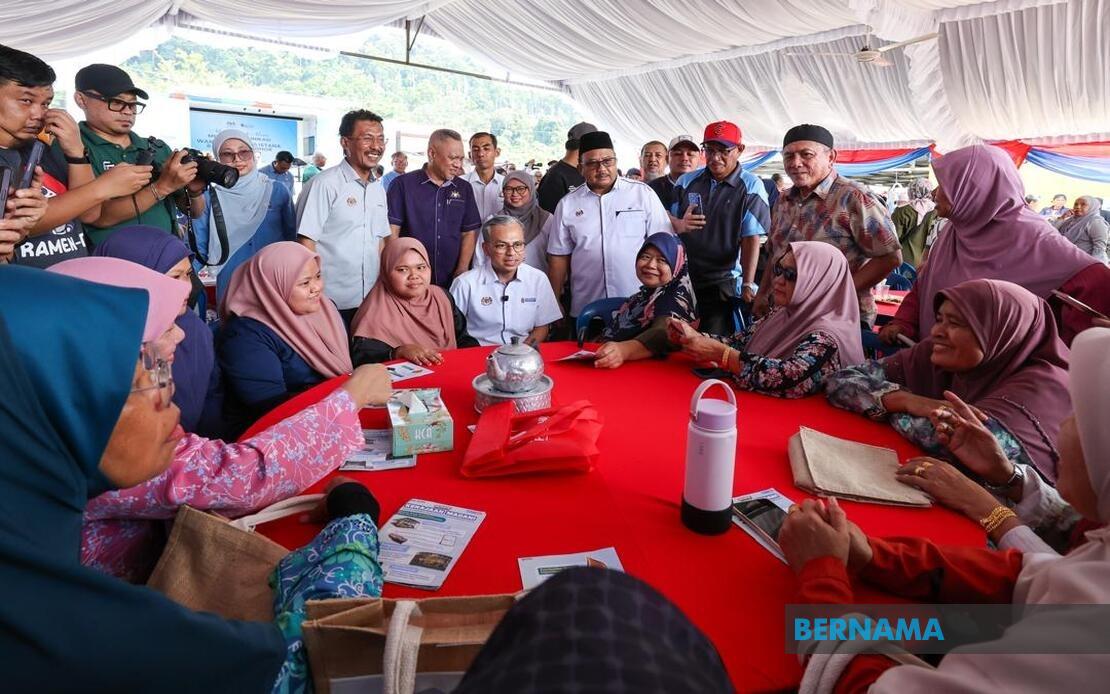
Pakatan Harapan's top communications official has rejected suggestions that the coalition stumbled in its campaign strategy by waiting until Friday to unveil its 'Johor for All' manifesto for the July 11 state election. Speaking during a grassroots engagement session in Batu Pahat, Communications Minister Datuk Fahmi Fadzil maintained that the delayed release reflected a deliberate choice to prioritise policy quality over speed, not a tactical misstep that would hamper PH's electoral prospects in one of Malaysia's most competitive states.
Fahmi's comments directly addressed criticism from former Bangi MP Ong Kian Ming, who had publicly warned that PH's late manifesto launch could hobble the coalition's campaign machinery and contribute to what Ong predicted would be a Barisan Nasional landslide. According to Fahmi, this assessment fundamentally misread the strategic calculus guiding PH's approach. The coalition leadership, he explained, deliberately held back the manifesto's launch until all internal stakeholders, including Prime Minister Anwar Ibrahim, had thoroughly reviewed and formally approved every element of the platform. This ensured the manifesto represented a genuinely cohesive vision rather than being assembled hastily without proper coordination among PH's component parties.
The timing itself, Fahmi contended, aligned logically with the broader campaign rhythm unfolding across Johor. The manifesto's public release on Friday coincided with the start of the campaign's second week, a juncture when both major coalitions would naturally transition from candidate introductions to articulating their competing visions and policy agendas. Positioning the manifesto launch at this inflection point, rather than earlier, allowed PH to sustain momentum through the remainder of the campaign period. This sequencing reflects a more sophisticated understanding of voter attention cycles than simply rushing to release campaign materials as early as possible, Fahmi suggested.
Ong's broader critique of PH's campaign positioning touched on several structural vulnerabilities that have worried observers tracking the Johor contest. The coalition's failure to formally designate a menteri besar candidate ahead of polling day, the apparent absence of senior party figures contesting state seats, and what critics characterised as a diffuse campaign narrative all pointed toward organisational disadvantages that Barisan Nasional appeared positioned to exploit. Ong's prediction of a decisive BN victory rested on these accumulated factors. However, Fahmi dismissed the premise underlying this analysis, insisting that PH possessed sufficient momentum and grassroots energy to mount a competitive challenge despite these apparent structural handicaps.
Fahmi also moved to neutralise another line of attack emanating from the opposition camp. Former UMNO Youth chief Khairy Jamaluddin had characterised the PH manifesto as little more than a verbatim reproduction of Barisan Nasional's policy platform, suggesting the coalition lacked genuine policy differentiation or original thinking. Rather than defending the manifesto's substantive content point-by-point, Fahmi pivoted to a pointed observation about Khairy's role in the campaign. The former Youth leader appeared to be campaigning far more aggressively and visibly than Johor Menteri Besar Datuk Onn Hafiz Ghazi himself, suggesting that BN's own hierarchy recognised limitations in their state-level leadership that Khairy was working to compensate for. Fahmi sardonically suggested that if Onn Hafiz possessed Khairy's oratorical skills and political stature, perhaps the menteri besar would be debating PH's candidate for the Puteri Wangsa seat, Maszlee Malik, rather than remaining largely absent from high-profile campaign moments.
Another complication shadowing PH's campaign effort has been internal controversy within the Democratic Action Party, the coalition's dominant Chinese-majority component. Former Skudai assemblyman Marina Ibrahim departed from active politics and aired grievances on social media regarding what she characterised as the "charade" surrounding DAP leadership positions on the proposed pardon for former Prime Minister Datuk Seri Najib Tun Razak. The dispute threatened to create wider doubts about DAP's internal integrity and party discipline, potentially eroding confidence among voters already inclined toward PH. Fahmi moved to contain this damage by emphasising the vigorous turnout and enthusiasm evident at PH campaign events throughout the Johor campaign period. The grassroots response, he suggested, indicated that these internal controversies had failed to significantly dent voter appetite for the coalition.
Fahmi specifically referenced Ng Yak Howe, the PH candidate contesting the Bentayan state seat, as evidence that DAP members remained willing to stand for office under the PH banner despite the brewing controversy. The enthusiastic reception accorded Ng at campaign events, coupled with strong attendance figures at other PH gatherings, suggested to Fahmi that the social media allegations regarding Marina's grievances and broader DAP internal divisions had not materially weakened the coalition's electoral standing or campaign momentum. This reading of grassroots sentiment offered modest reassurance to PH strategists concerned that internal party friction might translate into voter defection at the polls.
The Johor state election represents a crucial test for Pakatan Harapan as it seeks to consolidate and expand the electoral coalition that propelled Anwar Ibrahim into the Prime Minister's office following the November 2022 general election. Johor has historically been a Barisan Nasional stronghold, and any improvement in PH's standing would signal that the coalition has succeeded in translating national-level momentum into tangible gains at the state level. Conversely, a decisive BN victory would suggest that PH's coalition remains concentrated in specific urban and Malay-majority constituencies, with limited appeal in traditional BN fiefdoms where organisational machinery and entrenched political networks still predominate.
The 56 contested state seats will receive votes from 172 candidates in total, reflecting the number of multi-seat divisions and competitive contests across Johor's electoral landscape. Early voting is scheduled for July 7, with the main polling day set for July 11. This compressed timeline concentrates the campaigning effort and places considerable pressure on both coalitions to achieve maximum impact in the remaining weeks before voters cast their ballots. Fahmi's public statements defending PH's manifesto rollout thus serve a dual purpose: they address specific criticisms from within the opposition and among independent observers, while simultaneously projecting confidence in the coalition's prospects to supporters and media observers monitoring the campaign's trajectory.

