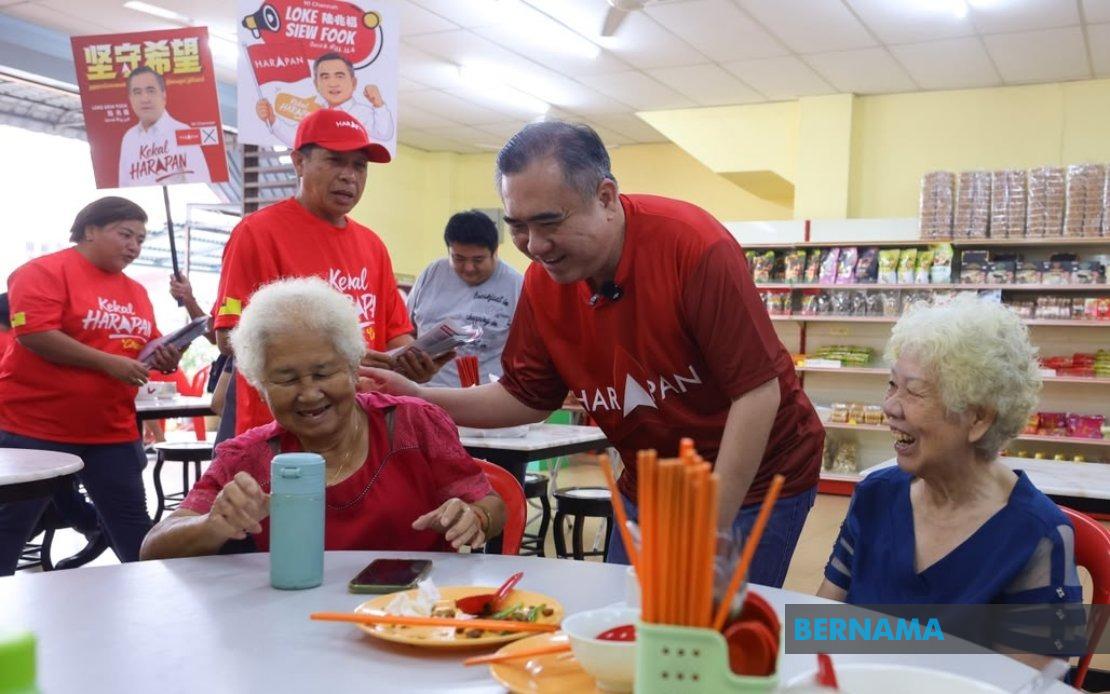
Pakatan Harapan is recalibrating its election campaign for the 16th Negeri Sembilan State Election by developing localised strategies that respond directly to the particular priorities and demographics of individual constituencies, marking a deliberate shift toward community-centred political messaging. Rather than deploying a uniform campaign blueprint across the state, the coalition is mapping out distinct approaches for different areas, recognising that urban voters, rural communities, and towns each face distinct economic and social pressures that demand customised policy responses and communication tactics.
DAP secretary-general Anthony Loke, who is standing for re-election in the Chennah state seat, articulated this localist philosophy during a campaign walkabout in Pekan Titi, emphasising that the party's machinery has moved beyond generic appeals to construct granular campaign plans tailored to individual villages and neighbourhoods. The approach reflects a broader acknowledgment that effective political communication requires not just reaching voters but genuinely understanding their lived experiences and addressing their specific concerns through targeted engagement. Loke noted that within the Chennah constituency alone, the campaign team has devised separate strategies for different localities, acknowledging that a single message cannot adequately serve the diverse needs of all communities.
The focus on grassroots interaction has dominated the initial phase of PH's campaign activities across Negeri Sembilan. All coalition candidates have begun systematic ground engagement, moving beyond traditional rally-based politics to conduct direct voter outreach and listening sessions. These first three days of formal campaigning have seen party representatives fanning out into communities to hear voter concerns firsthand rather than simply broadcasting pre-determined messaging. This ground-up approach represents a calculated response to evolving voter expectations, particularly among younger and more engaged citizens who increasingly demand that politicians demonstrate genuine understanding of local issues.
Loke, who has held the Chennah seat since 2013 and currently serves as Transport Minister, faces a straight contest against Barisan Nasional candidate Siow Kong Choon. His longstanding presence in the constituency provides incumbency advantage, though the competitive nature of the race underscores broader electoral dynamics in Negeri Sembilan, where the state has become increasingly contested between the two major coalitions. The outcome in constituencies like Chennah may significantly influence overall state-level results, making individual seat campaigns particularly consequential for both PH's ability to maintain influence and BN's attempts to regain lost ground.
A centrepiece of PH's campaign strategy will be its manifesto, scheduled for formal launch following Loke's remarks to reporters. The coalition has devoted considerable effort to developing this document, with a dedicated committee undertaking extensive consultation and deliberation before finalising its contents. Loke's emphasis on the manifesto's comprehensive nature and broad-based consultation suggests the coalition aims to present itself as having thoroughly researched voter priorities and developed evidence-based policy responses rather than hasty campaign promises. The manifesto is expected to detail a range of initiatives spanning multiple policy domains, though specific proposals remain under wraps pending the official unveiling.
The campaign cycle for the Negeri Sembilan state election operates on a compressed timeline established by the Election Commission. Early voting has been scheduled for July 28, allowing voters unable to cast ballots on the main election day to participate in advance. The poll itself takes place on August 1, meaning candidates have approximately two weeks to consolidate support and mobilise their respective voter bases. This relatively brief campaigning period places premium value on efficient organisation and focused messaging, which partly explains PH's emphasis on strategic localisation rather than attempting to conduct broad-based statewide campaigns in such a compressed timeframe.
For Malaysian observers and political analysts, PH's approach in Negeri Sembilan illustrates evolving thinking within the coalition regarding electoral strategy and voter engagement in the post-2022 period. Rather than relying primarily on coalitional machinery and established networks, the emphasis on customised local strategies and direct community engagement suggests PH is attempting to build resilience by demonstrating responsiveness to varied constituent needs. This methodology contrasts with more centralised, top-down approaches and reflects lessons from recent electoral experiences across the region, where localism and demonstrated attentiveness to community-specific issues have increasingly determined voting patterns.
The Negeri Sembilan election carries significance beyond the state itself, particularly for understanding current PH positioning and momentum ahead of potential national-level political developments. Negeri Sembilan has historically been a barometer of broader electoral trends, and the coalition's performance here—whether measured in seat gains, vote share, or individual candidate victories—will provide data points for assessing PH's organisational capacity and voter appeal across different demographics and geographic contexts. For the coalition, successful execution of its localised strategy in Negeri Sembilan could validate this approach for deployment in future contests.
The broader competitive context in Negeri Sembilan reflects wider trends in Malaysian electoral politics, where traditional state strongholds have become increasingly contested and no coalition can assume structural dominance. Both PH and BN recognise that victory requires systematic ground engagement, sophisticated data utilisation, and genuine responsiveness to voter concerns rather than simply relying on historical voting patterns or entrenched support bases. Loke's emphasis on tailored strategies and direct engagement suggests PH is attempting to cultivate a more dynamic, responsive political operation capable of competing effectively across diverse constituencies with different social and economic profiles.
As campaigning intensifies in Negeri Sembilan over the coming two weeks, the manifesto launch will represent a critical opportunity for PH to frame the election around substantive policy proposals rather than purely symbolic or personality-driven appeals. The coalition's willingness to invest resources in comprehensive manifesto development and extensive consultation processes signals an attempt to present itself as serious and thoughtful about governance, qualities that may resonate with voters concerned about competence and accountability. Whether this approach translates into electoral success will depend partly on how effectively individual candidates like Loke communicate these proposals to their communities and how compellingly PH's policy platform addresses the specific concerns voters have identified during campaign engagement.

