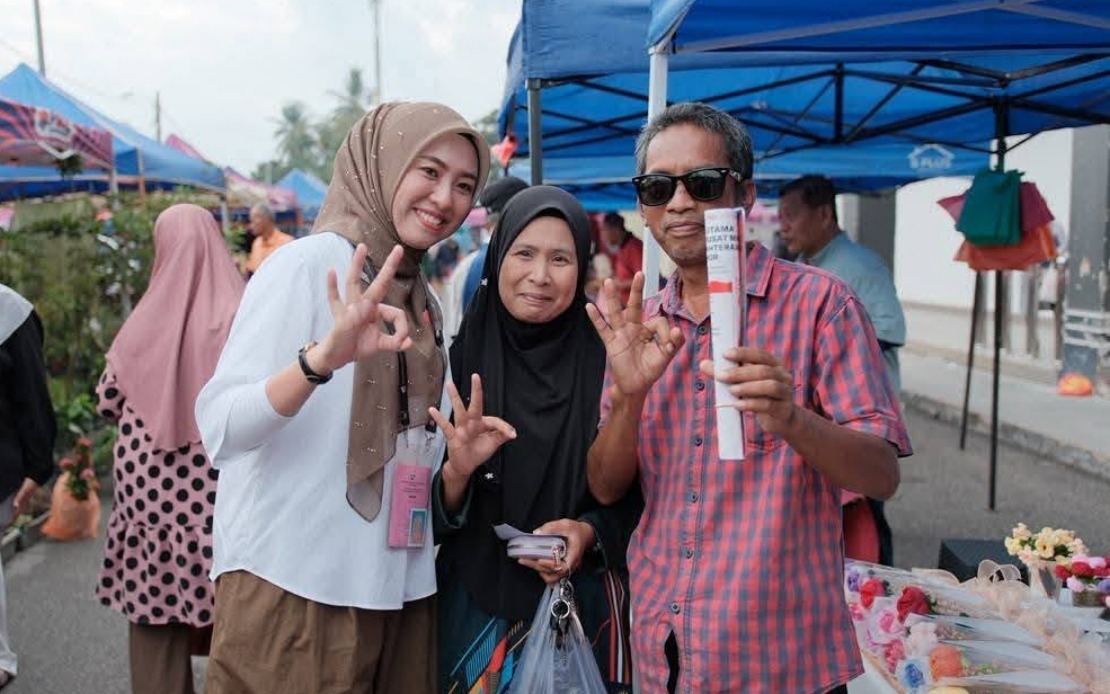
Ayna Soraya Badaruddin, the Pakatan Harapan contender for the Sungai Balang state assembly seat, has unveiled an ambitious plan to repurpose Pantai Seri Menanti into a purpose-built Youth Fishing and Leisure Hub. The proposal aims to harness the coastal area's existing appeal while creating structured opportunities for recreation, entrepreneurship, and visitor engagement. By formalizing what is already an informal gathering spot for young anglers across the constituency, the development could address both social and economic objectives simultaneously.
The fishing destination holds particular significance within the Sungai Balang catchment, drawing young recreational anglers from throughout the constituency who seek accessible waterfront activities. However, Ayna Soraya's proposal goes beyond the current ad-hoc usage patterns. Her vision encompasses a coordinated infrastructure upgrade that would establish proper amenities, safety features, and commercial frameworks currently lacking at the location. This reflects a broader trend among emerging political candidates in Malaysia who position localized infrastructure improvements as vehicles for addressing youth disengagement and economic stagnation in peripheral communities.
Central to the proposal are improvements to basic facilities and the construction of fortified fishing platforms designed to protect users while enhancing their experience. These safety enhancements address a practical concern often overlooked in informal recreational spaces, where inadequate infrastructure can deter visitors and limit accessibility for families and less experienced participants. The emphasis on engineering solutions demonstrates an understanding that aspirational leisure destinations require careful planning rather than spontaneous development.
Ayna Soraya envisions the hub incorporating a "healing" concept where young people can decompress from urban pressures and social media-driven lifestyles. The inclusion of mini-stalls operating under a camping framework would allow visitors to extend their stays while enjoying food and beverage offerings in a natural setting. This hybrid model—mixing free public recreation with fee-based commercial services—represents a sustainable financing approach that doesn't rely entirely on government subsidies for maintenance and operations. Such models have gained traction in Southeast Asian destination marketing as they distribute economic benefits across multiple stakeholder groups.
The creation of dedicated commercial spaces specifically reserved for youth entrepreneurs forms another pillar of the initiative. By allocating formal business zones to young vendors, the proposal directly addresses youth unemployment and underemployment in Muar's peripheral constituencies. Rather than generic job creation rhetoric, this targeted approach provides concrete pathways for 18-35 year-olds to establish recreational enterprises such as food stalls, equipment rental services, or tourism-related businesses. For Malaysia's persistently youth-heavy unemployment statistics, such constituency-level interventions offer practical alternatives to national-scale policy discussions that often feel disconnected from local realities.
Regional and zonal fishing competitions are positioned as catalysts for external visitation. By organizing tournaments that draw participants beyond the immediate constituency boundaries, the hub could generate spillover economic activity—accommodation bookings, meals, fuel purchases—that extends benefits beyond the immediate development site. This competition-driven tourism approach has proven effective in rural and semi-rural districts across Malaysia and Southeast Asia, transforming niche recreational activities into legitimate tourism events with measurable economic footprints.
The broader context involves positioning Pantai Seri Menanti as a distinctive domestic tourism asset, a branding objective that reflects Malaysia's strategic interest in developing secondary and tertiary tourist destinations outside the Klang Valley and Penang. Most Malaysian tourists typically concentrate visits in established zones, leaving substantial inventory of underutilized coastal and riverside assets. Ayna Soraya's proposal taps into the growing market for "quiet tourism" and wellness-oriented experiences among young urban professionals seeking weekend retreats within driving distance of major population centers.
Ayna Soraya's candidacy occurs within the 16th Johor State Election, where 172 candidates are contesting 56 state assembly seats. The Sungai Balang seat presents a three-way contest against incumbent Selamat Takim of Barisan Nasional and Perikatan Nasional's Muhammad Amin Sailan. With 2,727,926 registered voters eligible to participate, the election will be determined on this Saturday. The convergence of localized infrastructure proposals with broader electoral competition reflects how contemporary Malaysian politics increasingly incorporates granular community-level development ideas rather than relying solely on national policy platforms.
For Sungai Balang voters, the Pantai Seri Menanti proposal encapsulates a particular approach to governance: identifying underutilized local assets, applying modest infrastructure investments, and leveraging entrepreneurial activity to generate sustainable economic returns. Whether such initiatives gain traction often depends less on their intrinsic merit than on voter perceptions regarding a candidate's capacity to secure funding, navigate bureaucratic processes, and maintain political momentum after electoral victory. The proposal's viability will ultimately rest on implementation mechanisms rather than conceptual appeal alone.

