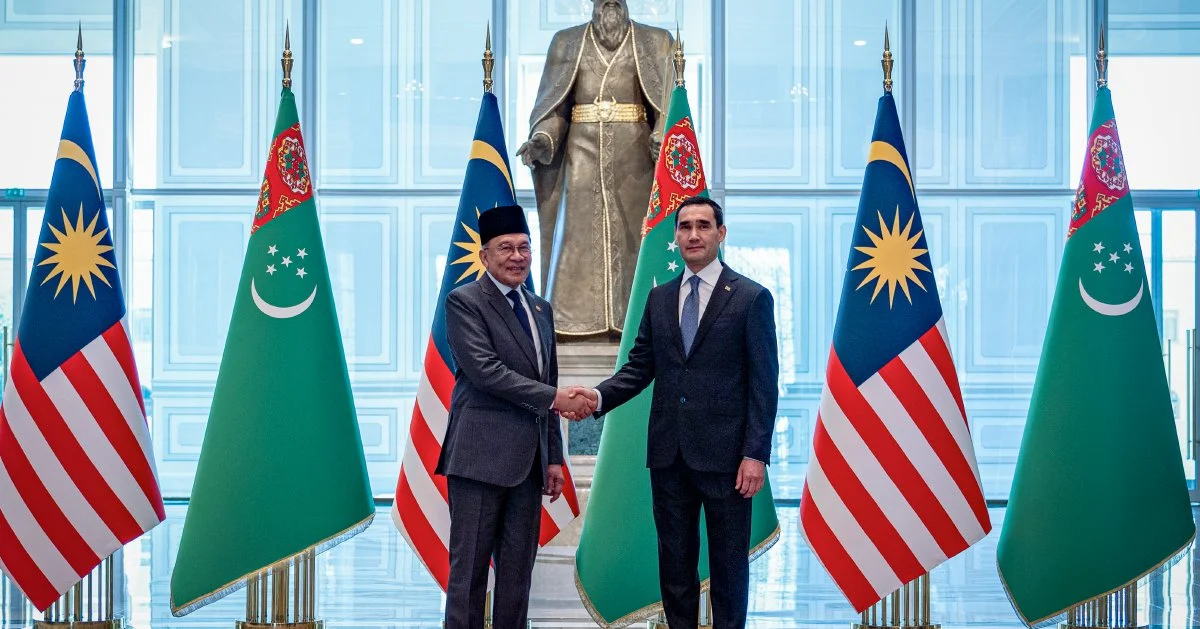
Malaysia's largest energy enterprise is playing an increasingly strategic role in cementing ties with Turkmenistan, a mineral-rich Central Asian nation whose economic importance has grown significantly in regional geopolitics. The deepening partnership between Petroliam Nasional Bhd and Turkmenistan's energy sector reflects broader diplomatic momentum following Prime Minister Datuk Seri Anwar Ibrahim's recent state visit, which highlighted Malaysia's intent to diversify its international energy partnerships beyond traditional markets.
Turkmenistan's vast natural gas reserves and expanding hydrocarbon production make it an attractive destination for Malaysian energy expertise and investment. Petronas, which operates in multiple countries across the Asia-Pacific, Middle East, and Africa, brings decades of experience in exploration, production, and liquefied natural gas technology that aligns well with Turkmenistan's development ambitions. The national oil and gas company's established footprint in the country provides a foundation upon which both nations can build more ambitious collaborative frameworks, moving beyond conventional commercial transactions into deeper strategic partnerships.
The timing of this renewed focus carries particular significance for Malaysia's positioning in Central Asia, a region increasingly vital to global energy security and geopolitical balance. As traditional energy markets experience transition and demand shifts, diversifying supplier relationships and operational bases has become essential for energy security. Petronas' activities in Turkmenistan demonstrate Malaysia's willingness to engage seriously with distant markets, signalling to other Central Asian states that Malaysian companies are credible, long-term partners capable of contributing to their development objectives.
Energy cooperation serves as the primary engine driving Malaysia-Turkmenistan relations forward, yet the implications extend well beyond oil and gas production metrics. When major national enterprises like Petronas expand operations in another country, they typically catalyse secondary economic benefits: infrastructure development, technology transfer, workforce training, and supply chain integration. These spillover effects create constituencies in both nations with vested interests in maintaining stable, productive bilateral relations, effectively anchoring diplomatic ties at the commercial level.
For Malaysian policymakers, the Petronas expansion in Turkmenistan represents a practical demonstration of economic statecraft—using commercial entities as instruments of foreign policy to advance national interests and strengthen relationships. Prime Minister Anwar Ibrahim's official visit provided political momentum that companies like Petronas can leverage to negotiate improved terms, regulatory clarity, and long-term contractual stability. This synchronisation between high-level diplomatic engagement and corporate strategy amplifies the impact of each initiative.
Turkmenistan has historically pursued a policy of neutrality in international affairs, which shapes how it engages with foreign investors and partners. Malaysia's approach, emphasising mutual benefit and respecting Turkmen sovereignty, positions Malaysian enterprises favourably compared to competitors from more strategically assertive nations. Petronas' decades-long presence suggests the company has successfully navigated Turkmenistan's bureaucratic and political landscape, accumulating relational capital that newer entrants cannot easily replicate.
The energy sector remains the logical foundation for Malaysia-Turkmenistan cooperation, but success here can unlock opportunities elsewhere. Enhanced people-to-people contact through energy sector employment, technology partnerships, and training programmes create awareness of Malaysian capabilities in other domains—from Islamic finance to agricultural technology to telecommunications. These secondary connections often prove durable and generate unexpected commercial opportunities that formal diplomatic channels alone cannot engineer.
For Southeast Asian readers, the significance of Malaysian companies strengthening ties in Central Asia lies partly in regional competitive dynamics. As China, Russia, and other major powers compete vigorously for Central Asian resources and geopolitical influence, Malaysian presence—whether through Petronas or other enterprises—contributes to a more multipolar regional structure. This diversity of engagement patterns reduces any single power's dominance and creates space for smaller nations to exercise meaningful agency in their relationships.
Regional energy security implications warrant consideration as well. Malaysia consumes significant energy domestically and regionally, and diversified supply relationships reduce vulnerability to supply disruptions or price manipulation. If Petronas develops substantial hydrocarbon reserves in Turkmenistan, these could theoretically supply Malaysian facilities or Southeast Asian markets, reducing reliance on any single supplier and strengthening regional energy resilience against external shocks.
The corporate dimension also matters strategically. Petronas operates as a commercially-driven entity answerable to Malaysian shareholders, yet functions simultaneously as a national champion representing Malaysia's interests abroad. This dual character allows the company to pursue profitable opportunities while supporting broader foreign policy objectives, creating a model that other Malaysian enterprises might emulate in expanding their international presence.
Looking forward, Malaysia-Turkmenistan ties will likely deepen through sectoral expansion beyond energy. Educational exchanges, cultural programmes, and trade missions typically follow successful energy partnerships, as demonstrated in Malaysia's relationships with other oil and gas producers. Each interaction builds familiarity and trust, gradually transforming bilateral relations from transactional to relational.
The success of Petronas' operations in Turkmenistan will substantially influence Malaysia's broader engagement strategy in Central Asia. Should the partnership yield tangible commercial benefits and meet both parties' strategic objectives, it could encourage other Malaysian companies to investigate opportunities in the region, while simultaneously demonstrating to Malaysian investors that Central Asia offers viable markets worthy of capital and management attention. Conversely, setbacks would signal caution and potentially dampen enthusiasm for regional expansion among Malaysia's business community.
Ultimately, Petronas' expanding role in Turkmenistan exemplifies how energy companies can function as architects of international relations, translating commercial objectives into sustained diplomatic momentum and building foundations for comprehensive bilateral cooperation. As Malaysia continues asserting itself as a serious international player beyond Southeast Asia, such strategic partnerships in resource-rich regions become increasingly central to the nation's long-term prosperity and influence.

