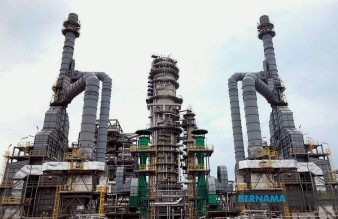
A prominent economist has warned that Malaysia's contemplated petroleum reserve cannot succeed as an isolated initiative, arguing instead that it must be woven into a comprehensive economic security framework addressing vulnerabilities across food systems, critical minerals, semiconductor supply chains and digital infrastructure. Mohd Sedek Jantan, director of investment strategy and country economist at IPPFA Sdn Bhd, delivered this caution in response to Prime Minister Datuk Seri Anwar Ibrahim's proposal to examine the feasibility of establishing a strategic petroleum stockpile to shield the nation from international supply disruptions and geopolitical instability.
Mohd Sedek's core argument challenges the assumption that energy represents the primary vector through which future economic crises will strike Malaysia. While acknowledging that reliable petroleum supplies remain fundamentally important to manufacturing, transportation and industrial activities, he emphasised that tomorrow's economic shocks may originate from entirely different sectors. The distinction matters considerably for Malaysian policymakers, who must determine how to allocate finite fiscal resources and storage capacity among competing national priorities in an increasingly unpredictable global environment.
The economist stressed that merely accumulating barrels of crude oil—however substantial the stockpile—will not by itself deliver genuine economic resilience. Instead, he argued, strategic reserves achieve their protective value only when positioned within a coherent broader framework that identifies, monitors and mitigates multiple categories of systemic risk. This reflects lessons drawn from international experience, where countries that have successfully weathered supply shocks tend to have adopted multifaceted approaches rather than betting everything on single commodities.
Food security emerged as the most pressing parallel concern in Mohd Sedek's analysis. Given Malaysia's pronounced dependence on imported foodstuffs for several staple categories, disruptions to global agricultural supplies carry immediate and severe consequences for domestic inflation, household purchasing power and ultimately social cohesion. Recent geopolitical tensions and climate-related agricultural failures in key exporting nations have demonstrated the vulnerability inherent in this dependence. Unlike petroleum, where alternatives and substitutes exist, food security strikes at the foundation of public wellbeing and political stability, arguably warranting equivalent or even greater priority allocation.
Beyond food and energy lie additional strategic sectors demanding attention within Malaysia's economic security architecture. Critical minerals—essential inputs for battery production, renewable energy systems and advanced manufacturing—represent a growing vulnerability as global supply chains concentrate in fewer hands and tensions over rare earth elements intensify. Semiconductors, the fundamental building blocks of modern industrial and information systems, have proven susceptible to disruption, as global supply chain shocks during recent years demonstrated. Digital infrastructure, increasingly critical to financial systems, government services and economic coordination, faces threats from both physical disruption and cyber vulnerability. Each of these domains could individually trigger economic crises comparable to or exceeding petroleum supply shocks.
Mohd Sedek outlined three essential principles that should guide Malaysia's approach to petroleum reserves if the government proceeds with such a policy. First, authorities must establish a clear strategic purpose, distinguishing between genuine crisis mitigation—which justifies maintaining reserves—and short-term market price manipulation, which does not. A petroleum stockpile intended to stabilise the economy during authentic supply emergencies serves the public interest; one designed primarily to influence commodity prices represents misallocation of public resources and opens pathways for political pressure and rent-seeking behaviour.
Second, the framework governing petroleum reserves must retain sufficient flexibility to accommodate future pivots in national economic priorities. Mohd Sedek suggested that instead of constructing rigid infrastructure dedicated exclusively to petroleum storage, Malaysia should develop an adaptable institutional methodology capable of identifying emerging vulnerabilities and responding to them. Today petroleum may warrant strategic reserves; in a decade or two, food security infrastructure or semiconductor supply diversification might take precedence. An inflexible petroleum-specific system cannot accommodate such shifts without costly reconstruction.
Third, any reserve programme must withstand rigorous commercial and fiscal scrutiny. Questions of reserve size, financing mechanisms, storage infrastructure location and governance structures should be resolved through systematic cost-benefit analysis rather than political instinct or ideological conviction. Malaysia's fiscal situation constrains what the government can reasonably undertake; resources devoted to petroleum reserves cannot simultaneously fund food security enhancement, critical minerals diversification or semiconductor ecosystem development. Policymakers must therefore make conscious trade-offs based on evidence rather than proceeding with multiple parallel initiatives that individually exceed available capacity.
The economist drew particular attention to Japan's experience as a potential model for Malaysian consideration. Japan has integrated strategic reserves across multiple commodities within a broader system encompassing diversified supply chains, resilient logistics networks and institutionalised public-private coordination mechanisms. Rather than warehousing commodities in isolation, Japanese policy seeks to build redundancy and flexibility throughout supply ecosystems, reducing dependence on any single source or node. This integrated approach has enabled Japan to weather numerous supply disruptions that might have paralysed economies relying exclusively on strategic stockpiles.
Mohd Sedek's analysis ultimately reframes the petroleum reserve debate from a technical energy question into a broader national resilience challenge. The fundamental measure of success should not involve hectares of storage facilities or accumulated barrels, but rather demonstrable improvement in Malaysia's capacity to absorb and recover from shocks originating from multiple quarters. A petroleum reserve serving this purpose might prove valuable; one pursued independently of broader economic security considerations risks becoming a costly monument to short-term thinking. As Malaysia confronts an increasingly volatile geopolitical environment and supply chain fragmentation accelerates, building resilience across multiple strategic domains simultaneously will likely prove far more effective than reinforcing individual sectors in isolation.

