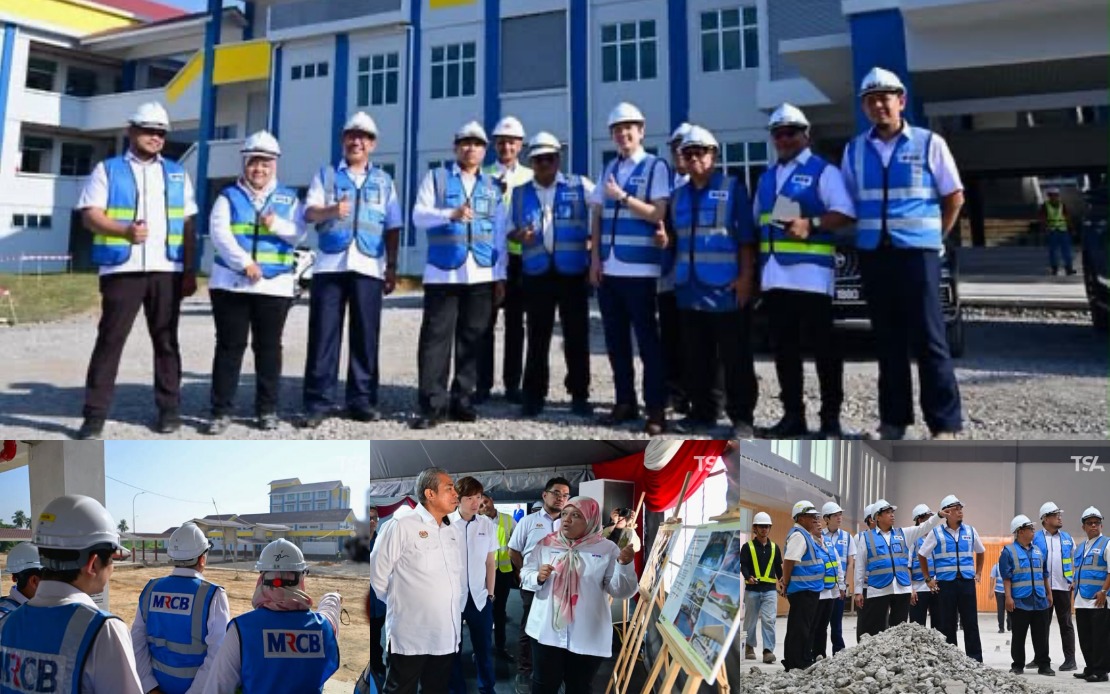
The Perlis Malaysia Sports School in Bukit Chabang, Padang Besar—a project languishing since 2013—is now expected to reach full completion by January 2027, marking a significant milestone for infrastructure development in the northern state. Chief Secretary to the Government Tan Sri Shamsul Azri Abu Bakar expressed confidence in the timeline following an inspection of the construction site, noting that the first phase of development has achieved between 85 and 90 per cent progress.
The revival of this long-stalled project represents a turning point for Malaysian sports infrastructure, which has frequently suffered from construction delays and abandonment. The school's initial conception reflected the government's ambition to establish a centre of sporting excellence, yet its nearly 14-year hiatus illustrated the challenges in maintaining momentum on capital-intensive public works. The facility, once operational, is intended to serve as a training hub and educational institution for aspiring athletes across the country.
A critical juncture came in April last year when Prime Minister Datuk Seri Anwar Ibrahim intervened directly, transferring responsibility to a capable government-owned company. This restructuring proved decisive in overcoming the systematic obstacles that had previously derailed progress. Tan Sri Shamsul Azri attributed the renewed momentum to the successful resolution of longstanding implementation challenges, particularly acute shortages of skilled labour and persistent contractor difficulties that had plagued earlier phases.
The government's approach to completing the facility reflects broader administrative reforms aimed at accelerating public project delivery. During remarks at the Iltizam 2026 Convention at Universiti Utara Malaysia, Tan Sri Shamsul Azri highlighted the Government Service Efficiency Commitment Act 2025, which was officially gazetted on 22 May 2025 and entered full force on 1 December 2025. This legislation establishes a binding legal framework rather than merely administrative guidance, fundamentally altering how government obligations to citizens are enforced.
The 2025 Act forms part of the government's comprehensive Public Service Reform Agenda, which encompasses the Bureaucratic Red-Tape Reform initiative launched in 2024. These interconnected reform programmes target the administrative inefficiencies that have historically constrained public sector performance. By transforming the legal and operational landscape governing government service delivery, authorities seek to restore confidence in institutional performance and demonstrate tangible improvements in responsiveness to public needs.
Early outcomes from red-tape elimination efforts provide measurable evidence of reform effectiveness. Since the Bureaucratic Red-Tape Reform programme's inception in 2024, authorities have successfully completed 439 distinct projects aimed at streamlining procedures, generating estimated compliance cost savings of RM2.95 billion for ordinary Malaysians and the business community. These savings translate into reduced administrative burdens and lower operational costs for companies navigating government processes, potentially strengthening Malaysia's competitive position as an investment destination.
The cumulative impact of such efficiency improvements extends beyond financial metrics. Faster government approvals, simplified licensing procedures, and reduced bureaucratic friction create an ecosystem more conducive to entrepreneurship and foreign direct investment. For Malaysia to maintain regional competitiveness amid rapid economic transitions, administrative modernisation ranks among the most consequential policy levers available to decision-makers, particularly as neighbouring economies similarly pursue digital transformation and service streamlining.
The Perlis sports school project itself exemplifies how improved governance structures can rescue stranded infrastructure investments. The facility's eventual completion will address genuine gaps in Malaysia's sporting infrastructure, particularly for athletes in northern states who previously faced travel burdens accessing comparable training facilities. The school's role extends beyond athletic development; it represents investment in human capital and community development within Perlis, a state that historically receives comparatively lower infrastructure allocation than peninsular counterparts.
Tan Sri Shamsul Azri also addressed civil service conduct ahead of anticipated elections, reiterating strict prohibitions against political engagement by government employees. He reported no complaints received regarding such violations and pledged that authorities would address any substantiated concerns with appropriate action. These guidelines ensure that the civil service maintains institutional neutrality and preserves public confidence in the impartiality of government administration during politically sensitive periods.
The government's emphasis on administrative discipline complements its broader efficiency agenda. A civil service unburdened by political interference and focused on professional delivery amplifies the effectiveness of reform initiatives. When combined with modernised procedures and clearer accountability mechanisms, such institutional integrity strengthens the credibility of government commitments and enhances the likelihood of timely project completion.
For Southeast Asian observers, Malaysia's experience with the Perlis school project and concurrent administrative reforms illuminates the interplay between institutional design, political commitment, and infrastructure delivery. Many nations across the region confront similar backlogs of incomplete public works, often rooted in inadequate coordination, weak contractor oversight, and cumbersome approval processes. Malaysia's deliberate restructuring of accountability frameworks and its documented results provide a case study in how determined administrative intervention can unlock stalled development.
The pathway to January 2027 completion depends on sustained execution by the responsible government company and continued freedom from unforeseen technical or resource constraints. Should the facility open on schedule, it will validate both the efficacy of Malaysia's institutional reforms and the government's ability to deliver on infrastructure promises—a demonstration increasingly vital as citizens demand visible returns on public investment and as regional competition for investment flows intensifies.

