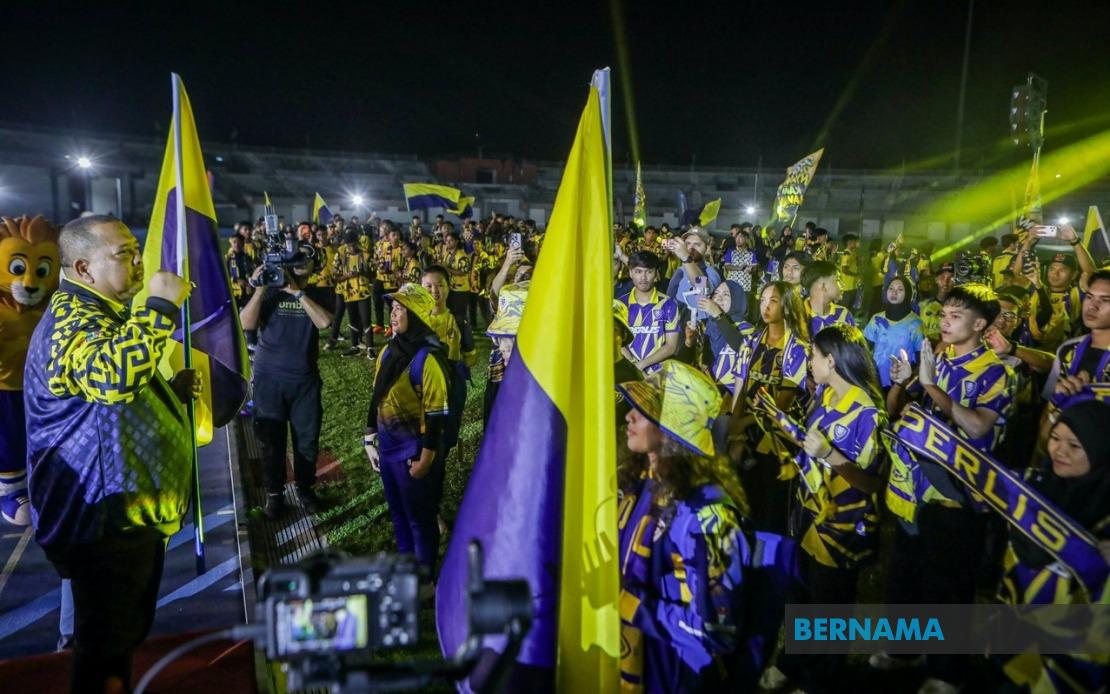
Perlis has marked a watershed moment in its sporting history by capturing 17 gold medals at the Malaysia Games 2026 held in Selangor, eclipsing all previous performances at the quadrennial competition. The northern state's contingent concluded the multi-sport event with a combined haul of 42 medals—17 gold, seven silver, and 18 bronze—representing a significant stride in the strategic direction of its sports ecosystem. Menteri Besar Abu Bakar Hamzah characterised the achievement as validation of the state government's sustained commitment to nurturing athletic talent and building institutional capacity across the sporting disciplines, remarks he made during an Exco meeting in Kangar on August 26.
The breakthrough performance reflects nearly a decade of deliberate policy investment and infrastructure development that has positioned Perlis to compete credibly against wealthier and more populous states within Malaysia's federal sports framework. Abu Bakar attributed the results to collaborative effort spanning multiple stakeholder groups—including the state's own athletes and coaching personnel, affiliated sports associations, and the machinery of the State Sports Council—all working within an integrated high-performance paradigm. This alignment of institutional actors around shared sporting objectives represents a maturing of governance practice in Malaysian state sports administration, where historical fragmentation often undermined medal-hunting ambitions.
Among the standout performances that gave particular lustre to Perlis's medal tally were record-breaking showings in weightlifting and field athletics. The state's weightlifting contingent captured the overall championship designation for their sport at SUKMA Selangor 2026, an outcome reflecting both technical proficiency and physical conditioning standards that have evidently improved under current training regimes. Equally noteworthy was the breaking of the Games record in the shot put event by Perlis competitors, a achievement in track-and-field that typically demands substantial investment in specialist coaching and biomechanical analysis—resources that smaller states often struggle to deploy.
From a Southeast Asian competitive perspective, Perlis's advancement holds subtle significance. Malaysia's internal multi-state sports framework operates as a training ground for athletes destined for regional and continental competitions, including Southeast Asian Games and Asian Championships. When a traditionally less-dominant state achieves breakthrough performances through systematic investment rather than sporadic luck, it signals the potential for deeper talent penetration across the national system. For Malaysian sports administrators, Perlis's model—balancing elite performance targeting with grassroots development—offers a replicable template that does not depend on exceptional natural resources or demographic advantages.
The Menteri Besar's public commitment to further enhancement of the medal-winning trajectory indicates that this performance is intended as a foundation rather than a ceiling. Abu Bakar signalled that ongoing emphasis would be directed toward several interconnected domains: structured talent identification and development pathways, intensified high-performance coaching programmes leveraging modern sports science methodologies, continuous facility upgrades, and improved athlete welfare provisions including nutritional support and medical services. Such comprehensive framing suggests policy maturity beyond simple incentivisation, instead targeting the systemic conditions that convert raw athletic potential into medal-winning outcomes.
The question of financial incentives for medal-winning athletes remains under discussion within the state government apparatus, with Abu Bakar indicating that a formal presentation ceremony will occur following the conclusion of Para SUKMA Selangor 2026. This timing reflects a dual commitment: recognition of the able-bodied athletes already crowned, while simultaneously maintaining momentum and public visibility as the Paralympic contingent completes their competitive schedule. The sequencing of ceremonial recognition carries psychological weight within sports cultures, where public acknowledgment serves not only as reward but as demonstration effect encouraging younger athletes to pursue elite development pathways.
For Malaysian national sports planning, Perlis's trajectory merits consideration in broader discussions about equitable resource distribution across states. Smaller jurisdictions with limited revenue bases have historically faced structural disadvantages in competing for sporting pre-eminence, yet Perlis demonstrates that strategic allocation of available resources—combined with targeted inter-state collaboration and utilisation of national talent identification infrastructure—can yield competitive advancement. This outcome carries implications for federal sports ministry budget deliberations and for discussions about how elite development programmes should be balanced against wider grassroots participation objectives across Malaysia's diverse geographic and demographic landscape.
The emphasis on institutionalising success through coaching excellence and sports science integration reflects global trends in medal-focused sports administration. Perlis's officials appear cognisant that sustainable competitive advantage derives from systematic knowledge production and human capital development rather than reliance on individual athlete charisma or generational luck. This institutional learning orientation suggests that the state sports council has absorbed lessons from international best practice—whether through academic partnerships, exchange programmes with higher-performing jurisdictions, or engagement with International Federation coaching certification frameworks.
Looking forward, the trajectory established at SUKMA 2026 presents both opportunity and challenge for Perlis. The psychological boost from record achievement can energise recruitment of young talent into development pipelines and justify continued financial commitment from state government budgets. Conversely, sustaining or further advancing performance at subsequent SUKMA editions will require continued strategic investment precisely when competing priorities may demand fiscal resources. The Menteri Besar's public positioning of sports development as a state priority suggests that political leadership has accepted this narrative, though long-term maintenance will depend on fiscal sustainability and insulation from electoral cycle fluctuations. For other Malaysian states evaluating their own sports development strategies, Perlis has provided a tangible case study demonstrating that systematic approaches yield measurable advancement within timeframes relevant to political decision-makers.

