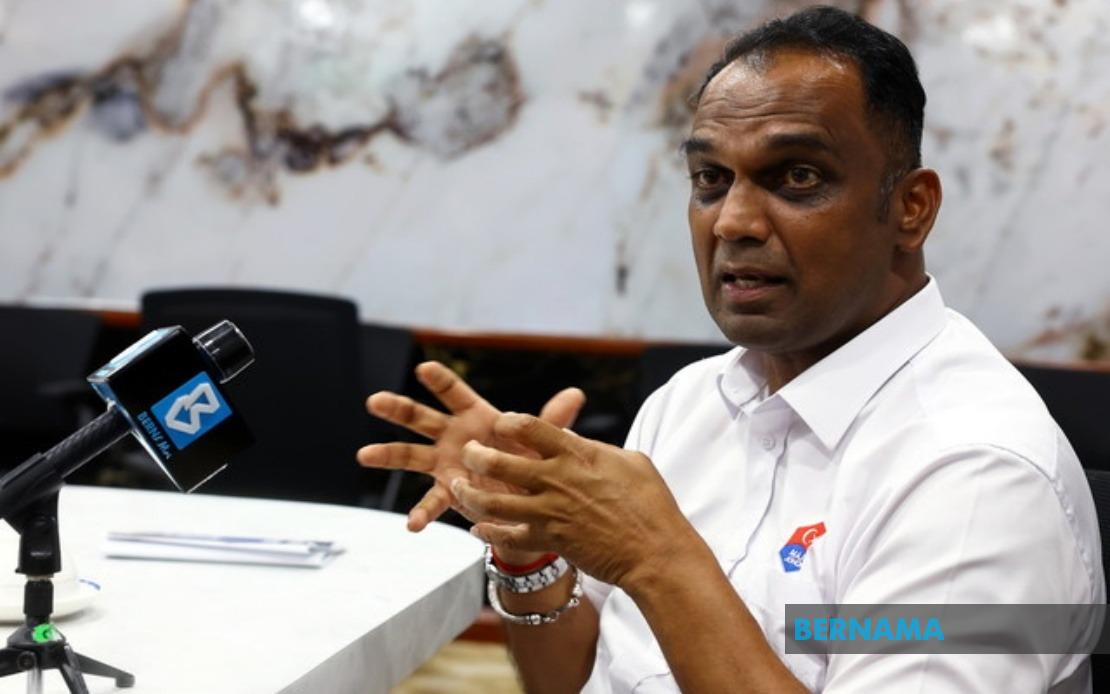
P. Pannir Selvam, the Barisan Nasional hopeful vying for the Perling state assembly seat, has chosen an unconventional but deliberate campaign path for the 16th Johor State Election. Rather than relying predominantly on the sophisticated digital machinery that characterises modern political contests, the first-time state-level candidate is anchoring his strategy on what he terms "pocket talks"—intimate, small-group conversations with constituents held across the constituency. This approach represents a calculated wager that the human touch and direct accountability remain potent forces in persuading Malaysian voters, even as social media's reach and influence continue to expand.
The pocket talk methodology reflects a broader philosophical stance on electoral engagement. Pannir Selvam acknowledges that social media has become an indispensable component of contemporary campaigning, yet he contends that face-to-face dialogue creates a qualitatively different impact on voter perception and retention. By convening these smaller gatherings, he seeks to establish a more genuine rapport with residents, moving beyond the transactional nature of mass messaging to build what he views as more meaningful political relationships. This distinction matters in Malaysia's highly fragmented voting landscape, where community-level trust and personal accountability still carry significant weight, particularly in state-level contests where local issues dominate public discourse.
For Pannir Selvam, these informal sessions serve multiple strategic purposes beyond mere introductions. They function as listening forums where he can absorb the authentic concerns of ordinary residents, understand the texture of neighbourhood problems, and refine his policy positioning accordingly. The constituency's immediate pain points—traffic congestion and inadequate parking around Taman Perling Public Market—emerged directly from these grassroots interactions rather than from party headquarters analysis. This ground-up intelligence-gathering approach lends credibility to his campaign messaging and allows him to position himself as genuinely responsive to constituent needs rather than imposing a pre-fabricated platform.
Pannir Selvam's background in local government administration as a former Johor Bahru City Council member provides substantive scaffolding for his campaign narrative. His prior experience navigating municipal bureaucracy and addressing neighbourhood-level challenges gives him concrete credentials when discussing practical governance solutions. This record of local administrative work distinguishes him from candidates lacking such background and offers voters a basis for assessing his capacity to deliver on promised improvements. In the Malaysian electoral context, where voters frequently judge candidates partly on their demonstrated competence in previous roles, such experience carries measurable electoral weight.
The candidacy is notably shaped by family political lineage, though in ways that require nuance. His father, Datuk KS Balakrishnan, served five consecutive terms as the Permas Assemblyman and held a position on the Johor state executive council—a formidable pedigree in regional politics. At 84 years old, the senior Balakrishnan remains actively involved in his son's campaign, personally attending grassroots events and campaign locations regardless of weather conditions. Rather than viewing this as mere filial obligation, Pannir Selvam frames his father's involvement as a source of institutional knowledge and ethical guidance, emphasizing the elder's teachings about non-partisan service delivery, racial equality in governance, and constructive engagement with criticism.
This intergenerational dynamic speaks to continuity within Johor's political establishment. The Balakrishnan family's sustained presence in state politics suggests deep roots in the constituency and accumulated social capital that benefits the younger candidate's candidacy. Yet the family connection also carries potential liabilities—voters may view the candidacy as dynastic rather than merit-based, or may harbour residual sentiment from his father's earlier tenure. Pannir Selvam's repeated emphasis on learning from his father's example appears designed to neutralize such concerns by demonstrating that he has internalized his predecessor's values rather than simply inheriting his seat.
The Perling state assembly constituency presents a competitive three-cornered contest among substantially different political forces. Beyond Pannir Selvam's BN representation, Pakatan Harapan has fielded Alan Tee Boon Tsong, while Parti Bersama Malaysia—a newer political entrant—has nominated Boo Wei Han. With 109,992 registered voters, the seat represents a mid-sized constituency where margins could prove decisive. The presence of three credible candidates may splinter the vote in ways that benefit whoever consolidates their core support most effectively, making Pannir Selvam's grassroots mobilization strategy potentially more valuable than in straight two-way contests.
The broader Johor electoral contest encompasses 56 state assembly seats contested by 172 candidates total, making this a significant mid-term test of voter sentiment in a traditionally BN-aligned state that has experienced considerable political turbulence over recent years. Johor's political landscape has undergone substantial realignment, with shifting coalitions and the emergence of new parties challenging the old two-bloc framework that dominated Malaysian state politics. Pannir Selvam's campaign unfolds against this background of voter unpredictability and reduced partisan loyalty, which arguably enhances the value of his localized, relationship-based strategy.
The scheduled polling date of July 11, with early voting on July 7, sets a compressed campaign timeline that may advantage candidates with pre-existing grassroots networks and community presence. Pannir Selvam's reported success in generating positive responses from pocket talks suggests he is effectively activating such networks, though translating encouragement into actual votes requires sustained momentum through campaign's final phase. The intensity of his ground engagement, combined with his father's symbolic presence and his own municipal governance record, constructs a multifaceted appeal that extends beyond any single campaign element.
For Malaysian voters observing Perling and similar state contests, the candidacy illustrates persistent tensions in modern electoral politics between digital innovation and traditional grassroots engagement. While technology enables unprecedented reach and targeting capabilities, the continued vitality of face-to-face politics suggests that many voters remain responsive to personal connection and direct accountability. Pannir Selvam's calculated choice to emphasize pocket talks over digital-first strategy reflects a pragmatic assessment that in Malaysia's political environment, especially at state level, the personal still trumps the impersonal in shaping voter decisions.

