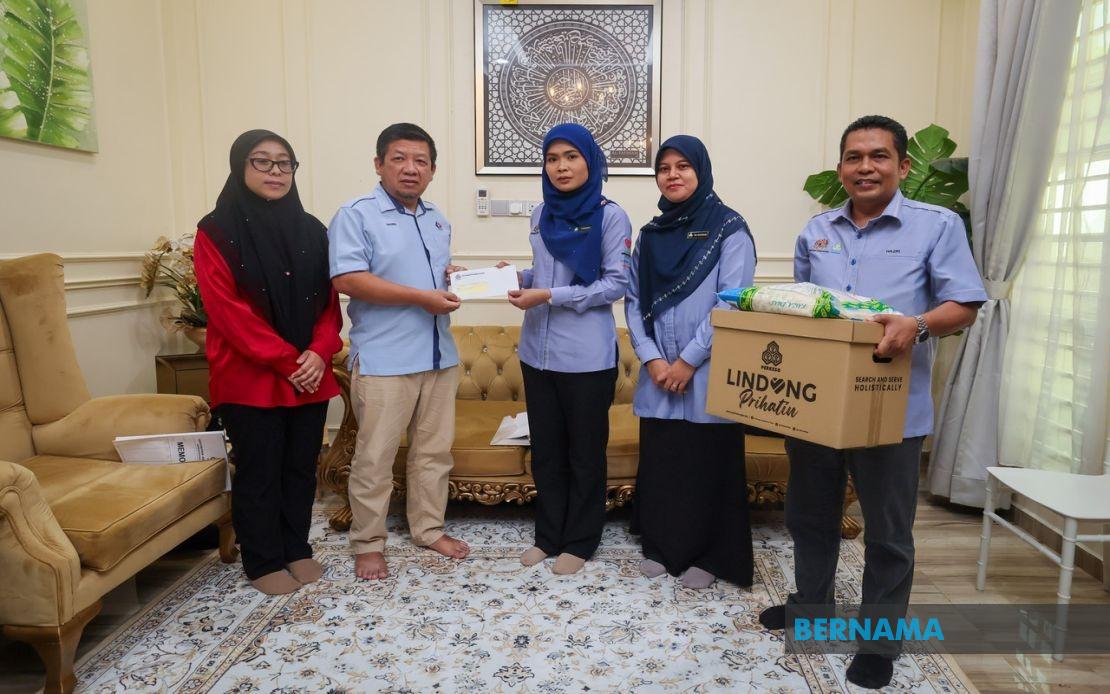
Malaysia's Social Security Organisation (PERKESO) has channeled substantial financial support to workers and beneficiaries across Kelantan, with the state office processing nearly RM3.5 million in various benefit payments during the first half of 2024. The disbursements underscore the critical role that employment injury and death benefits play in providing financial protection to Malaysia's workforce and their dependants, particularly in states like Kelantan where manufacturing and industrial activity contribute significantly to the regional economy.
According to Nor Aziemah Ismail, PERKESO's deputy director in Kelantan, Temporary Disablement Benefit (TDB) payments emerged as the dominant category of support, accounting for RM2.388 million of the total amount disbursed between January and June. This benefit scheme, established under the Employees' Social Security Act 1969, provides crucial income replacement to workers who sustain workplace injuries that temporarily incapacitate them from performing their regular employment duties. The substantial volume of TDB payments reflects the ongoing workplace safety challenges that Malaysian workers encounter across various industrial sectors, and highlights why occupational health remains a pressing concern for policymakers and employers alike.
Beyond temporary disability support, PERKESO Kelantan has also extended critical assistance to families bereaved through employment-related tragedies. The organisation disbursed RM73,000 in Dependants' Benefit payments to next of kin who lost family breadwinners to workplace accidents during the review period. This category of assistance acknowledges that workplace fatalities extend beyond the immediate victim, creating prolonged financial hardship for surviving spouses, children, and other dependent relatives who suddenly lose their primary income source.
Funeral expenses represent an often-overlooked but substantial financial burden for grieving families, particularly among lower and middle-income workers. Recognising this, PERKESO allocated nearly RM1 million in Funeral Benefit payments to families of workers who passed away during the six-month period. Each eligible claim receives a standardised payment of RM3,000, with the organisation prioritising rapid processing to enable families to arrange funeral rites without unnecessary delay. The commitment to processing approved claims within 24 hours, contingent on complete documentation submission, demonstrates how administrative efficiency can translate into meaningful support during emotionally difficult periods.
An increasingly important component of PERKESO's protection framework involves the 24-Hour Employment Injury Scheme, which extends coverage beyond traditional working hours. This scheme recognises that workers face injury risks throughout their daily lives, not solely within factory floors or office environments. During the first half of 2024, PERKESO Kelantan approved nine claims under this scheme, disbursing RM1,300 in sick leave benefit payments to eligible recipients. The approved cases illustrate the scheme's practical relevance: accidents sustained while participating in motorcycle convoys or transporting children to tuition classes now qualify for coverage, reflecting evolving understanding of how modern work-life integration creates unexpected injury scenarios.
The 24-Hour Employment Injury Scheme represents a paradigm shift in occupational protection, acknowledging that employment-related risks extend into workers' personal time and family responsibilities. By covering accidents that occur during everyday activities rather than restricting protection to factory gates, the scheme addresses a reality faced by Malaysian workers whose employment demands often blur boundaries between professional and personal life. This comprehensive approach provides financial security even when injuries happen in seemingly unrelated contexts, provided the claimant demonstrates that the injury occurred in connection with employment obligations.
Kelantan's benefit distribution figures carry particular significance for the state's socioeconomic landscape. As a state with substantial manufacturing and agricultural sectors, workplace safety remains a persistent challenge requiring sustained institutional attention. The volume of benefits processed reflects both the prevalence of workplace injuries and the effectiveness of PERKESO's claims processing machinery in converting legitimate claims into timely financial support. However, these figures also raise important questions about occupational hazard prevention and whether benefit availability creates sufficient incentive for employers to strengthen workplace safety culture.
The distribution pattern observed in Kelantan mirrors broader national trends in employment injury prevalence across Malaysia. Manufacturing-heavy states consistently demonstrate higher claim volumes, suggesting that industrial work environments present concentrated injury risks despite regulatory frameworks and employer safety obligations. For Malaysian policymakers and occupational health professionals, these statistics underscore why prevention-focused interventions—enhanced worker training, equipment modernisation, and safety audits—deserve equal emphasis alongside benefit systems that address injuries after they occur.
PERKESO's operational efficiency in processing claims becomes increasingly important as workplace injury rates remain persistently high. The organisation's commitment to processing funeral benefit claims within 24 hours reflects recognition that financial support carries heightened value when delivered promptly during acute crisis periods. Similarly, the timely processing of temporary disablement benefits helps workers maintain financial stability during recovery periods when their earning capacity is compromised. These administrative practices ultimately determine whether social security mechanisms deliver their intended protective function or merely provide delayed compensation long after financial crises have deepened.
For Malaysian workers and families, PERKESO's benefit ecosystem provides foundational protection against catastrophic financial consequences of workplace misfortune. The RM3.5 million channeled to Kelantan beneficiaries during just six months represents tangible security that enables workers to pursue employment with reduced anxiety about total financial devastation following injury or death. However, the existence of these benefits should not diminish employer responsibility for preventing injuries through robust safety practices, nor should workers' reliance on social security reduce pressure on regulators to enforce occupational health standards rigorously across all economic sectors.
Looking forward, PERKESO faces the challenge of processing growing claim volumes while maintaining service quality and processing speed. As Malaysia's workforce expands and workplace hazards evolve with technological change and industrial transformation, benefit systems must adapt correspondingly. The introduction of schemes like 24-Hour Employment Injury protection demonstrates institutional responsiveness to emerging worker needs, yet questions persist about whether PERKESO's funding and administrative capacity remain adequate for sustained service delivery across Malaysia's diverse regional economies.

