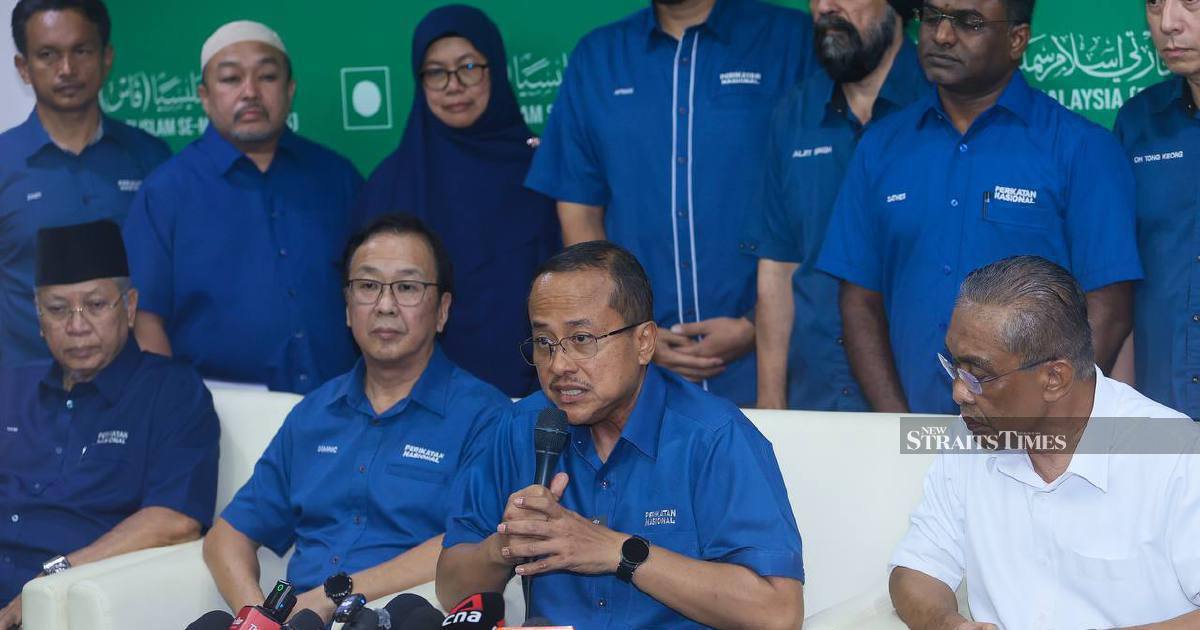
Perikatan Nasional (PN) has moved to strengthen its parliamentary footprint by formally admitting two additional political parties into its coalition structure, according to a decision announced by PN chairman Datuk Seri Dr Ahmad Samsuri Mokhtar following an emergency gathering of the alliance's Supreme Council in Kuala Lumpur on Thursday evening. The expansion represents a deliberate effort to consolidate support and broaden representation across the opposition political spectrum at a time when the coalition faces internal pressures and questions about its long-term strategic direction.
The PN leadership convened the emergency meeting at short notice, signalling that coalition strategists viewed the party recruitment drive as a matter requiring immediate attention and formal ratification. By bringing fresh members into the fold through a structured Supreme Council decision, the coalition demonstrated its capacity to adapt and absorb new political entities, a mechanism that will likely continue as PN seeks to position itself as a viable national alternative to the ruling Pakatan Harapan government. The timing of the expansion also suggests that PN leadership is keen to demonstrate momentum and organisational dynamism to both internal stakeholders and the broader electorate.
However, the nature of the two incoming parties and their specific political platforms remain significant considerations for understanding how this expansion might affect PN's overall ideological coherence and electoral prospects. Different PN member parties—particularly Perikatan Keadilan Rakyat (PKR successor elements), Bersatu, Umno factions, and various state-based entities—bring distinct voter bases, grassroots networks, and policy priorities that require careful management and negotiation within the coalition framework. The new entrants will add further complexity to an already intricate internal political economy.
Moreover, the Supreme Council session deliberately avoided substantive discussion of two interconnected governance issues that have generated considerable debate within coalition ranks: the question of Perikatan Nasional's forward-looking strategic vision and a proposed redesign of the coalition's visual identity and logo. These are not merely symbolic or cosmetic matters. A coalition's stated vision—encompassing policy positions on religious governance, economic development, federalism, and social issues—serves as a binding framework that must accommodate the interests and ideological preferences of constituent parties while projecting a coherent public narrative. The reluctance to address these questions at this particular juncture suggests either that internal consensus remains elusive or that the leadership judged the political moment inopportune for contentious internal deliberation.
The deferral of vision and branding discussions indicates potential fault lines within the coalition structure. Different PN members appear to hold divergent views on the coalition's primary purpose and messaging strategy. For instance, the question of religious governance and Islamic law implementation has historically divided conservative Islamist elements within PN from more secular-oriented parties. Similarly, economic policy orientations—whether to emphasize Bumiputera protections, privatisation, or state intervention—reflect different member party constituencies. A Logo redesign exercise, while technically administrative, typically precipitates broader conversations about brand positioning and the coalition's intended target audience, conversations that can expose these underlying tensions.
Geographically, this expansion has implications for PN's penetration into different regions across Malaysia. As the coalition seeks to challenge Pakatan Harapan's dominance in urban areas and expand its appeal beyond its traditional rural strongholds, bringing in new parties with localised influence becomes strategically valuable. New member parties may bring with them networks of grassroots councillors, municipal government representatives, and state assemblypersons whose mobilisation capacity could enhance PN's infrastructure for future electoral campaigns. This consideration likely motivated the leadership's decision to prioritise the formal acceptance process.
At the peninsular level, the coalition's expansion also reflects broader dynamics within the opposition landscape. Since the 2022 general election, when PN emerged as the single largest parliamentary bloc despite falling short of a simple majority, the coalition has faced questions about its ability to forge sustainable governing alliances with other opposition entities like the Democratic Action Party (DAP) or fringe Pakatan Harapan components. By internally strengthening through party recruitment, PN simultaneously reduces its dependence on ad-hoc coalition-building while increasing internal organisational weight. This approach prioritises coalition coherence over external alliance flexibility.
The decision to formally accept new parties whilst shelving broader strategic conversations represents a characteristically pragmatic approach to coalition management. By ratifying membership expansions, PN demonstrates tangible progress and achievement to its membership base, thereby generating positive internal momentum and reinforcing the narrative that the coalition is actively building strength and relevance. Simultaneously, postponing the more philosophically demanding conversations about vision and symbolism allows leadership to avoid triggering potentially acrimonious internal disputes during a period when coalition unity remains an asset.
For Malaysian observers tracking opposition development, the PN expansion merits close attention regarding both immediate political ramifications and longer-term institutional questions. How smoothly the new member parties integrate into coalition structures, whether they bring additional parliamentary seats or seats-in-waiting, and how the leadership ultimately addresses the deferred strategic questions will collectively determine whether this expansion ultimately strengthens or merely postpones internal reconciliation within Perikatan Nasional's multifaceted political experiment.