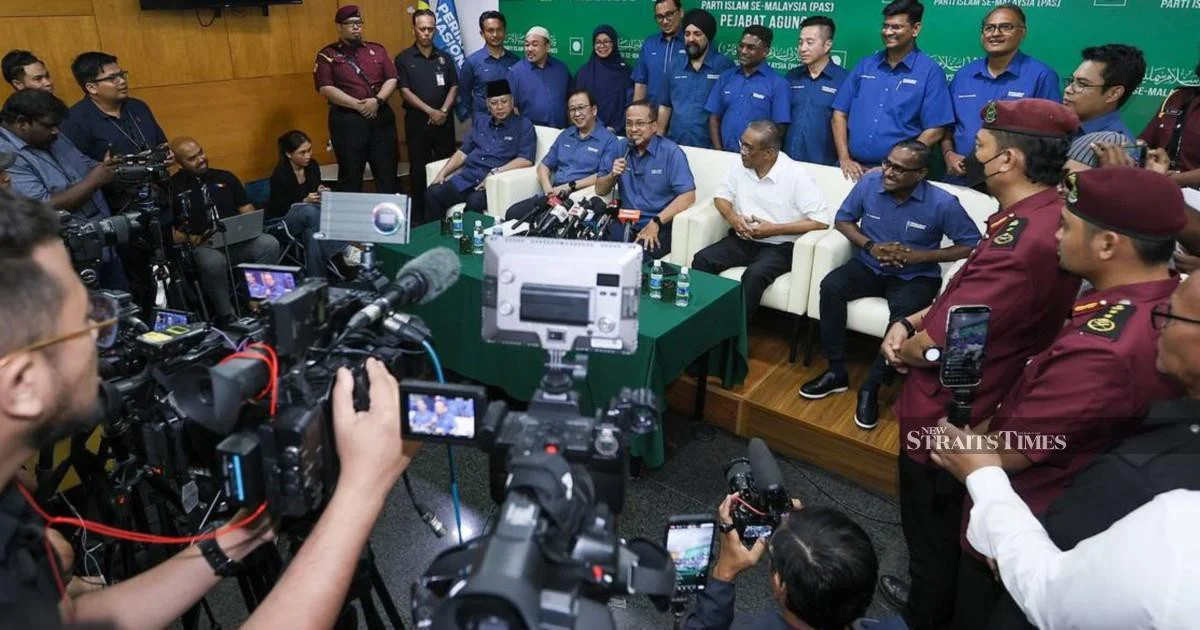
Perikatan Nasional has convened an urgent gathering to resolve its seat distribution arrangement ahead of the Johor state election, signalling the coalition's determination to present a united front despite potential internal tensions over candidate selection. The special meeting represents a crucial juncture in PN's electoral strategy, as coalition partners must reach consensus on which constituencies each component party will contest.
The timing of this emergency session underscores the competitive pressures mounting in Johor, Malaysia's second-largest state by population and a longstanding political battleground. Seat allocation negotiations within multi-party coalitions often prove contentious, as each participating organisation seeks to maximise its representation and influence within state governance. For PN specifically, harmonising the ambitions of its constituent parties while maintaining coherent campaign messaging remains essential for electoral viability.
Johor carries substantial symbolic and practical weight in Malaysian politics. The state's 56 assembly seats represent approximately 17 per cent of all state legislative positions nationwide, making Johor contests pivotal indicators of broader political sentiment. Previous electoral cycles have demonstrated the state's volatility and the difficulty of predicting outcomes, which amplifies the stakes for any coalition attempting to secure majority control.
Peikatan Nasional comprises PAS, Bersatu, and smaller allied parties, each bringing distinct organisational strengths and voter constituencies to the coalition. PAS draws substantial support from Malay-Muslim communities and maintains extensive grassroots networks, while Bersatu commands influence among certain segments of the Bumiputera electorate. Resolving how to distribute competitive seats equitably among these partners requires careful negotiation to prevent post-election recriminations or friction that could undermine coalition stability.
The seat allocation process itself reflects broader strategic considerations beyond simple numerical division. Coalition strategists must assess which party is best positioned to win specific constituencies based on demographic composition, historical voting patterns, incumbent performance, and local political dynamics. Some seats may be naturally advantageous for particular parties, while others represent genuine contests where victory margins remain unpredictable and the strongest candidate becomes paramount.
Johor's economic importance further elevates the significance of these electoral preparations. The state remains a major industrial hub, housing substantial portions of Malaysia's petrochemical, palm oil processing, and manufacturing sectors. Voters' concerns about economic management, job creation, and business-friendly governance policies will inevitably feature prominently in campaign discourse, and different coalition members may emphasise competing economic philosophies or priorities.
The timeline for finalising seat allocations also reflects practical campaign requirements. Political parties require adequate preparation periods to campaign effectively, recruit volunteer networks, organise candidate introductions to constituencies, and develop localised messaging strategies. Delayed seat confirmations risk leaving insufficient time for ground mobilisation, potentially disadvantaging whichever coalition appears unprepared compared to better-organised competitors.
For Malaysian observers, PN's coordination efforts carry implications extending beyond Johor itself. The coalition's internal coherence during this critical negotiation phase offers insights into its broader durability and governance capacity. Coalitions that manage internal disagreements constructively often translate that capability into effective state administration, whereas those displaying public discord risk appearing fractious and unprepared to constituents.
The meeting also arrives amid broader political recalibration across Malaysia's states. Multiple governing coalitions have experienced shifts in recent months, altering electoral landscapes and reshuffling political alignments. Johor's contest therefore occurs within a dynamic environment where previous assumptions about voter loyalty and party dominance may no longer apply, intensifying pressure on PN to execute flawless campaign strategies.
Regionally, Malaysia's state elections frequently serve as testing grounds for national political movements and coalitional arrangements. PN's performance in Johor will be closely monitored by political analysts and international observers tracking Southeast Asian electoral trends and the durability of multi-party political coalitions. Success or failure could influence PN's trajectory toward future federal political roles or reinforce its current positioning within Malaysia's competitive party system.
The completion of seat allocation negotiations represents merely the beginning rather than the conclusion of PN's electoral preparation. Following formal confirmation, coalition members must execute integrated campaign strategies, maintain messaging discipline across diverse party structures, and respond effectively to opposition attacks and counter-narratives. The meeting today therefore constitutes one significant milestone within a protracted process determining whether PN can translate internal agreement into electoral success.